English
 Español
 Français
 Deutsch
 Italiano
 Português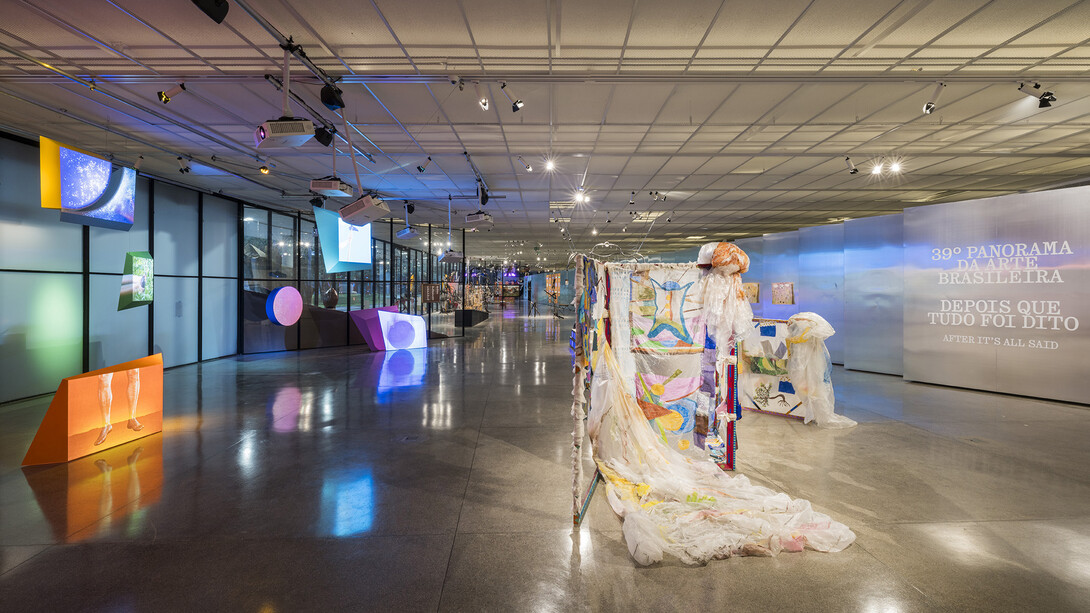
Entitled After it's all said, 39th panorama of brazilian art, under the curatorship of Diane Lima, questions where artistic production has overflowed in the search to expand the limits of aesthetic representation through a radical exercise of imagination. The curatorial framework examines how the epistemological turning point of recent decades — driven by demands for racial reparation and by the achievements of affirmative policies — has reconfigured Brazilian art, to the point that these not only inscribe racial debates within the field of language and aesthetics, but are also expressively influenced and expanded by them.
Such formulation highlights the vocation of this Panorama as a platform for critical thinking that speculates about the future, while simultaneously creating a historical experience of place: where we are, where we have arrived, and where we want to go, beyond everything that has already been said, done, seen, written, and imagined
Inspired by the title and philosophical question formulated by Denise Ferreira da Silva, one of the leading contemporary Black feminist theorists, the exhibition invites to imagine “whether it would be possible to deploy a sensibility that presumes and anticipates what lies beyond everything that has been said and done about colonial and racial violence, and the work they perform for global capital”.
Based on this dialogue with the philosopher, Diane Lima develops a project that, by “reading art as confrontation”, reflects on how artists have performed in their poetic and compositional procedures, radical exercises of imagination and experimentation, which evidence a continuous and collective movement of liberation. The exhibition seeks to complexify the aesthetic racial regime and, therefore, the very definition of Brazilian art: what we know about it, its past, our ways of looking at it, describing it, and, above all, the artistic practices of the next generations.
(Text by Diane Lima)