English
 Español
 Français
 Deutsch
 Italiano
 Português
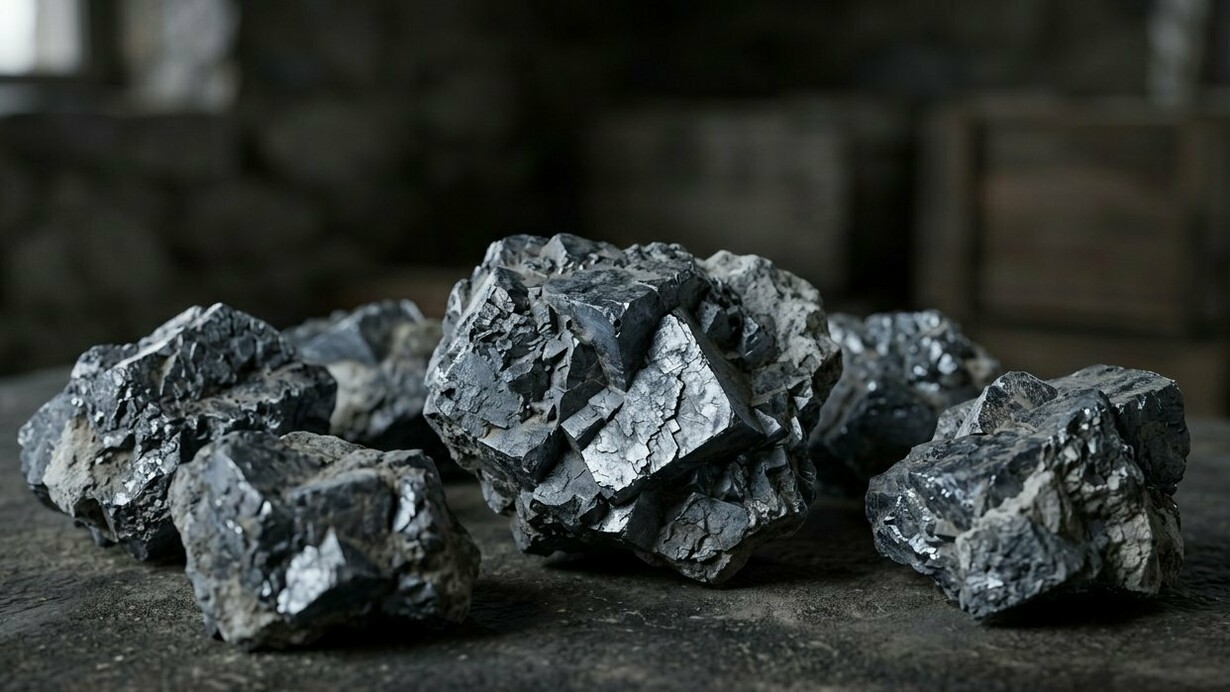
In February 2025, the Democratic Republic of Congo did something a resource-rich African state is rarely willing to do. It stopped selling.
The Authority for the Regulation and Control of Strategic Mineral Substances' Markets1, known as ARECOMS, suspended all cobalt exports. The country produces roughly three-quarters of the world's cobalt, so the effect was immediate. Prices that had collapsed to around $21,000 a tonne began to climb.
By January 2026, cobalt had passed $56,000 a tonne2, more than double the pre-ban level. Kinshasa had proven a point that OPEC proved half a century ago. A single dominant producer can set a price by choosing how much of its own wealth to withhold.
This is the story African policymakers are telling themselves in 2026, and it is worth taking seriously. But it rests on a confusion that runs through the whole continent's mineral strategy. Pulling a supply lever is not the same as climbing an industrial ladder. One changes a price. The other changes an economy.
The year Africa learned to say no
The Congolese move was not a one-off. It has become a template.
In October 2025, ARECOMS lifted the outright ban and replaced it with a quota, capping 2026 and 2027 exports at 96,600 tonnes a year3, roughly half of 2024 output. Of that, 87,000 tonnes went to producers on a pro-rata basis and 9,600 tonnes stayed under the regulator's discretionary control to release or withhold as it read the market. When producers failed to ship second-quarter volumes on time, ARECOMS reclaimed the allowance4 rather than roll it forward. Kinshasa was no longer a passive seller. It was managing a global commodity from the point of origin.
Zimbabwe followed the logic of lithium. In a letter dated 2 April 20265, the mines ministry told producers it would introduce export quotas on lithium concentrate and demand firm commitments to local processing before shipments could resume. Analysts read it as a direct copy of the Congolese sequence, ban first, then managed volumes.
Zambia, meanwhile, is pushing copper output toward three million tonnes and asking more of that metal to move through domestic smelters6. The vocabulary across all three capitals is the same: value addition, beneficiation, and local content.
The instinct behind it is sound. For a century these countries watched their ore leave cheap and come back expensive. Saying no is the first sovereign act available to a producer that has always been a price-taker. The question is what saying no actually buys.
A price is not an industry
What the DRC bought, first, was money. Congolese cobalt revenue on one estimate jumped from a baseline near $617 million to about $2.3 billion7 under the quota-driven price. That is real, and it explains why Kinshasa has ignored IMF warnings and held the line.
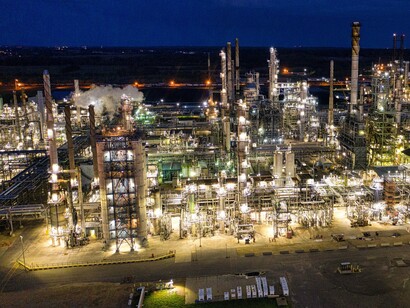
But look at where the metal goes after it leaves. The DRC still exports cobalt overwhelmingly as cobalt hydroxide, an intermediate that is shipped to China8 and refined there into the sulphate that battery makers actually use. The ore changes hands at the border. The chemistry happens somewhere else.
China refines around three-quarters of the world's cobalt. The DRC mines most of it and, by the UN Economic Commission for Africa's accounting, captures roughly 3 percent9 of the battery and electric-vehicle value chain it feeds. The segments it does not touch are the large ones. The precursor market alone runs to about $271 billion10, and cell production and assembly beyond it are measured in trillions. A higher price raises the value of the 3 percent slice. It does not widen the slice.
This is the difference the language of "value addition" tends to blur. A quota is a lever on supply. It moves a number on a screen in London or Shanghai. An industrial ladder is a sequence of physical transformations, from ore to refined metal to precursor to cathode to cell, and each rung is a factory, a workforce, a power supply, and a buyer under contract. The DRC has pulled the lever hard. It has barely touched the ladder.
Why the ladder is harder to climb
The reasons are structural, and they are the same reasons the ore left in the first place.
The first is power, in the literal sense. Refining and smelting are electricity-hungry. The technical consensus from DRC Mining Week 202611 was blunt: without a reliable injection of baseload electricity, a refining mandate produces stockpiled concentrate and halted lines, not domestic industry. A country can order value addition into law. It cannot legislate a grid.
The second is capital and sequence. A precursor plant is not a mine with an extra step. It is a chemical business with its own engineering, its own offtake contracts, and its own working capital. Bloomberg's own analysts have argued the DRC could build precursor capacity more cheaply than the US or China12, helped by cheap land and hydropower. The cost case has existed for years. The plants mostly have not been built, because cost competitiveness on paper is not the same as an investor willing to commit a decade of capital in a jurisdiction with policy that changed twice in eighteen months.
The third is coordination. No single African country holds all the inputs a battery needs. The often-cited vision, set out again this year13, has Zambia refining copper, Zimbabwe processing lithium, the DRC making precursors, and South Africa assembling components. It is a sensible division of labor. It is also a coordination problem across borders, currencies, and rival Chinese, American, and European partners, none of whom particularly wants the finished industry to sit in Africa.
The corridor that carries the question
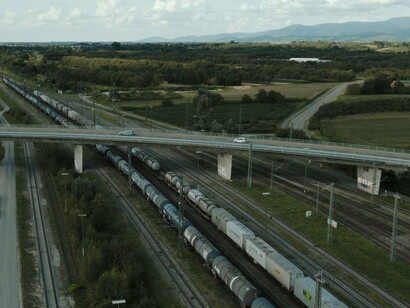
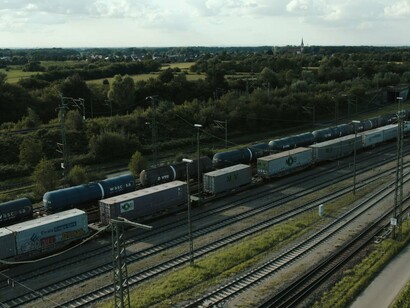
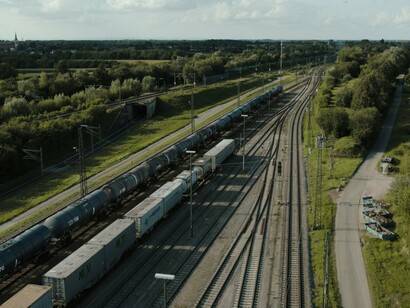
Nothing captures the tension better than the Lobito Corridor, the Atlantic railway running from Angola's coast toward the Copperbelt.
It has drawn more than $753 million from the US Development Finance Corporation and over €2 billion mobilized by the European Union14. It can move copper and cobalt to the ocean in five to eight days instead of the twenty-five15 it took heading south to Durban. For the producer, that is a genuine gain in cash-conversion terms.
But read the corridor as an object and its purpose is plain. It is engineered to carry raw and intermediate material out, fast, and to bring reagents and fuel in. Western financing flows toward the artery that moves the ore, because the buyers at the far end want the ore, not a Congolese competitor in cathode production. The corridor makes extraction more efficient. Efficient extraction is still extraction.
That is the quiet catch in the 2026 story. The same partners who praise value addition in communiqués are funding the infrastructure of raw export, and the producers are taking the money because the road, at least, is real.
What the lever reveals
The supply-side turn is a real shift in power, and it should not be dismissed. For the first time in a long time, African producers are setting terms rather than accepting them, and the $2.3 billion7 in Congolese cobalt revenue is not an abstraction to a treasury that needs it.
But leverage over a price and ownership of an industry are different kinds of wealth, and only one of them compounds. A quota can be reversed by the next minister, undercut by Indonesian nickel, or eroded when battery chemistries shift away from cobalt, as cobalt-free formulations already are8. A refinery, a trained workforce, and a grid built to run them do not evaporate when the price cycle turns. They are the difference between a country that earns more from what it digs and a country that no longer only digs.
The DRC, Zimbabwe, and Zambia have learned the easier half of the lesson in 2026. They have learned to withhold, and withholding pays. The harder half is that abundance, even abundance you have finally learned to ration, is not the same as capability. The lever is in their hands now. The ladder is still leaning against someone else's wall.
Notes
1 Temporary suspension of cobalt export from the Democratic Republic of Congo. The International Energy Agency. 2026 (last updated 28 May 2026).
2 Cobalt Export Quotas and Copper Supply Risks Shape DRC Revenue Outlook. Ecofin Agency. 21 January 2026.
3 DRC to lift cobalt export ban and impose quotas through 2027. Benchmark Mineral Intelligence. 22 September 2025.
4 DRC to Reclaim Unused Export Quotas from Cobalt Miners. Investing News Network. 30 June 2026.
5 Zimbabwe Halts Raw Lithium Exports as Africa Critical Minerals Race Splits US and China. The Rio Times. Samuel Ncube. 7 September 2026.
6 Zambia Is Mining More Copper. September Will Test How Much Value It Keeps. Energy Transition Africa. 10 August 2026.
7 DRC Congo Cobalt Export Quotas: 2026 Supply Control Explained. Discovery Alert. Muflih Hidayat. 29 June 2026.
8 What is Cobalt?. Benchmark Minerals, Cobalt Glossary.
9 Battery production in the DRC could be a gamechanger. ESI Africa. Date not stated on the linked page.
10 Producing Battery Materials in the DRC Could Lower Supply-Chain Emissions and Add Value to the Country’s Cobalt. BloombergNEF. 24 November 2021.
11 Retrospective on DRC Mining Week 2026. African Mining Online. Dr Nicolaas C. Steenkamp. 21 July 2026.
12 Will the EU help build a cobalt refinery in the Democratic Republic of the Congo?. European Parliamentary Research Service. 2024.
13 Africa can finally mine, beneficiate and industrialise on its own terms. Al Jazeera. Tafi Mhaka. 1 July 2026.
14 Critical Minerals Supply Chain Realignment: Africa’s Leverage vs Great-Power Extraction Risks in 2026. Bloomsbury Intelligence and Security Institute (BISI). Stephen Nkrumah. 3 August 2026.
15 Railing behind the Lobito Corridor and why Tanzania shouldn’t be worried about losing Zambia copper cargo. Tanzania Times. Special Report. 20 August 2026.