English
 Español
 Français
 Deutsch
 Italiano
 Português
![Mary Cassatt, Fillette dans un fauteuil bleu [Enfant dans le salon bleu] (detail), 1878. Courtesy of Musée d’Orsay](/attachments/7d082299a2d3c1fd02e57f69e28da4f631554414/store/fill/1090/613/9b97dc5b17cad42577b6453f0968e961b1231ceb2b8b5ceb2c09057b2695/Mary-Cassatt-Fillette-dans-un-fauteuil-bleu-Enfant-dans-le-salon-bleu-detail-1878-Courtesy-of.jpg)
In 2026, in order to mark the hundredth anniversary of the artist’s death, the Musée d’Orsay is organizing a major exhibition devoted to Mary Cassatt (1844-1926). In France, this will be a long-awaited event: its national museums have never devoted a major exhibition to Mary Cassatt, an active member and pillar of the impressionist group. Her centenary provides an opportunity to examine the central place occupied by this prominent artist who, through talent and determination, succeed in forging a unique identity in late 19th- and early 20th-century art history, on both sides of the Atlantic.
Mary Cassatt described herself as “American, American through and through”, but started off by grounding her art in the pictorial tradition of the old masters, which she studied during her visits to Europe, before becoming an essential figure in the impressionist movement in France, where she lived for no fewer than six decades. “I am independent!” she proclaimed, “I can live alone and I love to work”. Taking a chrono-thematic approach, the exhibition paints a new portrait of the artist, examining her art through the prism of the notion of independence, in which she took great pride and which was her guiding principle throughout her life.
Comprising almost 80 paintings, pastels and prints, and covering the whole of the artist’s career, Mary Cassatt: L'indépendante / Mary Cassatt: Being independent opens up new perspectives on her work, drawing on unpublished letters and never before exploited sources. Rarely shown works from public and private European collections will be presented, along with paintings and pastels from American collections seldom exhibited outside the United States.
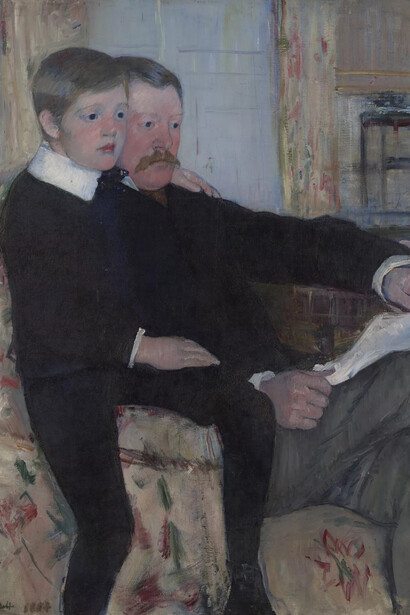
A selection of Cassatt’s early works and portraits of her loved ones shows how the artist’s social milieu, travels and knowledge of the art of the past shaped her approach and practice. Making it a point of honor to be independent (originally at her wealthy family’s request), she soon set herself up in her own studio and started employing paid sitters. In a largely male environment, and against a background of latent nationalism, she rapidly succeeded in establishing herself as a professional painter.
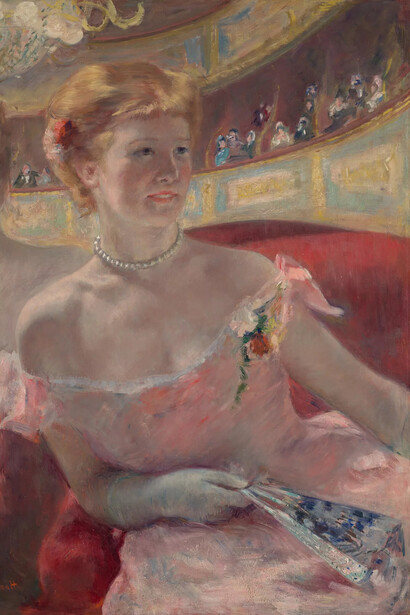
Her depictions of elegant young women, making their way in society, receiving guests at home and enjoying themselves at the theater – out to conquer the modern world and gain their independence – are among the artist’s most remarkable creations, as is evidenced by a number of dazzling examples. These audacious, vivacious images certainly attracted attention at the impressionist exhibitions, in which Mary Cassatt regularly participated (four times, starting in 1879) at the invitation of her friend Edgar Degas. Mary Cassatt’s essential contribution to these avant-garde, self-proclaimed “independent” exhibitions will be examined and reassessed.
Her activities in the art market world were another fundamental aspect of the artist’s independence. She specialized in “mother and child” paintings, a genre much in demand and in which she excelled – and remained associated with – while fulfilling portrait commissions. Several key works in the exhibition will also evoke her crucial role as a “consultant”, advising her American relatives, friends and acquaintances on their purchases of paintings, impressionist works in particular, and therefore in the constitution of art collections in the United States.
At this stage of her career, in the early 1890s, Mary Cassatt’s financial independence enabled her to become a landowner. Surrounded by extensive grounds, the château she acquired in Oise served as a backdrop for numerous outdoor scenes featuring women and children: radiant, vibrantly colorful works. Modern Woman, the most important commission the artist received, a monumental mural to decorate the Woman’s Building at the 1893 World’s Fair in Chicago, was a highlight in her career and a major milestone in the development of her body of work. This huge decoration, long since disappeared, will be evoked in the itinerary through a selection of prints and pastels relating to the mural, as well as via a film featuring a digital restoration of this gigantic work (4 x 18 meters), uniquely ambitious in size and subject alike. Her admirable set of Ten color prints will also be studied in light of this new, remarkably experimental phase in her work and her progressive opinions on women’s education.
Mary Cassatt’s commitment to independence was not limited to her own career and artistic approach. A staunch supporter of women’s fight for the right to vote, she encouraged her contemporaries to “work for suffrage, for it is the women who will decide the question of life or death for a nation.” In 1915, along with her friend Louisine Havemeyer, she organized an exhibition in New York on behalf of women’s suffrage. The itinerary concludes with a small selection of Mary Cassatt’s paintings featured in that exhibition, demonstrating how this pioneering artist’s art and actions alike tended towards activism.
![Mary Cassatt, Automne, portrait de Lydia Cassatt [L'automne] (detail), 1880. Courtesy of Musée d’Orsay](/attachments/8e57dac9e441f2c4db21aebb3de7a3b09969ba0c/store/fill/410/615/8731749618f523bc26ce6b21cdaff96a99ac3cc41a24a4036d568d527b15/Mary-Cassatt-Automne-portrait-de-Lydia-Cassatt-Lautomne-detail-1880-Courtesy-of-Musee-dOrsay.jpg)