English
 Español
 Français
 Deutsch
 Italiano
 Português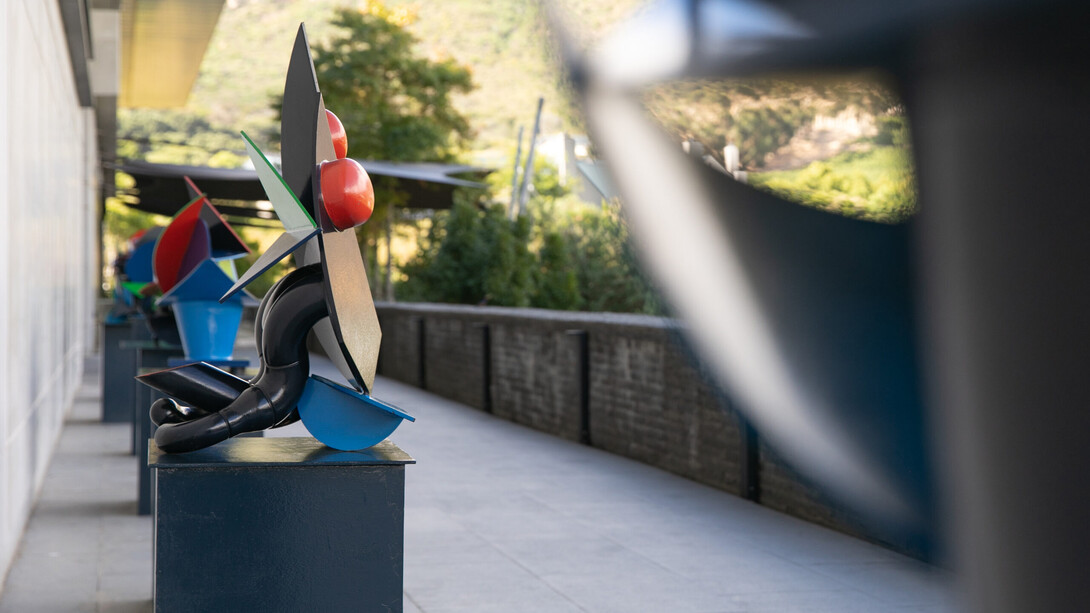
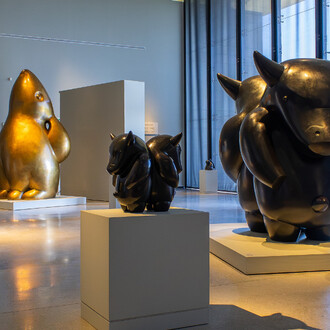
This procession of playful steel sculptures by Edoardo Villa come from his final body of work, shown at Nirox Sculpture Park in 2008, three years before his death at the age of 95. This original exhibition, Changing worlds, was installed in a Arcadian setting of rolling lawns, small lakes and stone outcrops in the Cradle of Humankind.
On his death in 2011, the contents of his studio, sculptural works and archive were acquired by the Homestead Collection and are now permanently housed at Norval Foundation. This is the first time that these sculptures have been seen publicly since his death.
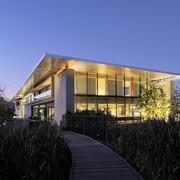
For Villa, the setting of his exhibitions was always a critical consideration. Here, this colourful series of small-scale sculptures is installed against the horizontal lines of the Foundation building, designed by the Cape Town architects, DHK, but can also be viewed against the contoured backdrop of the indigenous gardens, a continuation of the Table Mountain Natural Reserve.
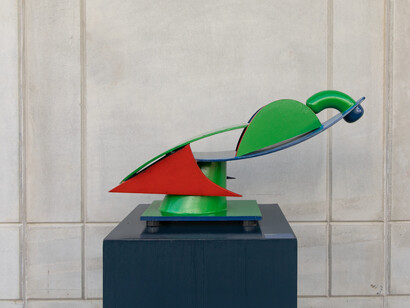
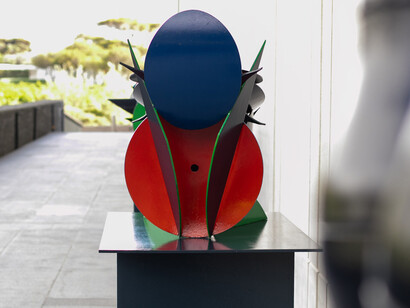
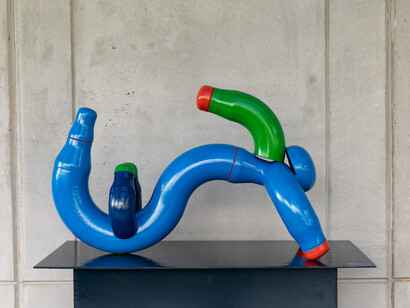
Shown on Villa’s original steel plinths, now newly restored, the works are light-hearted, humorous and sensuous, very different to the monumental Africa, seen on your left as you drive in to the Foundation. Produced in 1958-59, Africa was probably the first welded-steel sculpture constructed on the continent. The 7.5-metre work is characterized by stark, black vertical forms, and a spiky silhouette, a distilled amalgam of plant- and human-like forms, creating a forbidding presence.
On entering Norval’s portico, one encounters Villa’s huge, welded steel work, The last to arrive. Its grouped vertical and angular forms here allude to the angry youth that sparked the 1976 Soweto Riots, the first major event that led to the final shift in political power. Both these sculptures give some sense of the significance of his work, produced over a lifetime in the politically fraught, South African context of the period.
It therefore comes as a pleasurable surprise to see the jauntiness of the more personal works of his final years. They enliven the walkway with their bright, toylike presences. They seem like three-dimensional emojis of birds, angels, guardians, and other cavorting figures, frequently with a light-hearted eroticism. These final sculptures seem spontaneously constructed, each element differentiated in primary colours with dark accents. They are made with an impulsive lightness of touch, and morph between figuration and abstraction, a characteristic of Villa’s lifelong output.
This modest exhibition remembers his vital contribution to sculpture in this country.