English
 Español
 Français
 Deutsch
 Italiano
 Português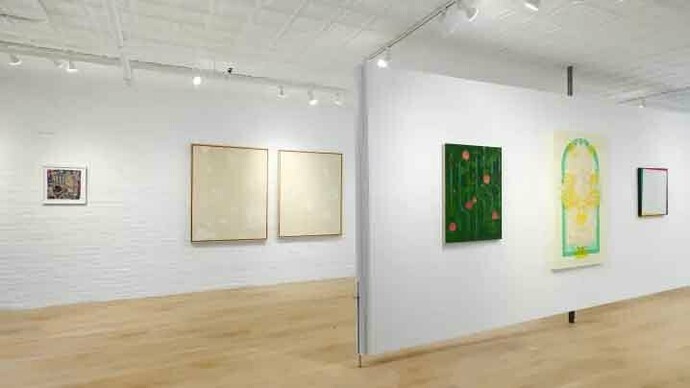
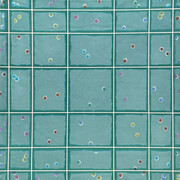
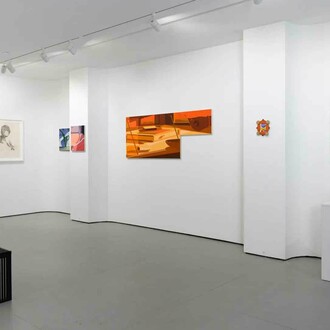
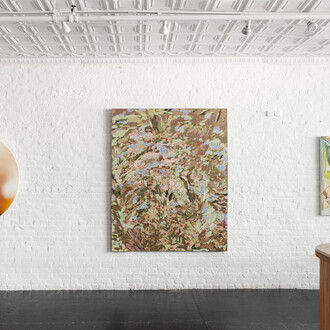
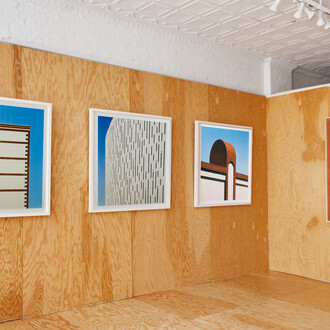
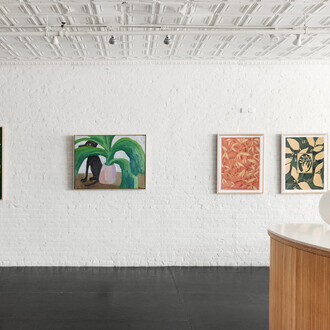
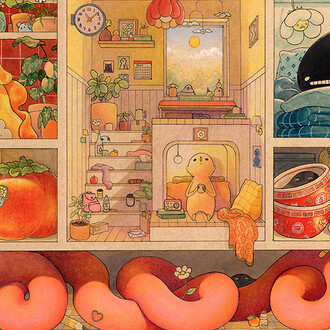
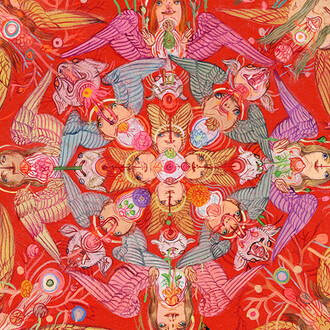
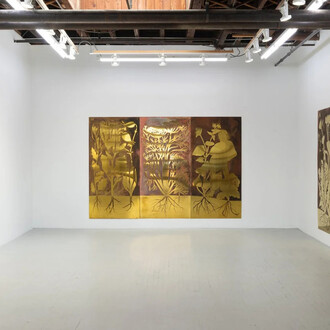
Uprise Art is pleased to present Guarded wilds, an exhibition of new work by Eddie Perrote, Kate Clements, Lucía Rodríguez Pérez, Natalía Nicole Rodríguez, and Padma Rajendran.
Through oil painting, glass, drawing, acrylic, and hand-dyed silk, each artist considers the garden as both subject and metaphor. In this exhibition, the garden operates as an aesthetic and conceptual framework through which personal narratives intersect with broader ideas of beauty, identity, impermanence, and our relationship to the natural world.
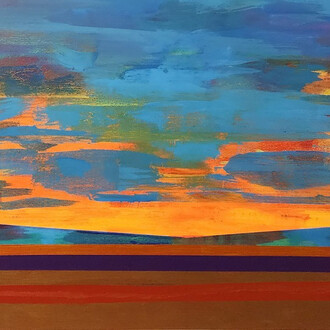
Eddie’s paintings exist in pure abstraction. They are a rejection of all things representational, in favor of abstract expression and raw composition used to capture the identity and essence of place and time. He uses fields of color and alternatingly geometric and expressive shapes to explore memory and connection to place, casting aside discernible imagery to achieve a more sensory expression of the spirit of the moment. This way of working has largely been born out of Eddie’s illustration and design practice. In opposition to creating within the confines of a tightly defined brief, his turn to abstraction has functioned as a garden for unexplored ideas, an opportunity to create with abandon and looseness that emotes rather than illustrates.
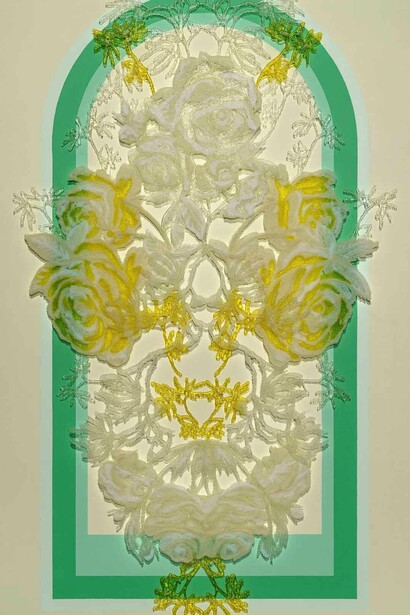
Created with frit, a type of crushed glass that is manipulated on a kiln shelf and fused together at a high temperature, Kate's opulent sculptures reference Victorian-era decor as a means to explore our culture’s obsession with beauty and the role nature has played in ornamentation. As the natural world undergoes endless cycles of transformation and resists permanence, so too do popular ideals of beauty, which are continually shattered and reformed according to the whims of society. Her works reference 19th-century cabbage rose wallpaper, whose coveted brilliant greens and yellows were notoriously achieved with arsenic. By invoking these historical motifs through the seductively confectionary quality of glass, Kate reveals the literal and metaphorical toxins concealed beneath surface beauty, asking what it costs to sustain ideals of perfection and the desire to keep up appearances.
In Guarded wilds, beyond a cultivated landscape, the garden is a space where beauty is constructed and undone, where order gives way to chaos and cycles of growth, decay, and renewal mirror our own lived experience.
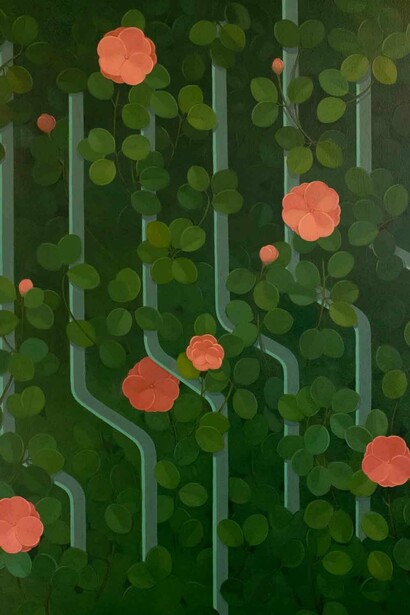
Inspired by botanical forms and architecture, both real and imagined, Lucía’s paintings are immersive, meditative worlds that embrace the liminal. In her paintings, atmospheric color enshrouds scenes of unfurling leaves and buds that snake between fences and balustrades, where organic growth and built structures exist in disquieting tension. Undergirding all of her work is a sense of quietude accompanied by a slight unease. The beauty of these spaces draws us in, yet something elusive lingers just beyond the surface. Rather than positioning this ambiguity as a threat, her works invite viewers to dwell within the uncertainty, to discover that discomfort can become a site of reflection rather than fear. In these suspended landscapes, uneasiness transforms into curiosity, offering space to learn about ourselves, the natural world, and the complexities of being.
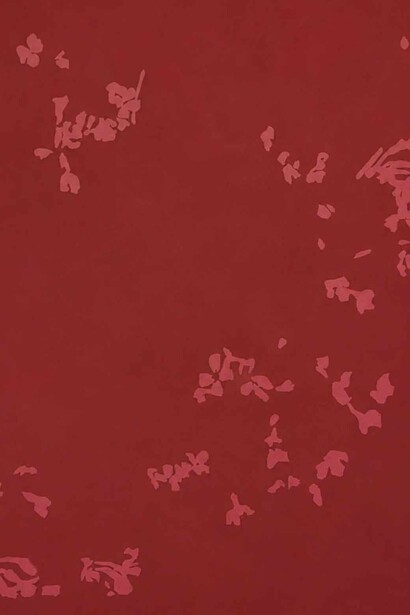
Natalia’s paintings distill the season's fleeting beauty and patterns of cyclical change, inspired by the changing light as winter melts to spring and into summer. The silhouetted flowers that dapple her color-washed canvases are drawn from photographs taken during her travels, memorializing memories into painterly impressions. In Natalia’s paintings, the delicate turn of a petal recedes into the background, dipping in and out of recognition as forms dissolve and fade away and then slowly come back into focus as if bobbing on water or caught in a breeze. Natalia’s paintings contend with impermanence and the emotions that accompany change, where endings and new beginnings can all exist at once.
Created with resist and dye on shaped and sewn silk, Padma's paintings reference the framing and enclosure of walled gardens, exploring themes of cultivation, care, and tending. Her deliberate use of contrasting and sometimes clashing fabrics, marks, and colors creates a frenetic energy bound by the act of demarcating borders through the act of sewing and arrangement. Encoding her work with symbolic adornments, Padma’s work honors personal and generational stories, traditions, and strains, addressing observations and contradictory understanding of home, homecoming, and homeland.
In Guarded wilds, beyond a cultivated landscape, the garden is a space where beauty is constructed and undone, where order gives way to chaos and cycles of growth, decay, and renewal mirror our own lived experience. It is a site of both intention and unpredictability, a place shaped by careful tending yet always subject to forces beyond our control.