English
 Español
 Français
 Deutsch
 Italiano
 Português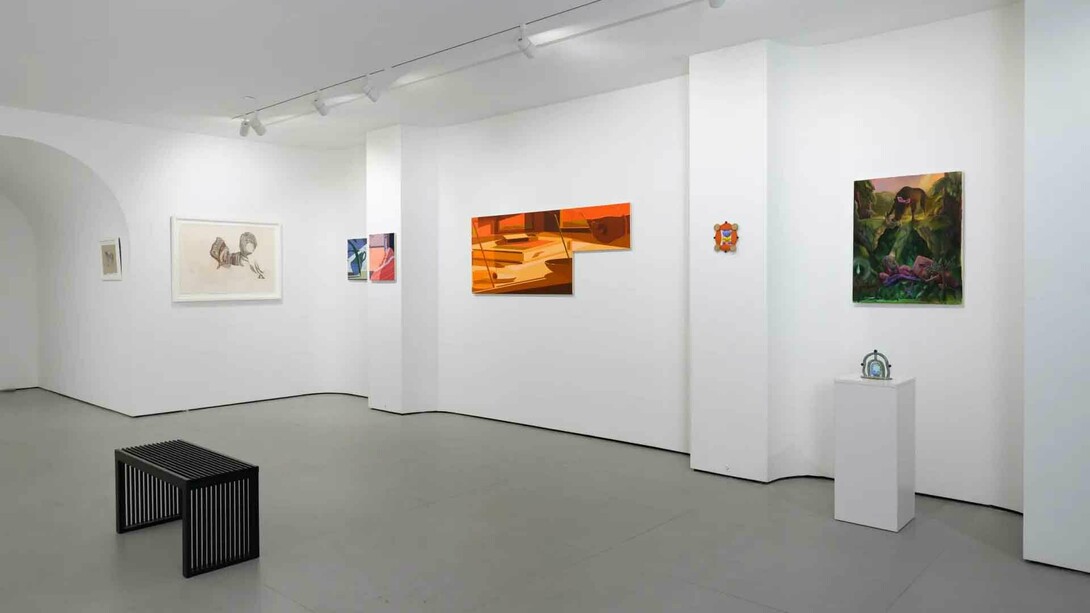
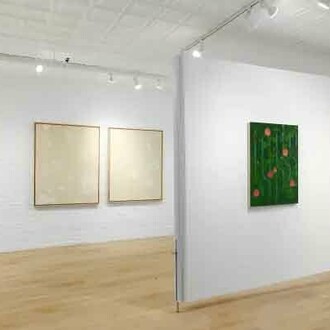
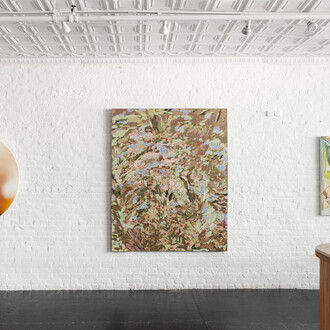
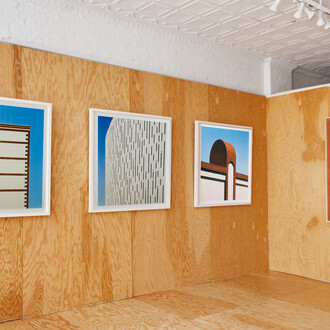
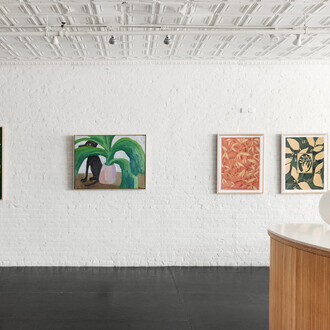
Uprise Art and The Blanc are pleased to present Janua, a four-artist exhibition featuring Adrian Kay Wong, Fay Ku, Jocelyn Tsaih, and Nefertiti Jenkins.
Derived from the Latin word for door or entryway, Janua shares its roots with Janus, the two-faced Roman god of doorways and transitions whose iconic two faces look in opposite directions.
In the context of the exhibition, Janua signifies a point of passage between interior and exterior, where each artist creates a portal into a distinct world, representing moments of transition between reality and imagination, self and other. Drawing on personal histories and lived experiences, the artists construct images that extend beyond autobiography to explore universal, timeless questions of identity.
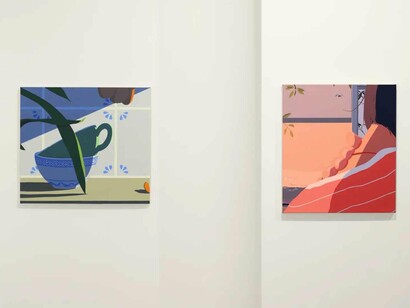
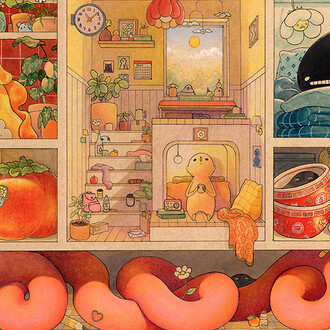
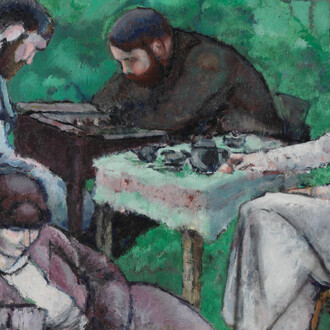
Adrian Kay Wong’s paintings memorialize subtle narratives found within seemingly incidental moments of the everyday. Set in domestic interiors, his paintings abstract space through his incisive use of perspective, light and shadow, balanced with moments of representation that weave together personal memory and cultural identity. Within these extended vignettes, Wong examines the quiet dualities of daily life, navigating intimacy and estrangement, transience and permanence, belonging and isolation.
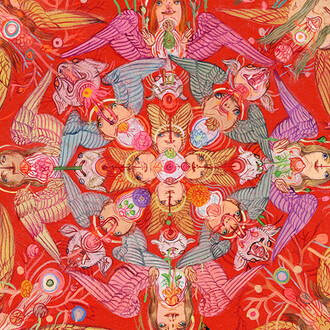
Fay Ku’s folkloric drawings depict otherworldly scenes inspired by myth, cultural history, and her own experience of displacement. As an immigrant navigating between two worlds, her practice reflects the fluidity of identity and how worldviews are encoded within culture. Ku’s work bridges past and present histories, acknowledging the darker facets of human nature through visual narratives that reveal the multiple stories we construct about ourselves.
Like Janus standing at the threshold between past and future, the works in 'Janua' ask us to look in multiple directions at once: inward and outward, backward and forward, toward the self and toward the other.
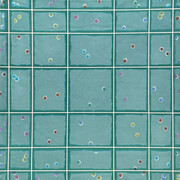
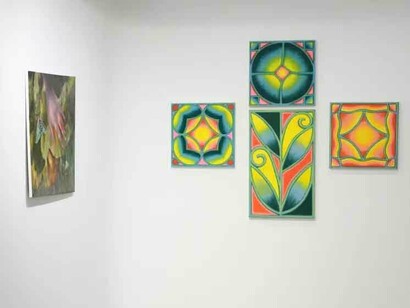
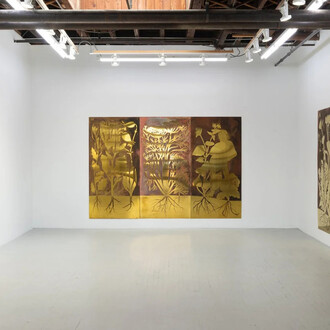
Jocelyn Tsaih’s works are a portal into liminality created through interchangeable components and modular compositions. Her works examine how acts of selection and arrangement shape identity, using motifs such as gateways and fences as recurring framing devices, asking how identity is expressed, perceived, and understood. Having grown up between Taiwan, China, and the United States, Tsaih's practice reflects on what we collect, how we adorn our environments, and how the objects we choose to surround ourselves with become expressions of both individual and collective identity.
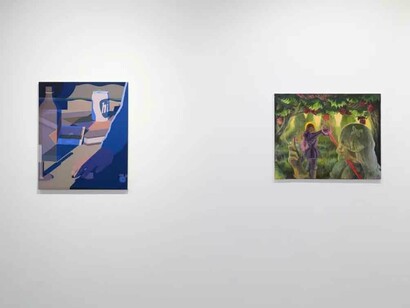
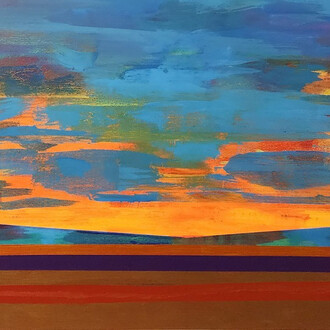
Nefertiti Jenkins’ paintings draw on video game lore and mythic symbolism to investigate fate and control. Her oil paintings depict knights, forests, magical potions, and malevolent confrontations in worlds where personal agency is challenged by unseen forces. Populated by radiant adversaries and sinister choices, amongst bucolic surroundings, her narrative compositions are fantastical allegories for real-life struggles.
Like Janus standing at the threshold between past and future, the works in Janua ask us to look in multiple directions at once: inward and outward, backward and forward, toward the self and toward the other. In crossing these symbolic portals, we are reminded that moments of passage, however routine or profound, are where new ways of seeing ourselves and the world around us begin to emerge.