English
 Español
 Français
 Deutsch
 Italiano
 Português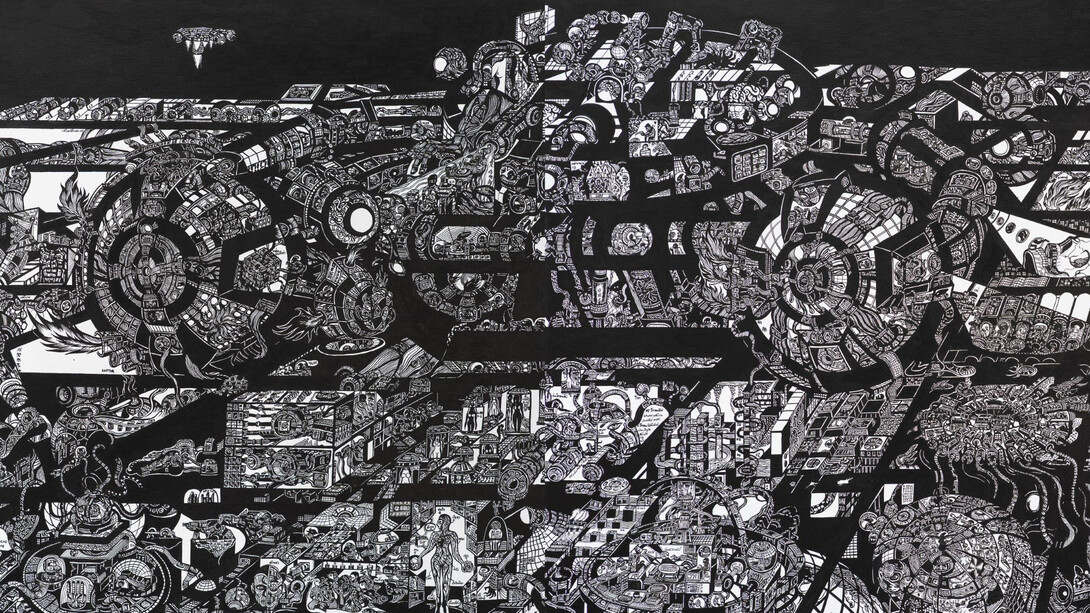
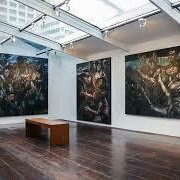
Reason and its shadows marks Atthaphon Suetrongprasert’s return to art-making after an extended hiatus. Black-and-white linework and visual narration remain central to his practice, while his experience with automotive engineering—a field governed by systems, causality, and verifiable relationships—has reshaped the way he structures and directs his imagination. Rules, mechanisms, and reason have consequently become integral to his visual language.
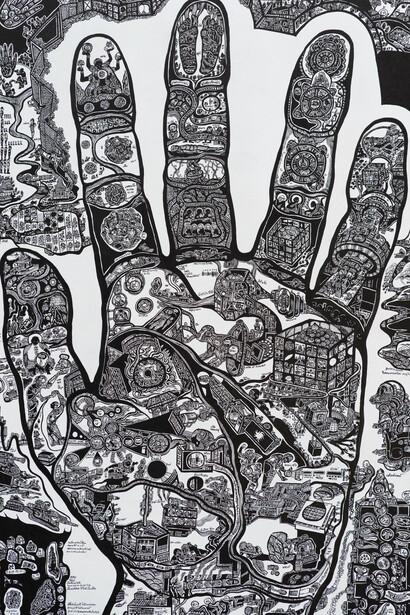
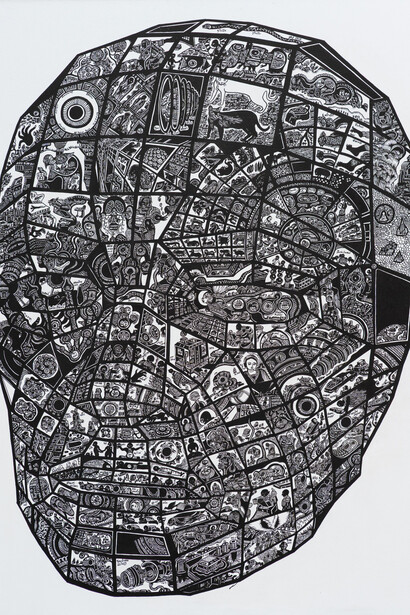
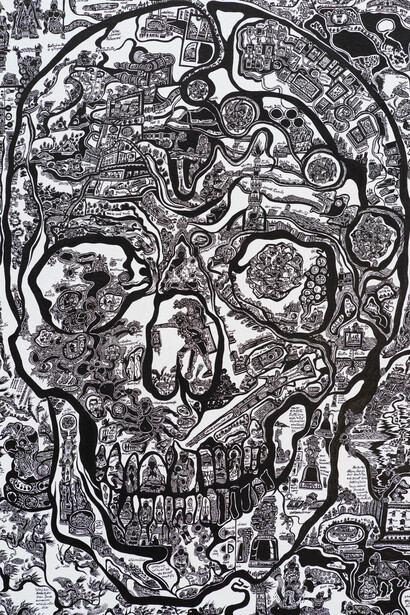
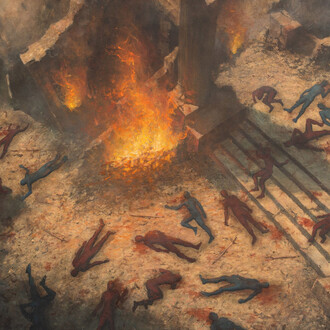
Within carefully defined frames, Atthaphon allows lines to move, proliferate, and accumulate into densely layered detail. Rather than relying on colour, he generates chromatic intensity through rhythm, tonal variation, and the unfolding narratives contained within each image. Events, memories, and imagined forms coexist without resolving into a single, fixed account.
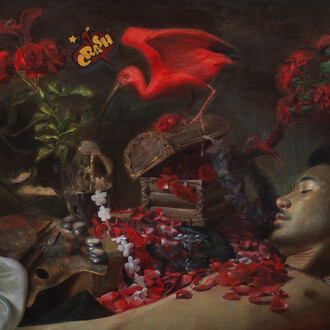
If reason is the system through which things are made coherent, its shadows belong to those aspects of life that resist complete explanation or control. Encounters with people, social realities, conflict, and the ambiguities of lived experience inform the works’ dark atmospheres. Skulls, flames, and signs of danger do not negate beauty or hope; instead, they articulate a vigilant way of seeing and acknowledge the uncertainties that persist beneath visible reality.
Technology—particularly artificial intelligence—appears as both a tool and a site of uncertainty. Atthaphon is drawn to its potential while questioning the power, control, and responsibility held by those who create and deploy it. A work such as The Human Hand redirects this enquiry towards the human agent: the same hand may create, assist, control, or destroy.
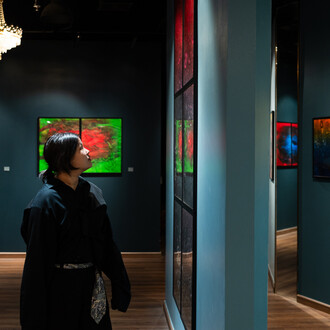
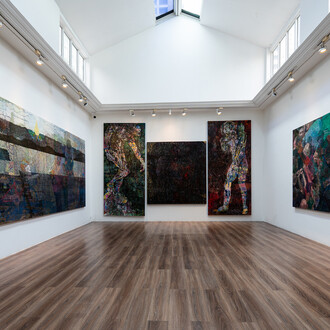
The exhibition brings two modes of thought into contact: a rational world in which every element functions within a system, and an artistic world in which thought, memory, and imagination branch into multiple possibilities. The frame becomes both boundary and generative space—a structure that allows narratives to move freely while reason and its shadows remain present within the image.