English
 Español
 Français
 Deutsch
 Italiano
 Português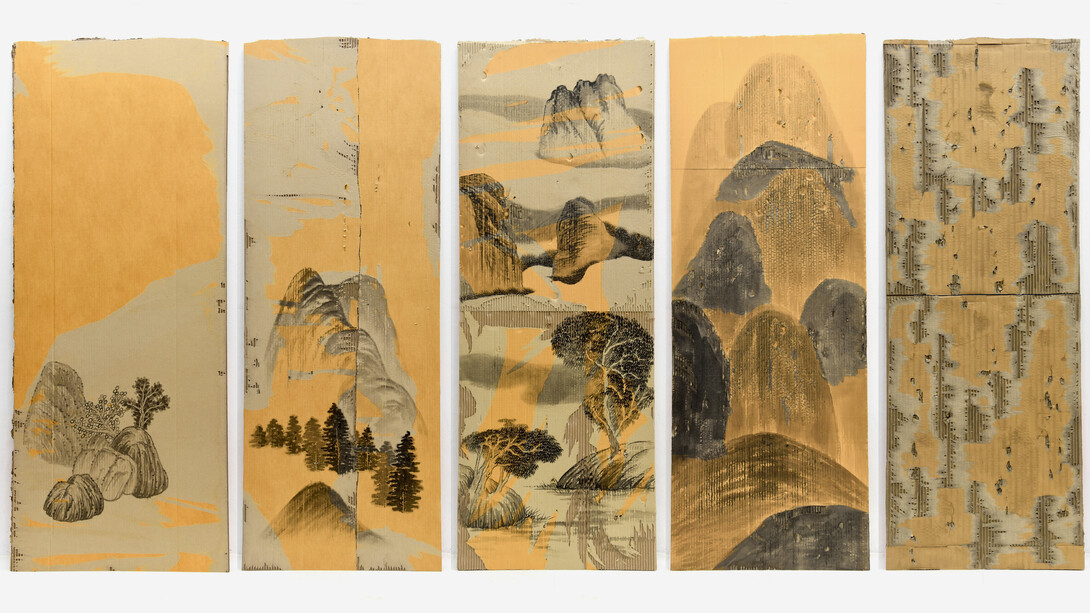
What allows us to remain afloat?
There are moments when support becomes visible. A hand steadies another hand. A wall bears the weight of a roof. More often, however, the structures that sustain us remain unnoticed.
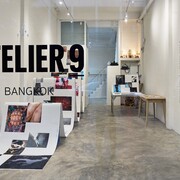
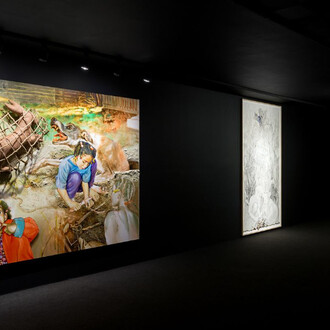
To hold, to be held, a solo exhibition by Jeon Gi-ok, explores the invisible relationships that allow things and people to remain. Presented at Atelier 9 from 24 October - 20 December 2026, the exhibition brings together a body of paintings, sculptural installations, and spatial works that examine ideas of support, interdependence, belonging, movement, and the conditions that sustain existence.
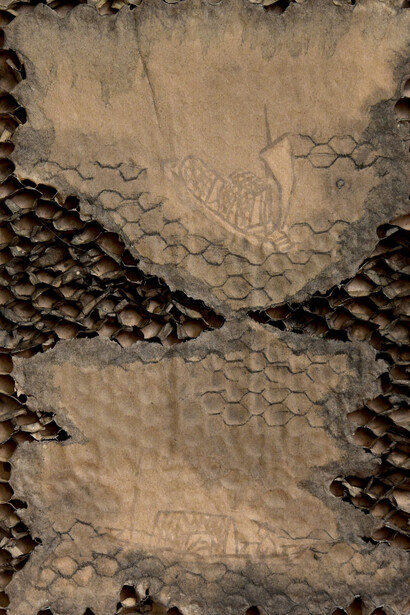
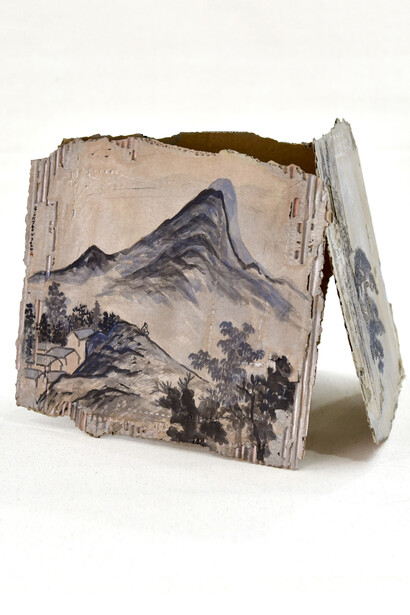
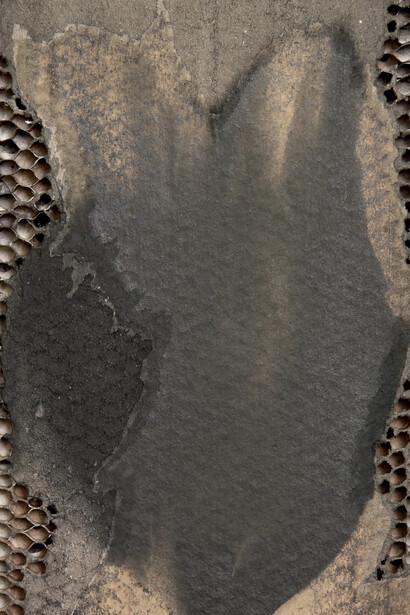
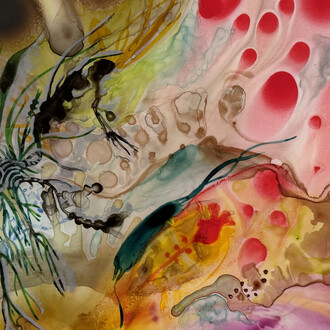
Working primarily with discarded cardboard, a material associated with transport, protection, and temporary use, Gi-ok transforms ordinary and often overlooked surfaces into landscapes, architectural structures, and thousands of hand-folded boats. Once used to carry and protect objects, the cardboard becomes a carrier of another kind, holding traces of time, movement, labor, and memory.
Drawing from the visual language and traditions of East Asian landscape painting, Gi-ok's practice moves beyond the representation of nature. They remain recognizable, yet they are continually disrupted by folds and traces of previous use.
Across the exhibition, landscapes lean upon one another in precarious balance. Painted images dwell within cardboard boxes, partially concealed from view. Circular structures invite visitors to physically enter the landscape, while folding screens unfold painting through movement and time. Elsewhere, thousands of small boats gather into collective formations, accumulating traces of the artist's studio practice. Viewed from a distance, the installation appears as discarded material and only through closer observation do the individual boats begin to emerge. Through repetition and accumulation, the individual becomes collective, and the seemingly insignificant becomes perceptible as a larger structure.
At the heart of To hold, to be held is the idea that to hold is also to be held. Landscapes are held by the structures that contain them; structures are sustained through their relationships with one another; and boats remain afloat through the water that carries them.
The works ultimately invite viewers to look beyond what is immediately visible and consider the networks of care and connection that quietly support everyday life. The exhibition acknowledges interdependence. What allows something to endure may simply be the presence of something else holding it in place—even temporarily.
So, what allows us to remain afloat?