English
 Español
 Français
 Deutsch
 Italiano
 Português
Gallery Common is pleased to present Records, a solo exhibition by Yukari Nishi, on view from November 7 to December 6, 2026. This will be Nishi’s second solo exhibition with the gallery, following Index #7 in 2023.
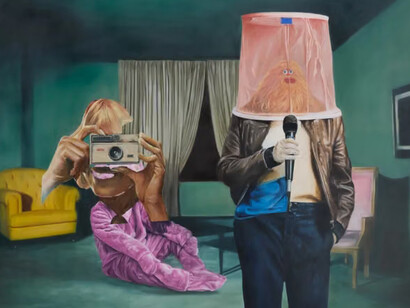
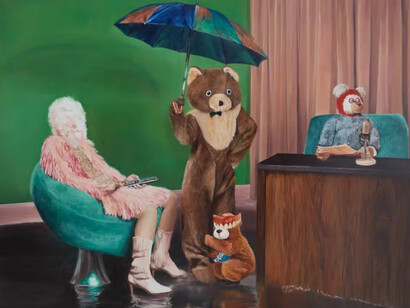
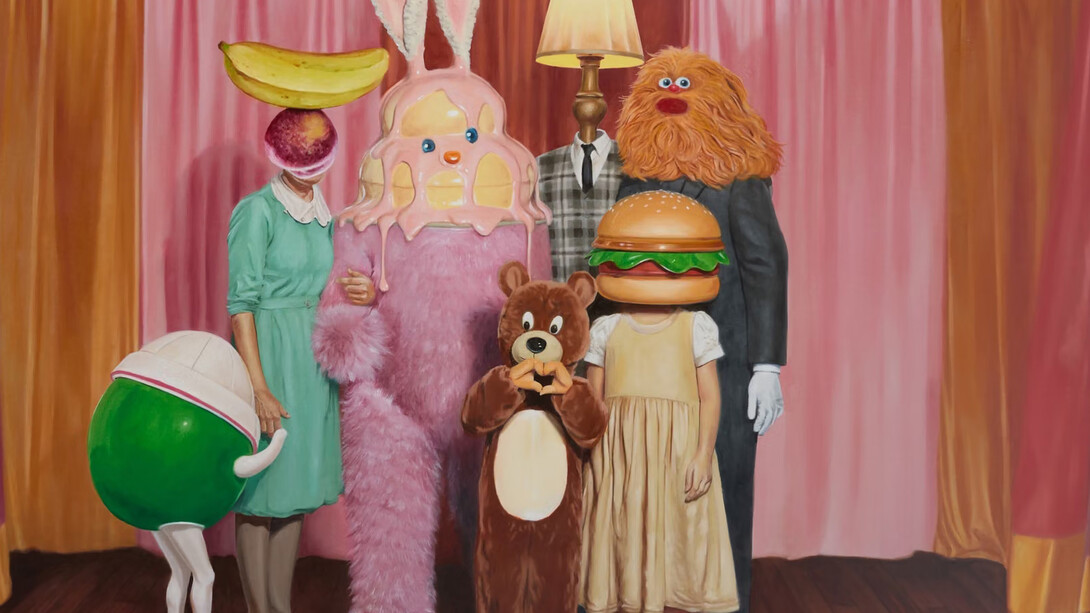
Nishi’s work features a wide range of motifs, from faceless figures and doll-like beings to quietly lingering animals and food. Her paintings hold scenes that feel nostalgic and familiar alongside strange, impossible events, drawing viewers into a curious state somewhere between waking life and dream.
This world takes shape through the layering of images Nishi has encountered over the years, from film and advertising to painting. She has long been fascinated by spaces that are real yet artificially constructed. In film, advertising, and stage sets, where light and depth are deliberately manipulated, a space can feel real while remaining unmistakably “made.” The surrealistic world in her work, then, may stem not from an attempt to depict dreams themselves, but from these “constructed fictions.”
The instability that pervades her canvases is deliberate. She says she is strongly drawn to scenes that seem to hold a story yet resist being pinned down, and to tension left unexplained. This sensibility surfaces in her cinematic play of light and shadow and in her enclosed interior spaces. Rather than explaining everything, she leaves “gaps in meaning” that allow each viewer to imagine their own narrative, an approach central to her practice.
The nostalgia in her work cannot be explained by her own lived memories alone. Images of eras she never experienced, seen again and again through movies and ads, take on the intimacy of memory. Nishi describes this feeling as “fictive memory.”
By the time Nishi came of age, Western culture was so thoroughly woven into everyday life in Japan that postwar Westernization was no longer something anyone consciously noticed. While she enjoyed the spirit of an era that prized novelty and eccentricity, she found herself drawn less to the maturing culture of her own time than to that of the 1960s and ’70s, when values had yet to settle and everything still felt unstable and distorted. She is captivated both by the West, presented as a fully realized ideal, and by a Japan still in the process of absorbing it, particularly through the grainy colors of the early days of color film and advertising and the distinctive textures of the visual culture of that period. Her sense of distance from these idealized images, ones that were ultimately out of reach, gives rise to the nostalgia and quiet unease that run through her work.
With more exhibitions outside Japan in recent years, including in New York, South Korea, and Hong Kong, Nishi has begun to look anew at the cultures and images that shaped her. Showing her work in different cultural contexts, she came to realize that Western imagery she had always accepted as natural could read as distinctive to audiences from other backgrounds.
For Nishi, the lines between West and East, or past and present, were never clearly drawn. In an environment where diverse cultures and images intermingled, she absorbed them not through conscious selection but as a natural part of daily life. This sense of disparate things overlapping within her, never settling into one, also shapes her current practice.
Her paintings repeatedly feature relationships that evoke a familial community. The faceless figures and doll-like beings are not portraits of specific individuals but “vessels” onto which viewers can project their own emotions and stories. By leaving faces and expressions unspecified, Nishi avoids steering the narrative or emotion in a single direction, entrusting it instead to the viewer’s imagination. At the same time, the characters are gentle presences who seem to wish to live in harmony, and their relationships offer a calm sense of reassurance.
Humorous motifs such as melting ice cream, slime, and characters with hamburger heads coexist within a single canvas. Meanwhile, her everyday sketches also include motifs that leave a lingering unease, such as flooded floors and protective disaster hoods, hinting at the small discomforts and anxieties of ordinary days. Gentle reassurance alongside flickers of disquiet: these contradictions are part of her, and they surface naturally in the work.
The awkward, patchwork quality that comes from collaging various images is another hallmark of Nishi’s work. Rather than digitally smoothing the edges and textures between images, she deliberately leaves traces of the patchwork, such as jagged edges and fringing, so that the canvas retains a sense of different images pieced together.
Some motifs and scenes may not reveal their meaning at first glance. Yet by paying attention to the objects placed around the figures and the small incongruities left within the picture, the relationships between them gradually come into view.
Nishi’s paintings leave room for each viewer to approach them in their own way. A place that feels nostalgic, yet somehow unknown. Familiar things appear on a single canvas in unexpected combinations. From there, imagination unfolds, and each viewer arrives at a story of their own.