English
 Español
 Français
 Deutsch
 Italiano
 Português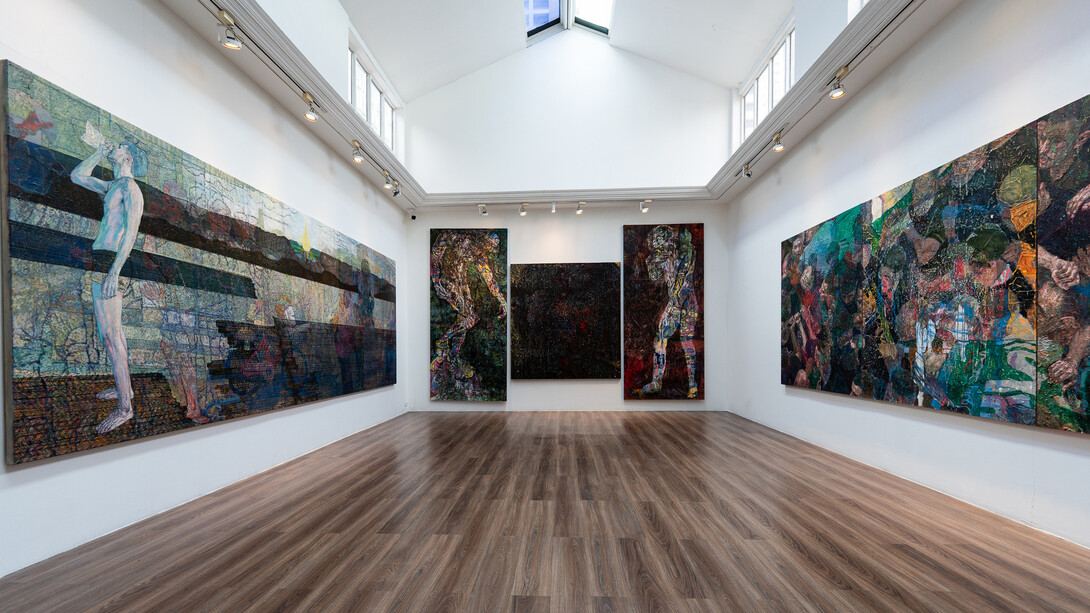
Moral decay can cause management processes to fail, demonstrating how irresponsible power can turn ideas into tools of oppression and transform order into systematic disorder.
Chaos is thus not an accident, but rather a feature of the modern world caused by political and economic discourse, with the goal of controlling people's lives within a system that favors those in power in an unchanging manner.
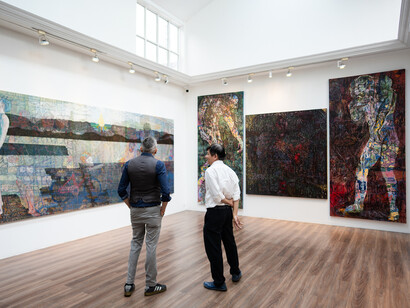
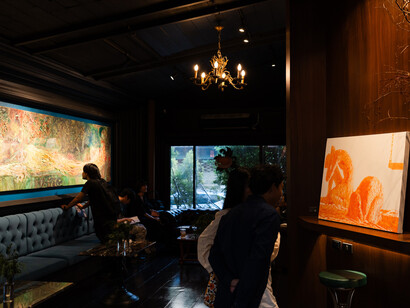
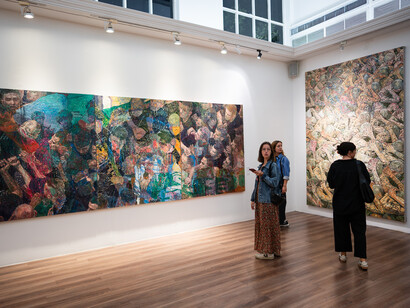
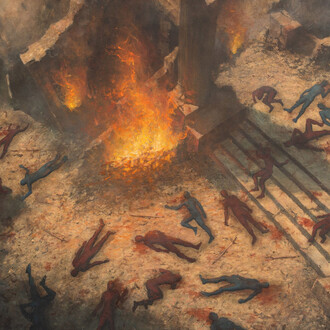
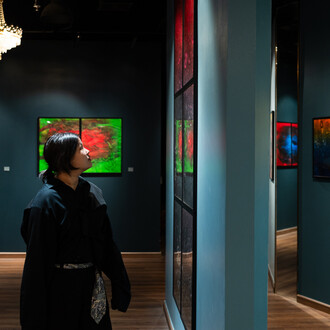
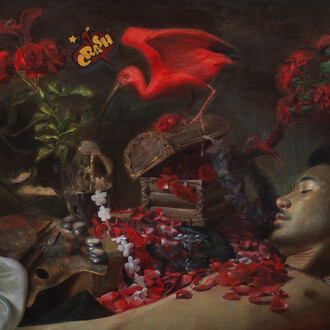
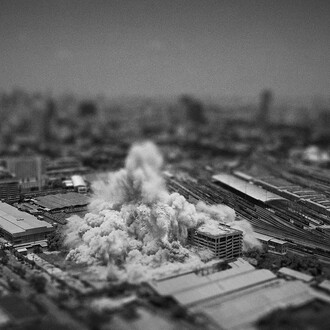
The solo exhibition Chaos poet knight by Arnont Lertpullpol, presents the hypothesis that chaos in society is a "state" caused by system imperfections, rather than a "designed structure" intended to maintain controllers' power. Arnont reinterprets symbols from Auguste Rodin's paintings The Gates of Hell and The Poet, which depict contemplation of sin and judgment in the afterlife, in the context of today, where "the gates of hell" represent a violent, war-torn, and corrupted human world. The Poet is not just a seeker of wisdom in this case, but also a "manipulator" who observes the misery of others with cold eyes. By conveying the perspective of "those affected" through a creative process that reveals the imperfections of both painting and morality, drawing from contemporary photographs and videos, and employing techniques such as scratching, sanding, thick impasto painting, and layering images, the works create surfaces that reflect the weight and density of social structures. Partially deleting and blurring images calls into doubt the truth, which is picked and altered by power. By revealing some layers of paint while concealing others, each piece contains a trace of concealment and revelation that coexists continuously. The pieces also incorporate pictures that imagine and forecast the grave implications of such buildings persisting.
Chaos poet knight is thus a simulated space of a complicated and ambiguous reality. What is hidden may be more significant than what is disclosed, and everything is linked by a pictorial language that stresses signs of motion. This is done to emphasize the importance of the process and give it meaning. It's not just about displaying results or presenting the story of a chaotic world; it's also about highlighting the processes that cause the world to be tumultuous and challenging "contemplation" as a force that influences the universe, especially when that thought lacks a moral grounding. It also challenges viewers to consider what would happen if the contemplator remained mute, the immoral knight became active, and the state neglected its duty in a world that continues to revolve beneath the manipulator's shadow.
![Paul Klee, Komiker (Comedian) [Invention 4] (detail), 1904. Courtesy of San Francisco Museum of Modern Art](/attachments/04df4ade6b4e470f095f311cf9fe61061207f309/store/fill/330/330/9c191f0baf62001530291521d7da91c9dc6cfcfa380da17510698c809d2c/Paul-Klee-Komiker-Comedian-Invention-4-detail-1904-Courtesy-of-San-Francisco-Museum-of-Modern.jpg)