English
 Español
 Français
 Deutsch
 Italiano
 Português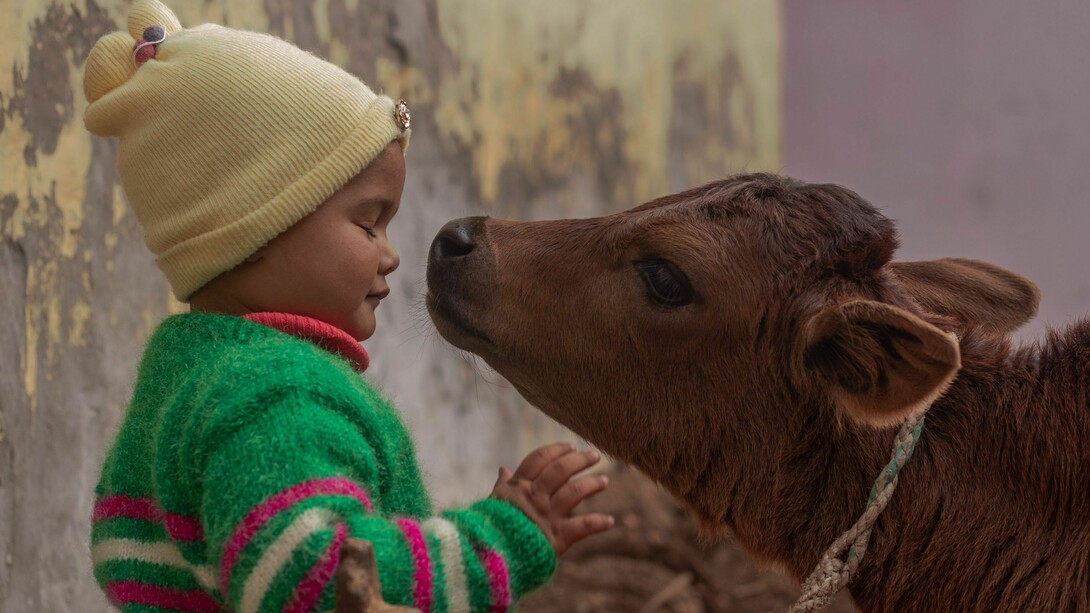
I love my family, I love people, I love New York City, I love our planet, I love our Universe, I love life.
This is where it all begins, with the love we feel and the love we have for everything, which is another way of saying of life itself.
So why do we complicate things so much? Why do we go to war and break the Golden Rule of doing unto others as we would have them do unto us? None of it makes sense; it is the very opposite of what we all most deeply want unless there is another agenda. We’ve explored this in other articles and will again, because while love makes the world go round, there’s a counter-spin perpetuated by a human sickness called greed, which has the world spin in the opposite direction.
When we’re in a state of love and gratitude, the world ‘goes round’ very smoothly in a vibrant flow. Nature gives us the beauty of flowers, birds, mountains, trees, animals, oceans and people. Studies have shown that when we’re in Nature, our sense of well-being flourishes, which is yet another way of saying “we’re in love with life.” The same hormones and neuro-chemicals that are released and bathing our blood, tissue and nervous system as when we’re in love.
In beholding beauty in every way it manifests and expresses itself, the way love does, one organically feels a sense of joy, a humbling respect and awe for the grandeur, power and magnificence of Nature.
This in turn generates a sense of coherence, well-being, good cheer and goodwill all at the same moment. It’s one grand gestalt, a deep, subjective sense of Oneness and connectedness with all and everything.
Call it the deep, abiding appreciation of Nature or love of the Divine, by being alive, we get to experience a beautifully awake world that sees the good in one and all, even in a world of intense tumult and turmoil. Shambhala Training, which is a secularized version of Tibetan Buddhist practice designed by Chogyam Trungpa, Rinpoche, refers to the idea of Buddha Nature as our fundamental “basic goodness”. This suggests that we humans, despite our shadow, are basically good. The entire Universe, too, in all dimensions, by definition, is also “good”.
If ultimately we create our own reality, shouldn’t we embrace the idea that it is our nature to live by gratitude and love? If you were to pick a form of heaven, wouldn’t it look and feel like it is flourishing with these uplifting emotions? Yes, I suggest that gratitude is an emotion!
Another way of putting it is that we can live as though God is real and with us moment by moment. Even still, anger and upset, anxiety and depression definitely arise in all of us. Why? The reasons are many, of course. While we can always plumb the depths of an individual’s pre- and postnatal life to understand the particulars of the formation of their psycho-emotional life, we won’t do this deep dive as I have in other articles. By saying that “love and harmony are the Nature of the Universe” is not Pollyanna-ish, as we recognize that negative emotions arise in every human with regularity.
For our purposes here, I suggest that these other emotions arise, of course, due to our primarily early childhood programming, but are largely triggered when we see how our state of integrity is disintegrating and compromised. They arise when our natural enjoyment of gratitude and love is disrupted by any number of causes. The sooner we get back to their embodiment, the happier we are.
According to both Jewish1 and Buddhist2 traditions, it is our obligation to be happy and share it with others.
We’re not naïve here. There’s a place for all emotions in our humanosphere. God knows that there are so many reasons that many people feel anger, indignation, sadness, disappointment and rage due to injustice, ignorance and violence across the planet. This is largely due to the “compromised and disintegrating integrity” mentioned previously, which leads to hell.
I suggest that fundamentally, gratitude, awe, humility and love are the bedrock of the experience of which, right here on Earth, leads to Heaven.
Even when we’re feeling angry, anxious or depressed, we can be grateful that we are alive to feel these emotions.
Our bedrock biology loves love
One of the major reasons I believe that these ebullient emotions 3 are our fundamental Nature, our bedrock, is because the human body is primed and wired for the release of the hormones and neurotransmitters which both establish and sustain these states of well-being, even ecstasy and bliss.
These feelings are rooted and reflected in our very physiology. Endorphins flow as do serotonin and oxytocin. These hormones and neurotransmitters are designed to uplift and nurture our spirit, to create a deep sense of peace and well-being. After all, oxytocin is known as “the love hormone”4. When it is in active circulation, one feels that they love everybody.
It’s quite a skill to feel anger at someone at the same moment you’re feeling overwhelming love for them. These positive emotions lead to deeper breathing, inner ease and greater release of both negative emotions and nitric oxide all at the same time. This, in turn, dilates our blood vessels, leading to more thorough cellular nourishment, promoting vitality itself. Over time, it also reduces blood pressure.
This is the power of the mind and the emotions over the body and their establishment and sustaining of physical health. In short, being in love with life is one of the keys to a healthy, long life.
Positive feedback loops form a healthy contagion
Feeling is our feedback from our emotional IQ. It informs us. When we are feeling good, this is a sign that we’re on a good path. Mediated by the mind, this dialogue guides us through.
When people are kind to each other5, it evokes the same in others. There becomes a wish to be kind and to extend it outward. Whether it’s a warm smile to a stranger or holding the door open for someone as a simple act of courtesy and kindness. When we do these simple things, everyone feels better. What is this about?
Quantum physics posits that on a meaningful level, we are all one organism, one community of cells and microbes in a larger organism called the Universe, a notion that Dr. Bruce Lipton 6 has been discussing for decades in his books and lectures. When we talk, smile, feel and emote, we are directly and indirectly influencing the whole. In quantum physics, this is called the Butterfly Effect. It may be hard to measure that effect, but it is measurable.
Indeed, this is a way to have a massive influence on the whole of humanity and even on the entire planetary ecosystem. Small but certain, small perhaps, but measurable.
Roger Nelson’s Global Consciousness Project at Princeton University attests to the measurable effect of an emotional field that is generated as a result of some kind of significant event.
It is this circularity and contagion that cellular biologist, Dr. Bruce Lipton, has additionally discussed at length, including in his books The Honeymoon Effect and in his most recent book, Beyond Darwin. We are all connected through the quantum field, which is in and around us, connecting all elements and sentient life.
It’s like we have one enormous, coherent nervous system that affects and influences the world around us for the good.
There are large groups, whole communities of people all over the world who are embodying these ideas that we are all a unified field, the principle found in Wisdom Traditions East and West of Oneness, connected by love. A few of these are the Evolutionary Leaders Circle, Unity Earth originally organized by Ben Bowler, A Better World, and We, the Earth to name but a few of literally thousands."
Yes, we’ve heard it a million times that love makes the world go round, so that it almost sounds trivial, but it couldn’t be less true. When it’s blended with trust and integrity, could it be that we would have a different, kinder, more compassionate, less confused and more coherent, harmonious world?
We’ve perhaps heard it so many times because its simplicity defies the tendency we have to obfuscate, create complexity and confusion because we just refuse to accept simplicity, the essence of the principle of Occam’s Razor, in which the simplest answer is also most often the best.
The physiology of laughing and smiling
At this point in time, it is well known that laughing is incredibly good for the immune system; it dilates blood vessels and releases endorphins. Smiling occurs of course with our mouth but also our eyes. As the eyes are the window to the Soul, a loving smile reveals the depth of our nature, and we all feel this beautiful sensation. This is a big part of the positive feedback loop.
The circularity of love and kindness
Not only do we all love receiving love, but we also love giving it. It is expressed through kindness, caring, compassion, humor, play, affection, caress and sometimes through “making love”, a beautiful phrase indicating meaningful and caring sexual engagement.
Remember that virtually every song, opera, sonnet, film and play revolves, in one way or another, around love. It may be heartbreak or unrequited love, but these are all about love in one form or another. Of course, there are many forms of love7, though; let’s not kid ourselves, romantic love is by far the most cherished!
Though our world is agog in wars, an environment that is insulted and exploited every minute of the day and every kind of violation of peace and the dignity of others is perpetuated daily, our nervous system bounces back to find peace, integrity, friendship, joy and love every single day everywhere in the world.
Music plays by the fountain; people of all backgrounds, all colors, shapes, sizes, cultural identities, just absorbed in the music and dancing, laughing, eating, enjoying.
This goes on even in Gaza, Lebanon, all over Iran, Africa and the Middle East. Children and adults want to play, and virtually nothing stops them. Why? It is our nature to play and to, in effect, celebrate life and being alive.
Elephants spray each other with water for fun, splash about, laugh, nudge each other, and so do virtually every other animal in the Kingdom.
At an early age, I learned that we are wired for joy, love, caring, nurturance and well-being.
Elephants spray each other with water for fun, splash about, laugh, nudge each other, and so do virtually every other animal in the Kingdom.
What gets in the way are reptilian-brain instincts of fear, seeking control and a drive toward insatiable acquisition, commonly known as greed. And even with these, there is a touch of intelligence behind each one as they preserve our survival momentarily.
But that’s the rub: momentarily. Our pre-frontal cortex, our power to reflect and design our way of being, allows us to quickly let go of the instinctive impulse of that reptilian brain and to embrace our consciously evolved humanity in which ubiquitous love prospers as it should.
Notes
1 Zimmerman, B. (n.d.). The Jewish imperative of simcha. Yeshivat Har Etzion.
2 Study Buddhism. (n.d.). Original texts
3 Rabin, M. J. (2023, September 11). How kindness & courtesy can change the world. Meer.
4 Rabin, M. J. (2024, January 11). Is oxytocin the answer? Meer.
5 Rabin, M. J. (2026, January 11). The power of love, not love of power. Meer.
6 Lipton, B. H. (n.d.). Bruce Lipton, Ph.D.
7 Rabin, M. J. (2026, January 11). The power of love, not love of power. Meer.