English
 Español
 Français
 Deutsch
 Italiano
 Português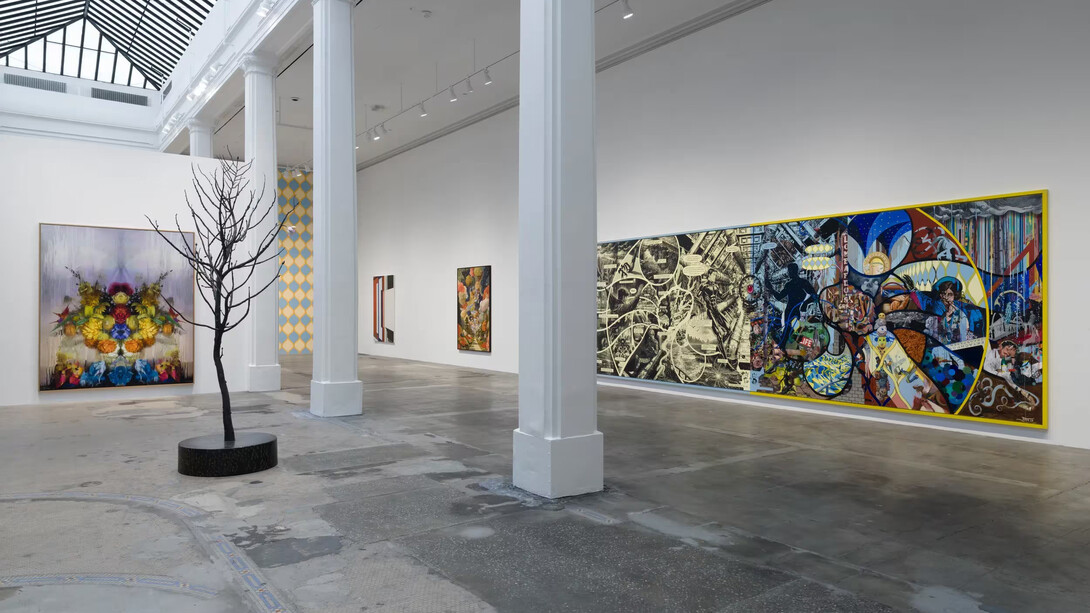
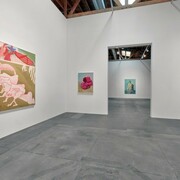
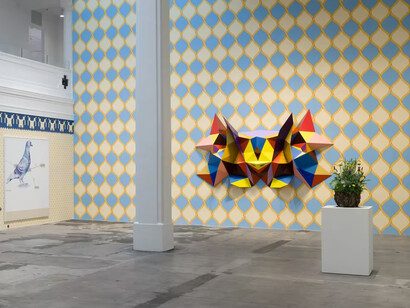
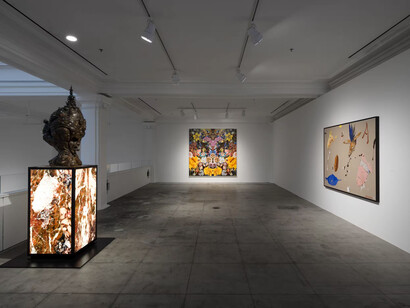
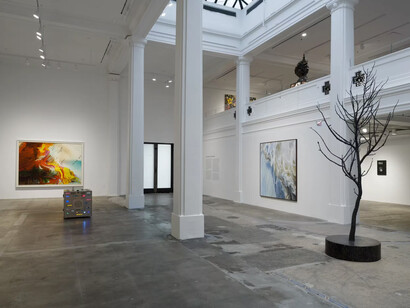
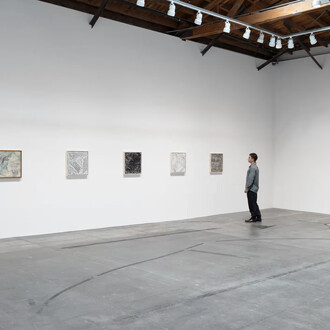
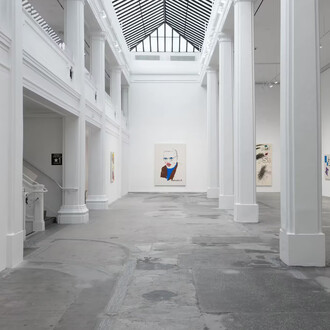
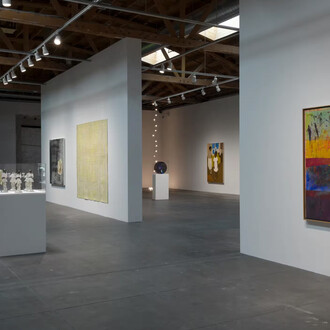
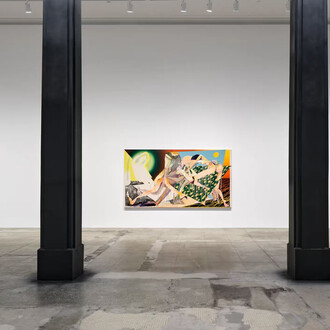
British artist Keith Tyson has long used wide-ranging techniques and materials to explore the permeable boundary between human creativity and the wider forces that give rise to patterns and possibilities across the cosmos. With The generative universe, his first exhibition in Los Angeles since 2009, Tyson brings together paintings, sculptures, drawings and mixed media works spanning the past three decades—and makes a powerful case for the universe as a single generative system: a constantly shifting, causal network in which forms arise, transform and dissolve.
Tyson, who originally trained as an engineer, was an early practitioner of generative art, often approaching artmaking as the act of setting parameters within a set of systems he set in motion. At art school in Brighton in the early 1990s, he began to see paint as a programmable material—one shaped by codes of action, chemical reactions and conceptual constraints. Recognizing that he could both paint and code, he created the Artmachine, a programmable device that generates prompts—specifying size, material, subject matter and other parameters—for him to interpret and physically execute. Each work Tyson makes using an Artmachine prompt therefore produces a distinctly unique outcome, resulting in works of radical stylistic diversity.
Hello world (1991) is the earliest work on view in the exhibition and his first Artmachine iteration. Its computer-font greeting and stark white handprint on a black background evoke a primordial gesture: a lone signal in the void linking humanity across millennia. Tyson’s Artmachine anticipated today’s conversations about artificial intelligence by treating creativity not as esoteric or divine but as an exchange between human intent, algorithmic suggestion and accumulated knowledge. The generative universe features several Artmachine iterations alongside works from Tyson’s other principal series, works that emerge from a combination of natural, chemical and conceptual processes: the Nature Paintings, where chemical reactions and fluid dynamics create their own swirling, unpredictable imagery, and his ongoing Still life series, where Tyson reimagines the genre through shifting scientific, mathematical and art historical frameworks.
Other works in the exhibition expand upon Tyson’s systems-driven vision by employing handmade devices, mathematical fields and electronics informed by principles from physics, biology and computation. Everything (2024), for example, is a sensor driven sculpture that continuously monitors and reacts to its surroundings, embodying Tyson’s commitment to an art practice attuned to the interwoven organic and digital networks that govern our world. Together, the works in The generative universe function less as representations than as manifestations—participants in the same wider field they depict—inviting viewers to consider the mysterious universal processes through which reality, and our consciousness within it, come into being.