English
 Español
 Français
 Deutsch
 Italiano
 Português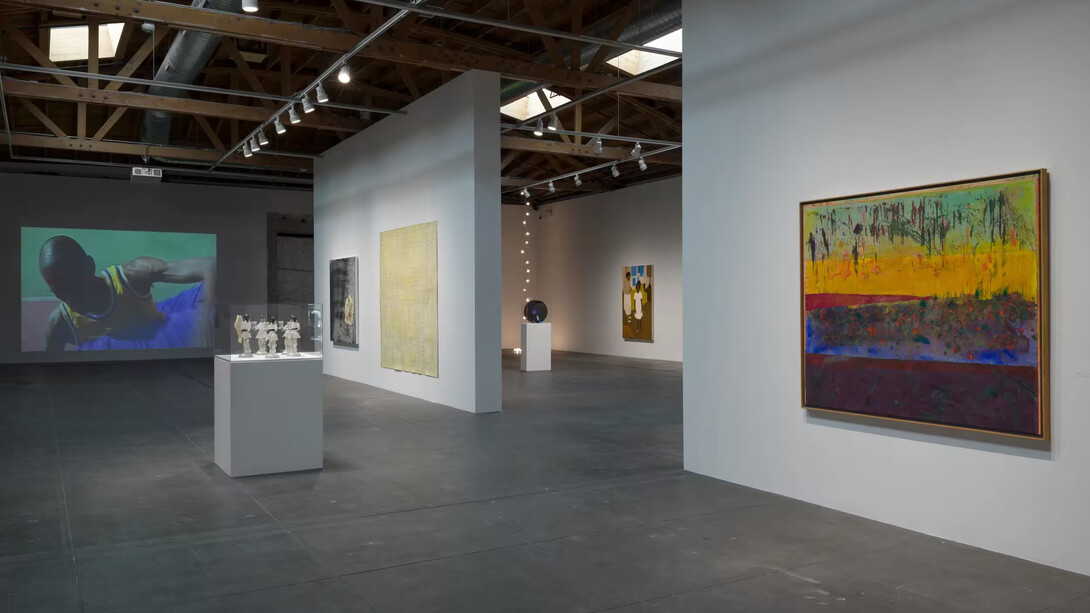
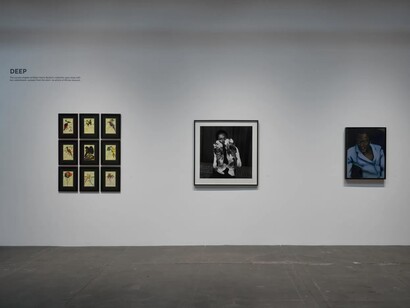
Renowned for her generosity to artists and institutions, Eileen Harris Norton has built an inspiring art collection and forged a philanthropic legacy by focusing upon the work of women artists, as well as artists of color and of her native California. Marking fifty years since Harris Norton made her first acquisition—a print purchased in 1976 directly from Los Angeles artist and African American arts advocate Ruth Waddy—‘Destiny Is a Rose’ will present more than 80 works from Harris Norton’s holdings in an exhibition conceived to celebrate the connoisseurship and commitment to social justice and learning that she embodies.
Taking its title from a 1990 painting by Kerry James Marshall, Destiny is a rose features paintings, sculptures and works on paper by Mark Bradford, Felix Gonzalez-Torres, David Hammons, Glenn Ligon, Marshall, Patrick Martinez, Beatriz Milhazes, Michael Norton, Catherine Opie, Yoshitomo Nara, Senga Nengudi, Lorraine O’Grady, Betye Saar, Amy Sherald, Lorna Simpson, Bob Thompson, Kara Walker and Carrie Mae Weems, among many others. In conjunction with the exhibition, Hauser & Wirth Publishers will release a fully illustrated catalogue with texts by Dr. Kellie Jones and exhibition curator Ingrid Schaffner.
The first to draw comprehensively on Eileen Harris Norton’s collection, this catalogue—and the exhibition that occasions it—builds on the concept that collections can be creative and intellectual constructions in their own right, and that visionary collectors are cultural treasures whose efforts provide beacons for wider cultural advocacy. Destiny is a rose follows past gallery projects dedicated to such collectors, including major exhibitions devoted to the Helga and Walther Lauffs (2008), Onnasch (2014) and Sylvio Perlstein (2018) collections.
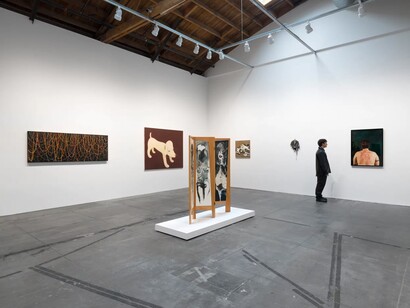
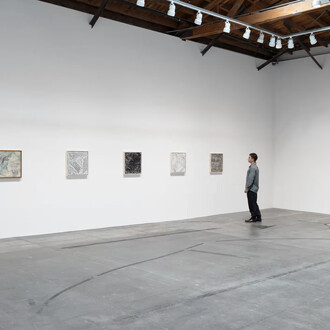
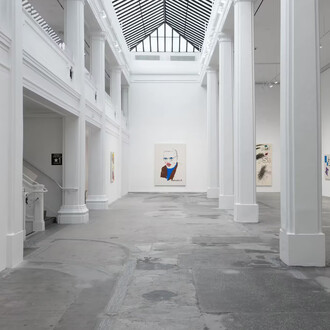
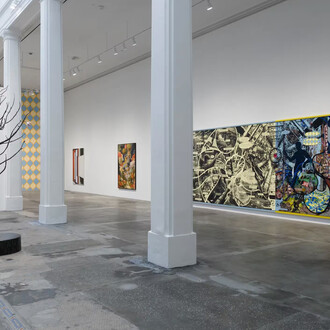
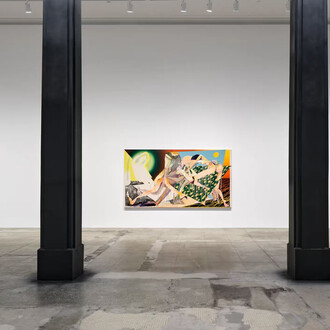
Destiny is a rose unfolds across the gallery’s spaces through a series of chapters that together tell the story of Harris Norton’s collecting. A devoted gardener in her personal life, she brings the same spirit of cultivation to her relationships with artists and ideas. Her approach as a collector is defined by care and constancy—nurturing practices over time, supporting growth and fostering creative ecosystems that continue to flourish. In this sense, Harris Norton stands among the great collectors who might be seen as constant gardeners: those who build something both beautiful and enduring, whose vision sustains across generations. The exhibition reveals the living landscape she cultivated—an interconnected field of artists united not by medium or movement, but by her intuitive understanding of their transformative potential.
The first chapter opens with Harris Norton’s love of color and craft, as well as her embrace of the beauty of art in all its complexity, including its engagement with issues of race and gender. Presiding over this selection is Lorraine O’Grady’s ‘Mlle Bourgeoise Noire’—the performance persona the artist adopted in 1980 to address the subjects of her artistic and intellectual critique—embodied here by the avatar’s original debutante gown (made of 180 pairs of white gloves), whip and beaded crown.
Successive chapters of the show trace Harris Norton’s evolution as a collector chronologically, and, by extension, mirror key developments in contemporary art over the past several decades. The story begins in the 1980s and early 1990s, when, as a self-described neophyte living in Venice, California, Harris Norton began frequenting neighborhood studios and galleries, looking and learning with characteristic curiosity. From this formative period came foundational acquisitions from Los Angeles–based artists, including Alison Saar’s monumental assemblage sculpture Bye bye blackbird (1992), its wings feathered with the soles of worn shoes, and Charles Ray’s enigmatic 1973 photograph of himself suspended in a tree.
The next chapter follows Harris Norton into the 1990s and 2000s, as her outlook expanded alongside that of an increasingly global art world. With the encouragement of a growing circle of artists and curators, her collection took on a transnational dimension, incorporating canonical works by Mona Hatoum, Isaac Julien, Byron Kim, Yinka Shonibare and others. Engaging themes of gender, identity, postcolonial histories and multiculturalism, these works reveal the depth and reach of a collector attuned to the evolving cultural landscape of her time.
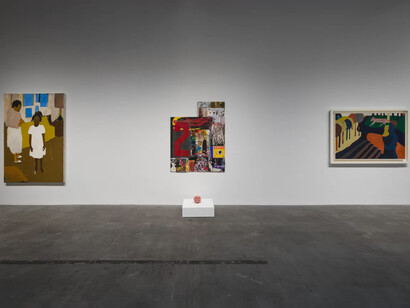
The exhibition’s final chapter centers on Harris Norton’s enduring commitment to artists of African descent—a defining principle of her vision from the outset. Here, seminal works by David Hammons confront and complicate notions of Blackness, while the abstractions of Frank Bowling and Jack Whitten embed questions of race and representation within layered, luminous surfaces. Powerful breakthroughs in figuration by Noah Davis, Lynette Yiadom-Boakye and others underscore the vitality and range of her collecting voice. Among these works, a radiant abstraction by Alma Thomas—herself an avid gardener—serves as a fitting crescendo. In her canvas, concentric fields of color pulse with rhythm and joy, evoking both the natural cycles that inspired her and the living heart of a collection that continues to grow in its influence.