English
 Español
 Français
 Deutsch
 Italiano
 Português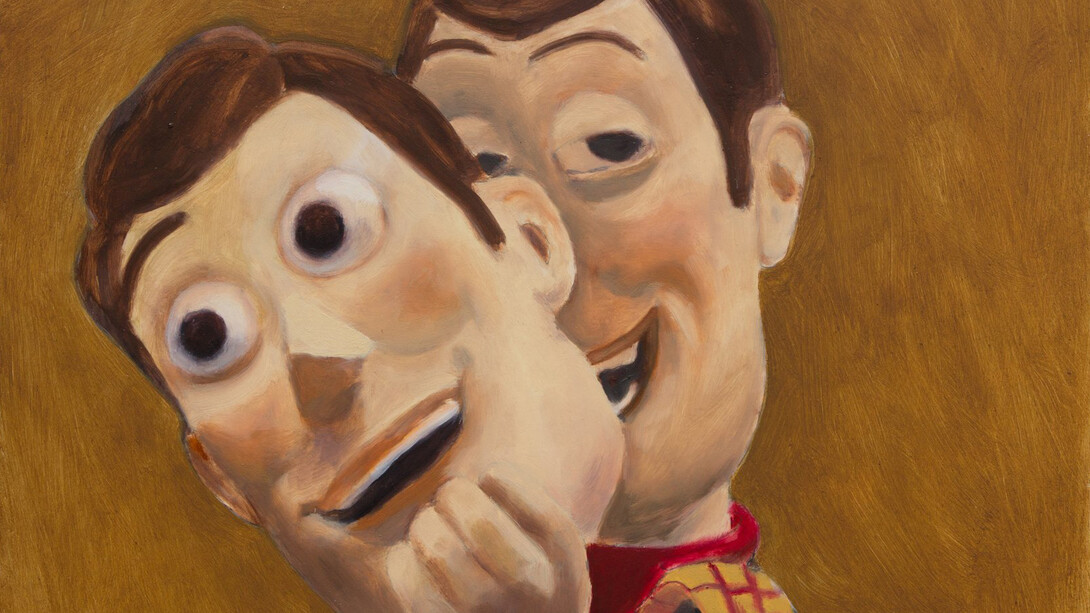
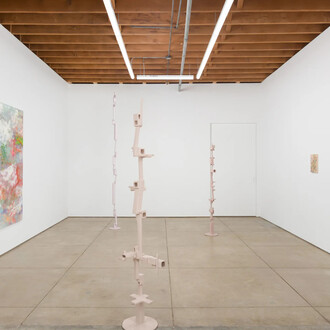
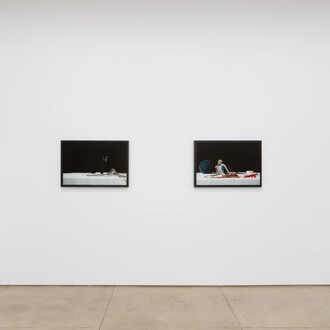
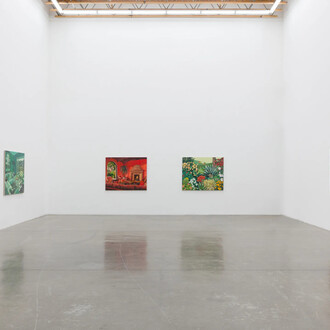
Ochi is pleased to present Word is the fish are biting like crazy, an exhibition of new work by Los Angeles-based artist Adam Beris. The exhibition marks Beris’s third solo show with Ochi. Word is the fish are biting like crazy will be on view at Ochi, located at 605 N. Western Avenue in Los Angeles, CA, from October 17 through November 14.
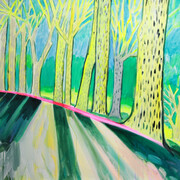
Asked in a recent interview whether his work engaged with an American art tradition, the conceptual artist Rudolf Stingel said no and quickly moved on to a discussion of landscapes. The question, however, stayed with Adam Beris, prompting a year-long reckoning with what such a tradition might look like today. Reprising inherited imagery, from Impressionist paintings to digital media, he examines the role pictures played in shaping the country’s contemporary culture.
Adverts for Las Vegas call girls, coloring book pages, tire commercials, Christian self-help guides, and exhibition previews are among the sources Beris plumbs for his latest body of work. Collaged across the larger canvases, the amalgamations replicate the seemingly inexhaustible bombardment of visual information. The incongruity, say, between a portrait of JFK and a woodblock print of an old cathedral recalls the continuous scroll of a social media feed, where footage of a violent conflict abroad might be sandwiched between a live recording of a megachurch’s Sunday sermon and a snap of your aunt’s ballpark wiener, mustard dripping down her wrist.
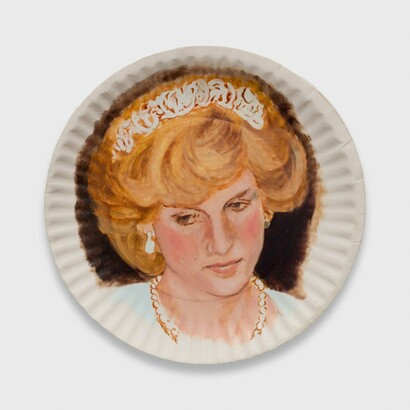
In the series of small-scale canvases, individual images are extracted from that succession. A lambent pat of melting butter and a Marlboro cowboy silhouetted against the setting sun acquire a material existence beyond the screen. What might otherwise have slid past, consumed but not comprehended, becomes available for sustained attention, assimilation. Each composition, Beris explains, is nevertheless completed in a sitting or two, a practice he describes as “spaghetti-ing them out.” The speed of their circulation is inscribed in the speed of his hand.
Elsewhere, a cluster of pistachios appears from one angle like a stock photograph, and from another like a painting, its brushy marks cohering into solid forms before disintegrating again. The uncanny effect calls attention to the possibility of deception, and the newly minted challenges of discerning the human from the automated.
The rotund mahogany and copper-red resin kielbasas produce a similar optical confusion. Their wrinkled casings and puckered ends emphasize the processing that goes into processed meat. Seen alongside the repository of internet images, the slick surfaces also suggest something of the media we’re fed, how the appeal of the carefully manufactured package is often sufficient to forestall questions about “how the sausage gets made.” The ruby resin steak extends the uneasy play of food and flesh, the artificial and the real. Mounted on a white ceramic plate that doubles as a communion wafer, the imitation meat acquires a sacramental association: a drop of blood, water turned to wine.
In the exhibition’s largest composition, religious instruction turns directly to media consumption. A cartoon character with a bulb-shaped head and a bulbous nose, drawn from the 1967 book How to be a christian without being religious, is shown reading a book above the caption: If you giggle, blush, get up tight or turned on…by what you are reading, seeing, hearing…you are being programmed in the wrong way. To laugh at the warning’s absurdity is to incriminate yourself by the book’s own logic. The nearby kielbasas look like kielbasas look like kielbasas—and nothing else.
“All possible pictures have already been made,” Stingel said in an earlier interview. What remained was to “confront yourself with the picture.” Beris invites us to confront the tradition we’ve long taken part in.
(Text by Tara Anne Dalbow)