English
 Español
 Français
 Deutsch
 Italiano
 Português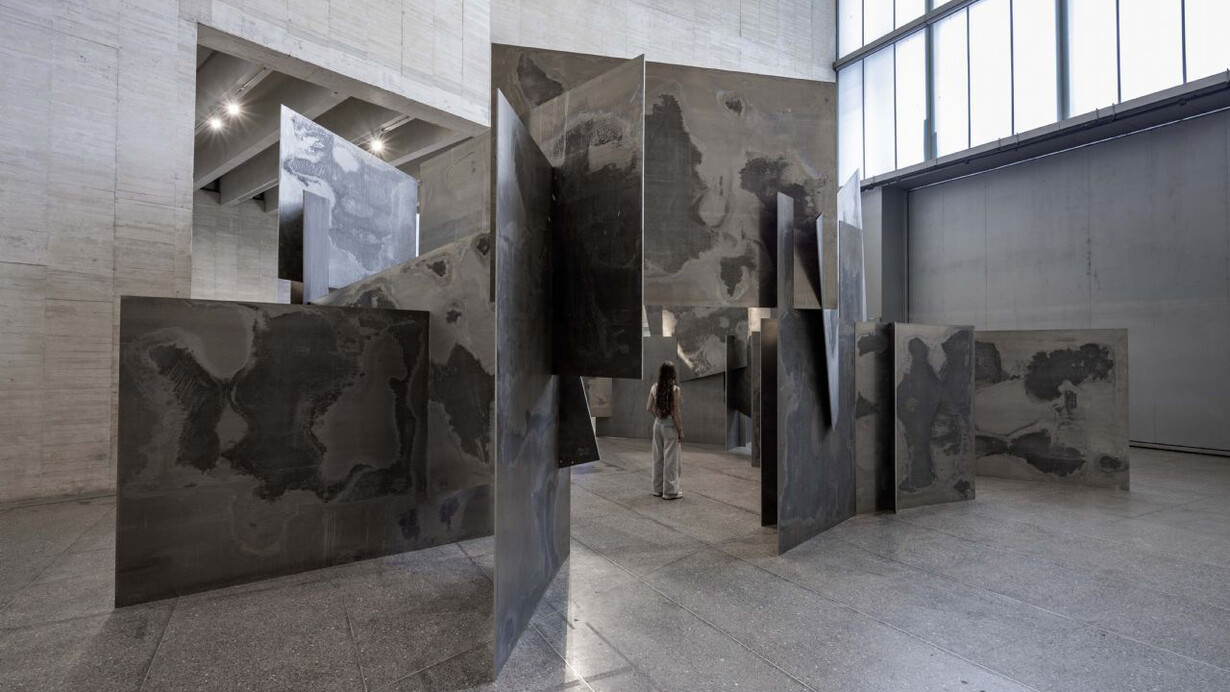
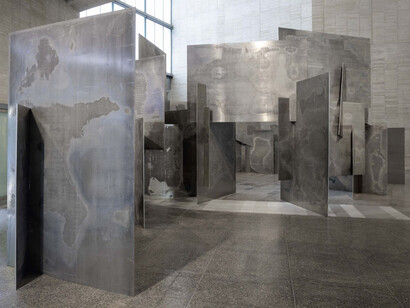
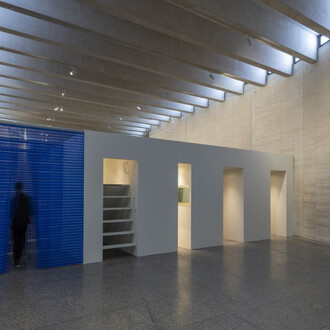
Sculpture pavilion by Ana Laura Aláez (Bilbao, 1964) is one of the most monumental pieces in the MUSAC Collection. In this installation, devised for the artist’s solo show of the same title in 2008 and consisting of thirty-two aluminium sheets which, when assembled, form a single sculptural unit, sculpture and architecture converge in the void used as material. An energy residue is made evident when an echo of life experience manages to penetrate the work, as it does here, where metal causes the imprint to bounce off the already lived. MUSAC, a museum that contains a smaller metaphorical museum, has once again activated this analogy, and in that tension between container and content is where art-making breathes and thrives as an act of resistance and transformation.
It also refers to an exhibition space which, instead of giving shelter to art, violently banishes it to the margins in a process that allows it to question sculpture and its problems since the avant-garde movements of the early twentieth century. Aláez distinguishes between the “art world” and art itself. In a way, she needs to demonstrate that the creative drive is activated in the most unlikely times and places. From the outset, her approach to art has had to do with finding a safe haven in it. When we are secure and shielded from all danger, we confront the complexity of our own nature, with all its contradictions, in a different way. Some of these internal movements translate into the multiple bends and junctions that make up her Sculpture pavilion.
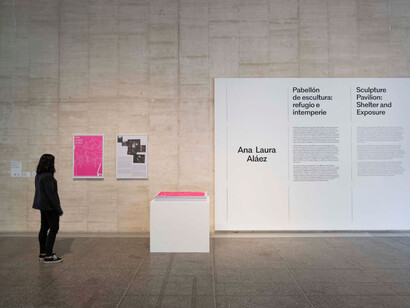
To mark this new presentation of the work, the museum has printed a special artist’s poster—made available to visitors in this same gallery—with a text in which Aláez dedicates the structure to her ancestors, emphasising her own roots as a way of acknowledging the extent to which they have shaped her artistic practice. Her long career originated in the periods she spent as a child in a small corner of León, in which a piece of the story is not yet fully visible. Shelter and exposure is therefore enriched by the memory of those places that one day stopped being safe, and the artist has chosen to highlight this now, in these turbulent times, because the search for a dwelling begins with the struggle for survival we have inherited from our predecessors.
As part of the museum’s ongoing efforts to promote public engagement with the works in its collection, the MUSAC is delighted to once again present this piece by Ana Laura Aláez, adapted to the unique setting of Hall 6 with the assistance of the artist herself.