English
 Español
 Français
 Deutsch
 Italiano
 Português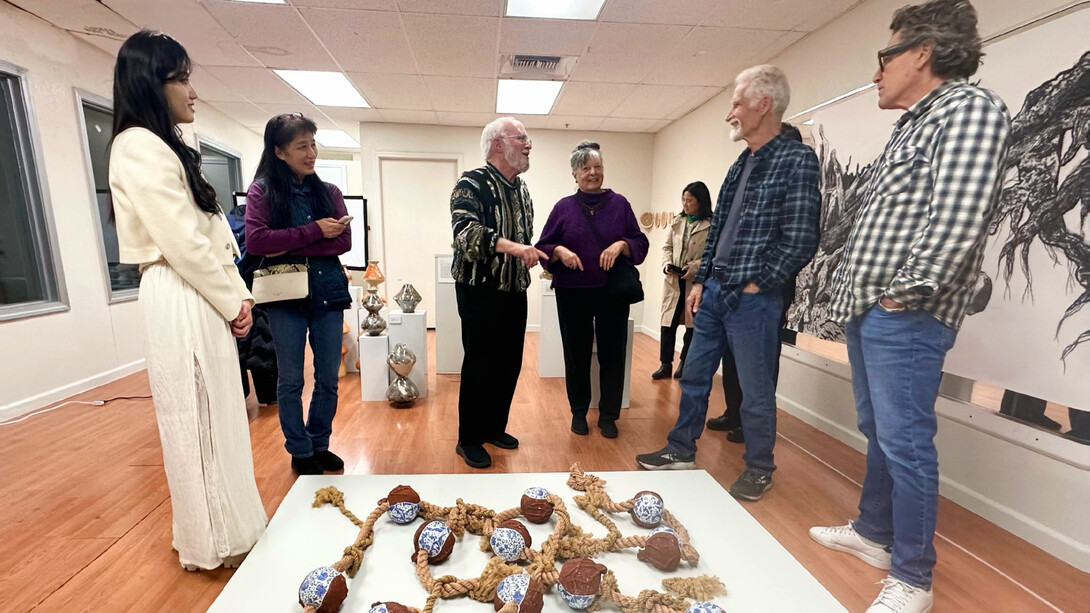
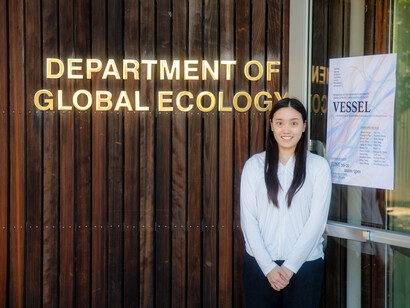
Yilin “Rebecca” Sun is an interdisciplinary artist and curator working primarily across ceramics, installation, and material-based forms. She received her MFA in Ceramics from the Rhode Island School of Design and her BFA in Fine Arts from the School of Visual Arts. In her practice, Sun explores how materials can hold memory, cultural identity, movement, and transformation, as seen in her solo exhibition Entangled roots and floating forms. She is also serving as curator and juror for Vessel: an exhibition on sustainability, community, and our shared future, where she brings together artists working across diverse media to reflect on connection, care, and our shared future. In this interview, Yilin discusses the curatorial vision behind Vessel, her evolving relationship with clay, and how art can become a vessel for stories, community, and dialogue across different places and experiences.
You are currently serving as curator and juror for Vessel: an exhibition on sustainability, community, and our shared future. The exhibition frames art as a carrier of stories, memory, and connection. What drew you to the idea of the “vessel” as a curatorial concept?
The word vessel carries many layers of meaning. It can be a physical container, but it can also be a carrier of stories, memories, knowledge, and experiences that we pass from one another across generations. It can even refer to the bloodlines and relationships that connect people through time.
To me, art functions in much the same way as a vessel. It carries culture, preserves memories, and creates connections between people, places, and different moments in history. Art has always been part of our past, continues to shape our present, and will be carried into our future. That idea of carrying forward—of holding and sharing what matters—is what drew me to Vessel as the curatorial concept for this exhibition.
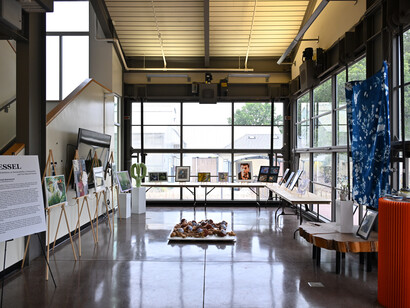
Vessel brings together works across painting, drawing, ceramics, sculpture, installation, photography, fiber, and other media. As a juror, what were you looking for in the selected works?
As a juror, I was drawn to both the diversity of artistic mediums and the different ways artists interpreted our exhibition theme. Rather than looking for a single perspective, I wanted to bring together works that approached sustainability, community, and our shared future from many different angles.
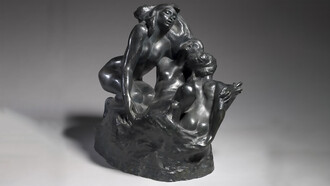
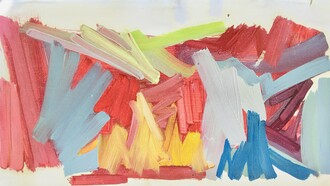
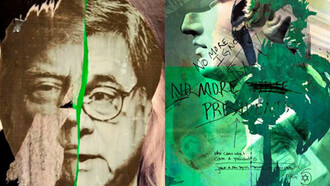
The selected artists explored subjects ranging from Utopian imagination, intimate emotions, and abstraction to war, religion, and the natural world. What I found especially rewarding was seeing how each artist translated their ideas into a unique visual language. Together, these varied approaches create a richer conversation, reminding us that there is no single way to understand or respond to the world we share.
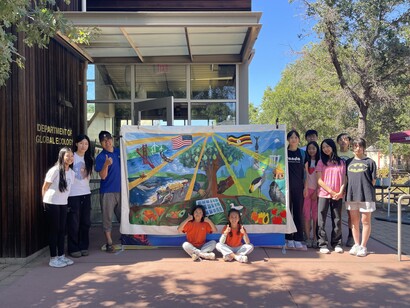
One of the most distinctive parts of Vessel is the diptych mural begun by students in Uganda and completed live by students in Silicon Valley. What does this cross-continental collaboration add to the exhibition?
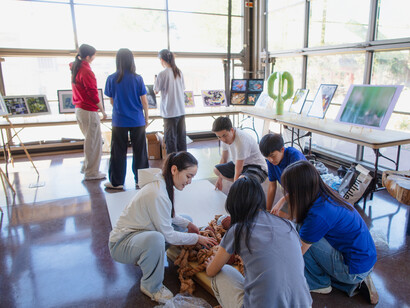
To me, the mural is not simply a collaborative artwork—it is a record of relationships built across different cultures, lived experiences, and geographic distances. Before the two groups were brought together, students in Uganda and Silicon Valley spent months learning from one another and exploring the theme of sustainability through conversations, shared ideas, and artistic exchange. It demonstrates how art can create meaningful dialogue where language or borders might otherwise divide us. The completed diptych mural reflects not only the creativity of the students, but also the understanding and trust that emerged through the process of making it together. In many ways, it embodies the central idea of Vessel: that art can carry stories, connect communities, and open up new possibilities for our shared future.
Your own solo exhibition Entangled roots and floating forms also dealt with memory, connection, and transformation. Do you see a relationship between your curatorial thinking in Vessel and your studio practice as a ceramic artist?
In my ceramic work, I often explore how materials can hold traces of history, personal experiences, and cultural identity. In the quietness of my studio, I look at and practice how different material can merge, interact, and coexist side by side. As a curator, my role shifts from creating those conversations myself to creating a space where many different voices can exist together. Rather than presenting a single perspective, I wanted Vessel to bring together artists whose works could speak to one another in unexpected ways. In that sense, my studio practice and my curatorial thinking are closely connected. Both are rooted in the belief that art is more than an object—it is a vessel that carries stories, connects people, and creates opportunities for dialogue across different experiences.
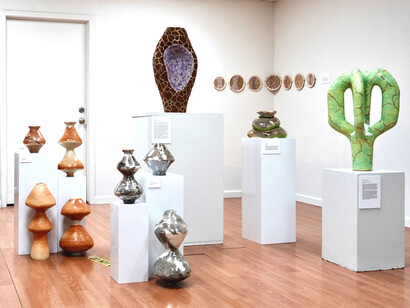
In Entangled roots and floating forms, clay often appears as something alive, wounded, and responsive. How did you develop this relationship with clay?
I think my relationship with clay changed when I stopped thinking of it simply as a material to shape and started treating it as something with its own presence.
When I work with clay, I pay attention to the way it stretches, tears, cracks, and responds to touch. Those moments are often unpredictable, but they never feel accidental. Instead, they feel like the material is revealing something about its own character. I realized that every interaction was leaving a mark—not only from me onto the clay, but from the clay onto me. That changed the way I approached making.
Since then, I've thought of my practice as a conversation rather than a process of control. Instead of asking how I can make clay do what I want, I'm more interested in listening to what the material has to offer and allowing it to become an active participant in the work.
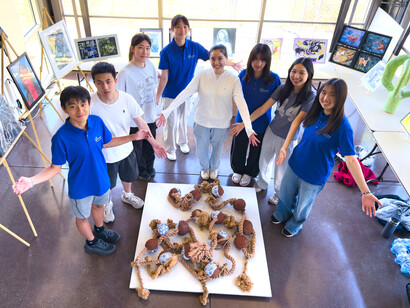
One of your striking installations Buoys line combines blue-and-white ceramic fragments with fiber. The work seems to carry concepts of material contrasts, migration, and belonging. What was the starting point for this piece?
The starting point actually came from the visual reference of ocean buoy lines. I've always been fascinated by how they float on the water, marking invisible boundaries that tell us where we can and cannot go. I began wondering what would happen if those buoys no longer simply marked a border, but became living forms searching for somewhere to belong.
That led me to combine the ceramic buoys with root-like fiber forms. Roots are usually symbols of stability and belonging, but here they are suspended in water, unable to take hold. The earthy surface of the ceramics is created with natural soil, suggesting roots searching for ground where they can finally settle. The Qinghua patterns, meanwhile, speak to cultural origins—not as something fixed, but as something that can travel, fragment, and transform over time.
Together, the piece asks how we carry our cultural roots through movement and change, and how we navigate the space between where we come from and where we are becoming.
Your work has been shown in New York, Rhode Island, Northern California, and Beijing. How has moving between different art contexts affected your understanding of audience?
Showing my work in different cities and cultural contexts has taught me that every audience brings a different perspective. Sometimes viewers discover meanings I never intended, while other times their interpretations reveal aspects of my visual language that I hadn't recognized before. Those conversations have become an important part of my creative process because they allow me to step outside my own perspective and see the work through someone else's eyes.
Rather than changing my ideas to fit different audiences, these experiences have helped me become more intentional about how I communicate them. The more I engage with people and places beyond my studio, the more precise and confident my visual language becomes, while still leaving room for viewers to bring their own experiences into the work.
As both an artist and a curator, what does “care” mean in your practice?
To me, care begins with paying attention. Whether I'm making my own work or curating an exhibition, I try to slow down enough to truly listen—to the material, to the artists I'm working with, and to the people who experience the work.
As an artist, care means respecting that clay has its own presence and allowing it to respond rather than trying to control every outcome. As a curator, it means creating a space where different artists, mediums, and perspectives can exist alongside one another without forcing them into a single narrative. In both roles, I see care as an act of listening before speaking.
I think care is what allows meaningful connections to happen. It asks us to remain open to different interpretations, and to recognize that every material, every artwork, and every person has something worth contributing to the conversation.
Contemporary ceramics is receiving increasing attention in museums, biennials, and interdisciplinary art spaces. Why do you think clay feels so urgent today?
I think clay is one of the few materials that audiences instinctively relate to. It carries a familiar visual and physical language. We recognize the traces of the artist's hands, we associate it with the functional objects we use every day, and we see ourselves reflected in its glazed surfaces. Even before we begin interpreting a ceramic work, we already have a relationship with the material itself.
At the same time, clay holds a unique balance between history and possibility. It is one of humanity's oldest materials, carrying traditions and cultural memories across generations, yet it continues to speak to contemporary questions about identity, migration, and community. That ability to bridge the past and the present makes it feel endlessly relevant.
To me, that's why clay feels so urgent today. It offers a material that is both deeply familiar and constantly evolving—one that invites people into a work through shared experience, while still creating space for new ideas and new ways of seeing.
After Entangled roots and floating forms and Vessel, what questions are you most interested in continuing to develop?
Both Entangled roots and floating forms and Vessel have deepened my interest in the relationships between people, materials, and place. Going forward, I'm becoming increasingly interested in collaboration—not only between people, but between different materials, disciplines, and ways of thinking. Whether I'm working in my studio or developing an exhibition, I want to continue creating spaces where those different voices can meet and influence one another.
For me, every project raises another question rather than reaching a conclusion. I hope my future work continues to explore how art can build connections—not by simplifying our differences, but by giving them room to exist alongside one another.