English
 Español
 Français
 Deutsch
 Italiano
 Português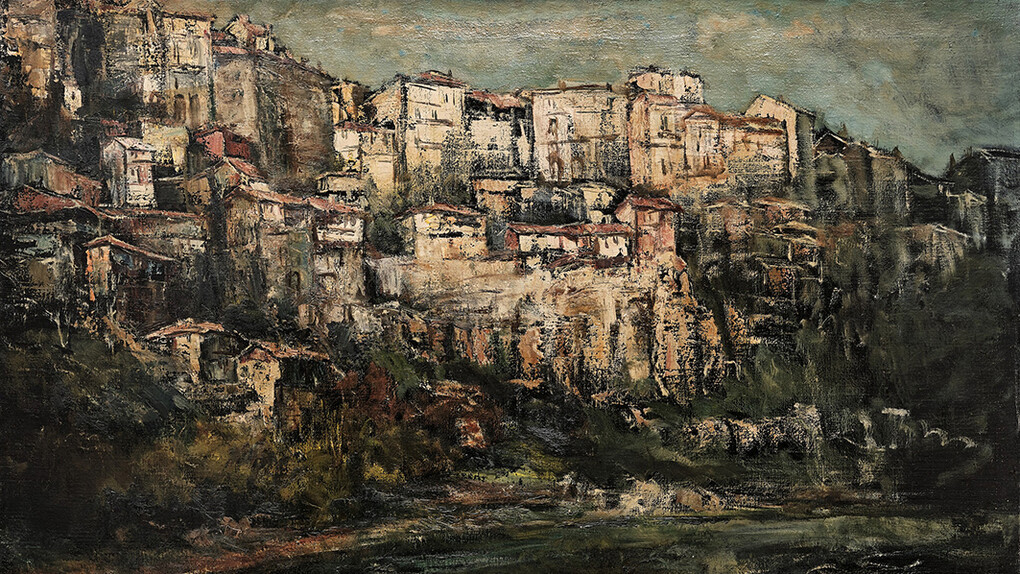
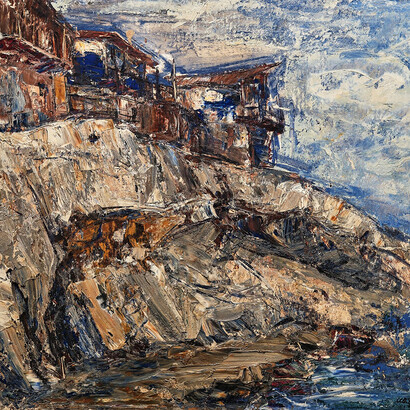
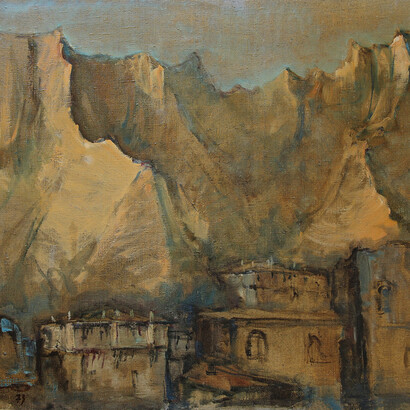
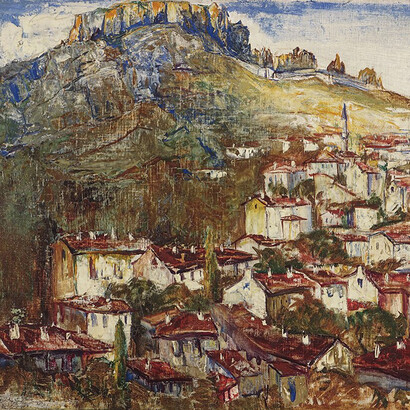
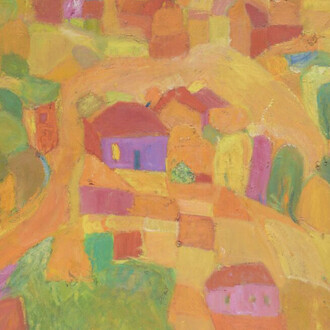
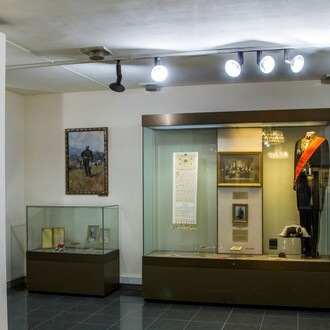
Ivan Hristov (1900–1987), one of the most prominent masters of Bulgarian landscape painting, created hundreds of canvases reflecting the intransient in our native nature and Revivalist architecture, recreating and preserving their rich spiritual impact. He worked in this genre alongside Boris Denev, Nikola Tanev, Sirak Skitnik, Vladimir Rilski, Atanas Staykov, Danail Dechev, Pencho Georgiev, Mario Zhekov, among many others. He was a member of the Native Art Society. The painter’s oeuvre is recognisable by its rich colour palette and expressive brushstrokes. The building elements of his style are in harmony with the material power of nature. Critics responded favourably to his strong individuality and idiosyncratic painting technique. High international recognition for the artist was the Gold Medal at the 1937 Paris International Exhibition, where he showed his painting, Sozopol houses.
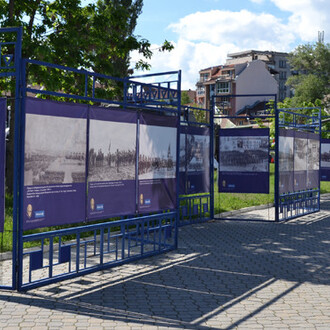
Ivan Hristov’s retrospectives have been held at the Nikola Petrov Art Gallery in Vidin (2015) and the Hristo Tsokev Art Gallery in Gabrovo (2017). The current extensive exposition comprises predominantly unexhibited works owned by his heirs and by admirers of his art, as well as paintings from the collections of the National Gallery and the Plovdiv City Art Gallery.
In 1919, young Hristov enrolled in the Faculty of Law of Sofia University and concurrently attended the Academy of Arts. He chose to study painting under professors Nikola Ganushev, Nikola Marinov and Stefan Ivanov. Between 1926 and 1927, he specialised in Painting in Munich. Towards the end of his stay there, he held his first solo exhibition at the Kunstverein Gallery, where, along with portraits, he also showed several townscapes of Tryavna.
After returning to his homeland, he was appointed as teacher at the Carpentry School in Tryavna, and became one of the initiators of the foundation of a local museum preserving the masterpieces of woodcarving and iconography. He continued his intensive creative work, presenting a series of over 50 solo exhibitions not only in Bulgaria but also abroad, including the Munich Kunsthaus Brakl Gallery (1928), the Camera degli Artisti Gallery in Rome (1930), the Turin Gallery at Palazzo Carignano (1931), the Salita di Santa Caterina Gallery in Genova, La Bottega dell’Arte Gallery in Brescia, the Salon Artistiozi Sztuki I Reproductsia in Warsaw (1934), the Sala Centrala a Atensumi in Bucharest (1935), and the Berlin Gallerie von der Heyde (1938).
His works are owned by the National Gallery, the Sofia City Art Gallery, and all regional galleries; state institutions, embassies and public organisations in Bulgaria; the Museum of Fine Arts in Budapest; the National Museum in Schwerin; the Anastasia Sima Museum in Bucharest; the UN, state institutions of Germany, Russia, Poland, Romania, Cuba and Hungary; the City Hall of Rome; many private collections in Bulgaria and around the world.
Bearer of high state awards and titles in the fine arts, and honorary citizen of Veliko Tarnovo and Tryavna.