English
 Español
 Français
 Deutsch
 Italiano
 Português
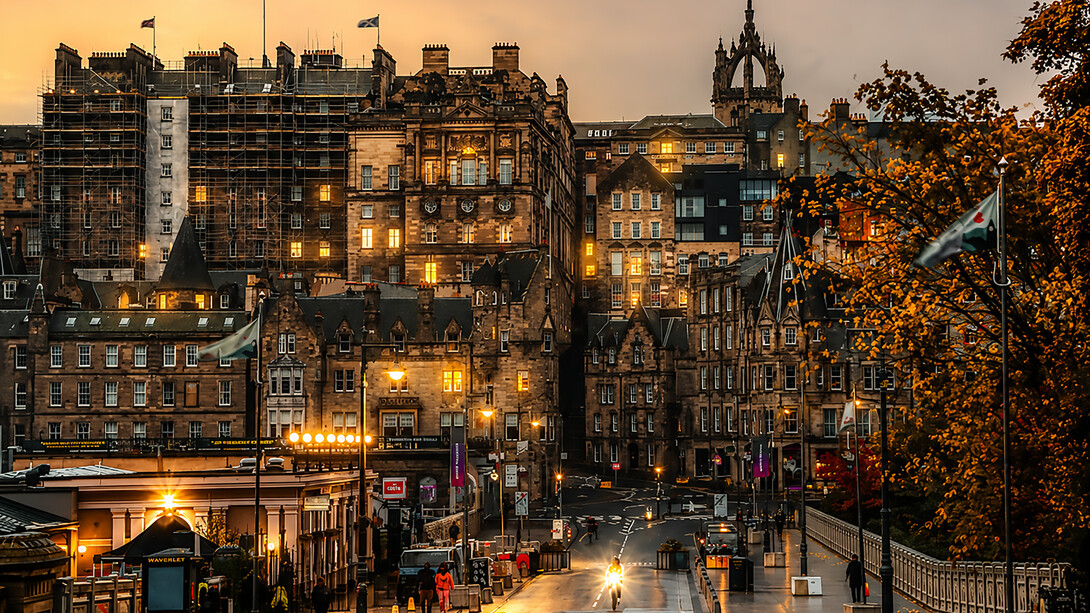
There is no subtle introduction to Edinburgh. The city does not gradually reveal itself; it presents its dramatic, brooding silhouette all at once. Arriving in the Scottish capital, one is immediately confronted by a landscape that feels less like a modern urban centre and more like a theatrical stage set designed by geology itself. Built upon the remnants of extinct volcanoes and deeply scarred by ancient glaciers, Edinburgh’s very foundation dictates its character. It is a city that forces you to look both up at its towering spires and down into its plunging valleys, existing in a constant state of vertical tension.
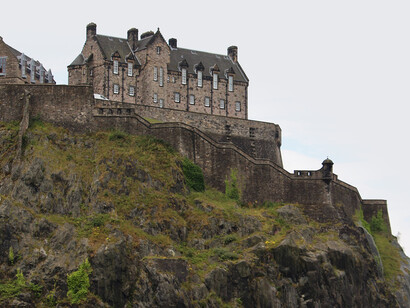
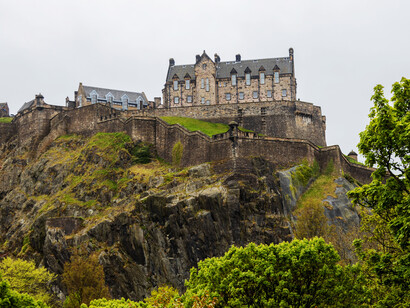
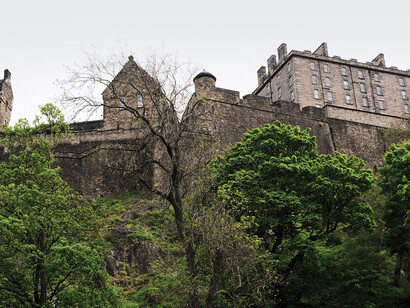
The defining feature of this skyline, and indeed the psychic anchor of the nation, is Edinburgh Castle. Perched atop the formidable basalt plug of Castle Rock, it looms over the city with a stern, impenetrable grace. To stand in Princes Street Gardens and gaze up at the fortress is to understand the raw, defensive necessity that birthed this settlement. The gardens themselves occupy the basin of what was once the Nor Loch. This was a heavily polluted body of water drained in the 19th century to create a verdant valley that physically and metaphorically separates the city's two distinct personalities.
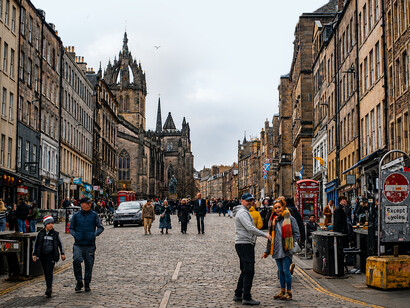
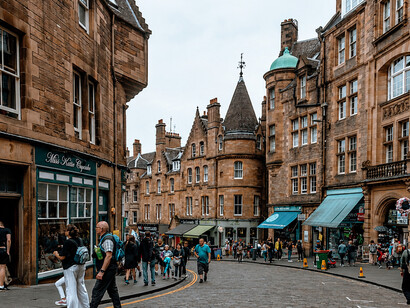
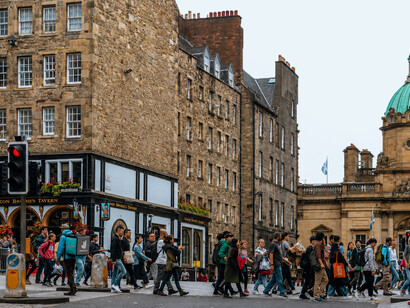
This separation is the key to understanding Edinburgh’s unique urban rhythm. To the south of the gardens lies the Old Town, a dense, mediaeval spine running from the castle down the Royal Mile to the Palace of Holyroodhouse. The architecture here is a chaotic, organic triumph. Confined by the defensive city walls, residents in the 16th and 17th centuries had nowhere to build but up. This resulted in towering, precarious tenements that scrape the sky, some reaching up to fourteen stories high on the steep slopes. The Royal Mile is a labyrinth of narrow, steeply descending alleyways known locally as 'closes'. Wandering down these dark, stone-flagged passages, one can almost hear the echoes of the city’s turbulent history. It is a history marked by political intrigue, religious fervour, and the harsh realities of mediaeval urban life, where aristocrats and labourers lived stacked upon one another in astonishing proximity.
At the foot of the Royal Mile, the narrative of power takes a dramatic, modern turn. Here, opposite the ancient royal residence of Holyroodhouse, sits the Scottish Parliament building. Designed by Catalan architect Enric Miralles, the structure is a masterpiece of contemporary political architecture. It rejects the imposing, authoritarian symmetry of traditional government buildings. Instead, it features organic shapes, sweeping oak panels, and fragmented forms designed to reflect the surrounding landscape of Arthur's Seat. It is a brilliant architectural embodiment of devolved power and modern democratic transparency, standing in stark, fascinating contrast to the monarchical history across the street.
Cross the valley into the New Town, and the atmosphere undergoes a profound paradigm shift. Constructed in the late 18th century as an antidote to the overcrowding and unsanitary conditions of the Old Town, this area is a masterpiece of Georgian town planning. Here, the chaotic mediaeval alleys are replaced by broad, elegant avenues, expansive sweeping crescents, and meticulously manicured private garden squares. It is an architectural manifestation of the Scottish Enlightenment, a period when Edinburgh earned the moniker "The Athens of the North". In these neoclassical salons and coffee houses, luminaries like Adam Smith and David Hume forged the intellectual frameworks of modern economics and philosophy. The New Town breathes with a cool, rational elegance that stands in deliberate, brilliant contrast to the passionate romanticism of the Old Town.
To understand Edinburgh's global reach, one must trace the Water of Leith down to the city's historic port. For centuries, Leith was the logistical artery connecting the Scottish capital to the Baltic, Scandinavia, and the wider world. The architectural remnants of this mercantile past are still visible in the robust, functional warehouses lining the Shore. Today, Leith has undergone a spectacular regeneration. The old maritime infrastructure has been seamlessly integrated into a vibrant culinary and cultural hub, proving that historical commercial spaces can find brilliant new life without losing their gritty, authentic edge.
Beyond the stone and mortar, Edinburgh is fundamentally defined by its relationship with the elements. The weather here is not merely a backdrop; it is an active participant in the city’s mood. A sudden haar, a cold sea fog rolling in from the Firth of Forth, can instantly transform the imposing gothic spire of the Scott Monument into a ghostly apparition, wrapping the city in a cinematic melancholy. Conversely, when the low afternoon sun breaks through the clouds, the sandstone buildings glow with a warm, honeyed light that softens the city's austere edges.
No visit to Edinburgh is complete without an ascent of Arthur’s Seat. This dormant volcano, situated wildly close to the city centre, offers a physical challenge that rewards the traveller with a sweeping, god’s-eye view of the city’s complex geometry. Standing at the rocky summit, with the wind whipping off the sea and the entire capital laid out below, the true scale of Edinburgh’s majesty becomes clear. It is a city that embraces its contradictions: ancient and modern, romantic and rational, fiercely Scottish yet deeply international. It is a destination that does not offer a simple, sunny holiday but rather a profound, atmospheric journey into the very soul of a nation.