English
 Español
 Français
 Deutsch
 Italiano
 Português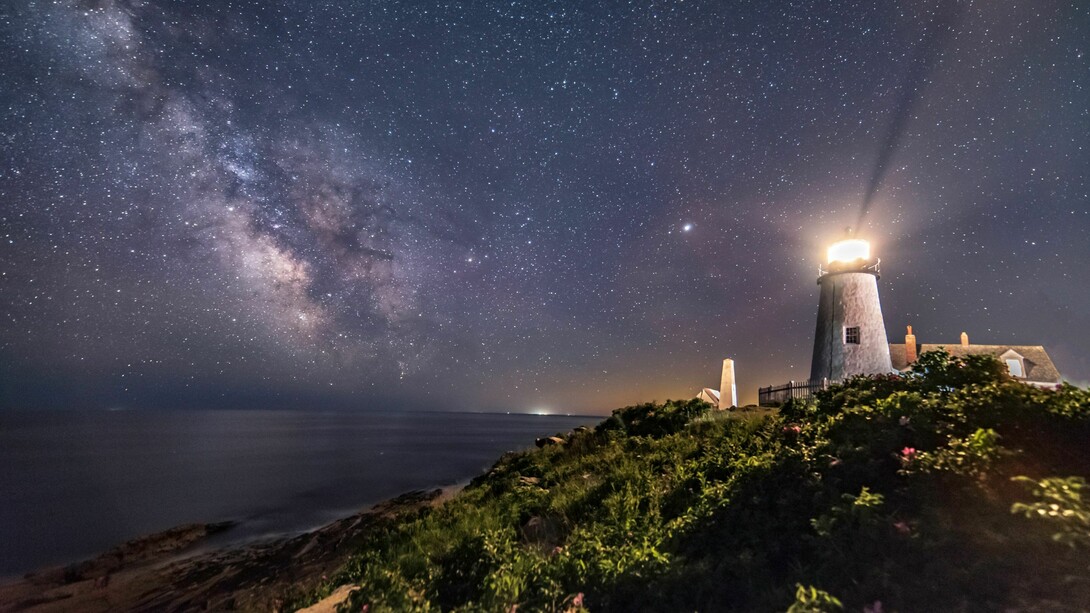
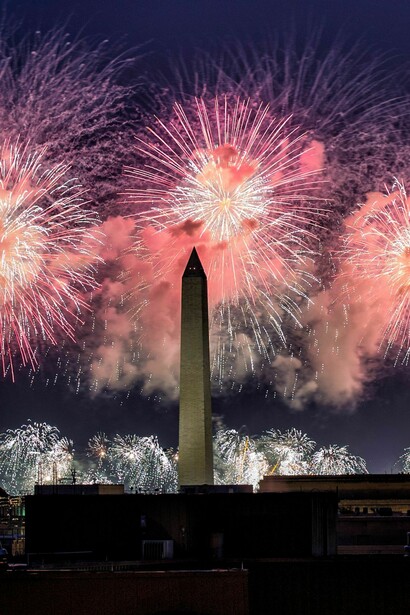
Every Fourth of July, Americans gather to celebrate the nation’s independence with fireworks, parades, patriotic music, and family traditions. While many symbols represent the United States—such as the American flag, the bald eagle, and the Liberty Bell—lighthouses also hold a special place in the nation’s history.
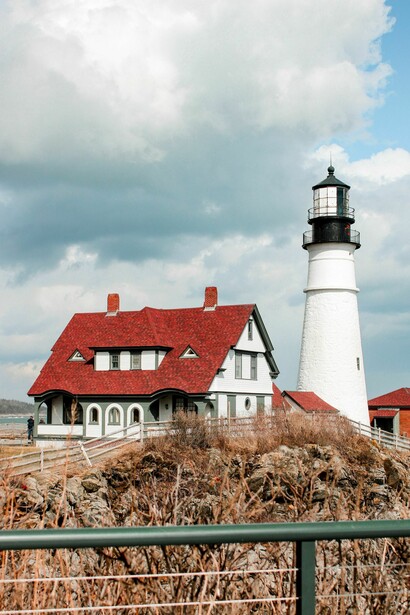
Standing along rugged coastlines, rocky shores, and busy harbors, these towering beacons have protected generations of sailors while symbolizing hope, perseverance, and freedom. Their construction reflects remarkable engineering, craftsmanship, and dedication, making them fitting reminders of the values celebrated on Independence Day.
The making of a lighthouse begins long before the first stone is laid. Engineers and surveyors carefully evaluate the coastline to identify dangerous reefs, sandbars, and narrow channels where ships are most at risk.
They study tides, weather patterns, wave action, and the surrounding terrain to determine the safest and most visible location. Choosing the proper site is essential because a lighthouse must remain visible in all conditions while withstanding years of relentless wind, waves, saltwater, and storms.
Once the location is selected, builders establish a strong foundation. This stage is often the most challenging, especially when construction takes place on isolated islands or rocky outcroppings surrounded by water.
Workers transport heavy stone, brick, iron, timber, and later reinforced concrete by boat, frequently battling rough seas and unpredictable weather. Foundations are anchored deep into solid rock whenever possible to prevent erosion and shifting caused by powerful Ocean currents.
The durability of these foundations has allowed many historic lighthouses to remain standing for more than a century. The lighthouse tower itself is designed to maximize both strength and visibility.
Early American lighthouses were commonly built from locally available stone or brick, materials chosen for their durability and fire resistance. As engineering advanced during the nineteenth and twentieth centuries, cast iron, steel, and reinforced concrete became more common.
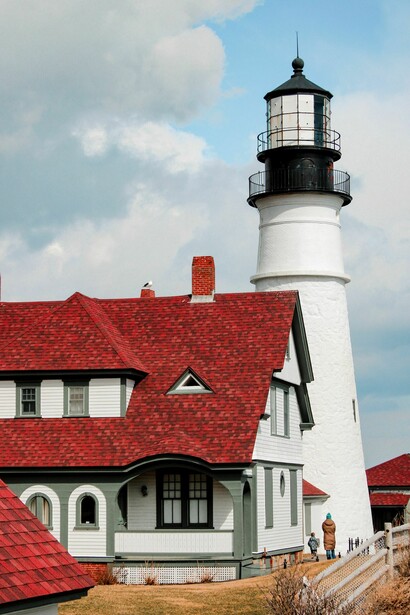
Most towers feature tapered shapes, becoming narrower toward the top. This design distributes weight efficiently while reducing wind resistance, allowing the structure to withstand hurricanes, coastal storms, and freezing temperatures.
Inside the tower, a spiral staircase winds upward to the lantern room. Some staircases include well over 200 steps, requiring lighthouse keepers to climb multiple times each day while carrying fuel, cleaning supplies, or maintenance equipment.
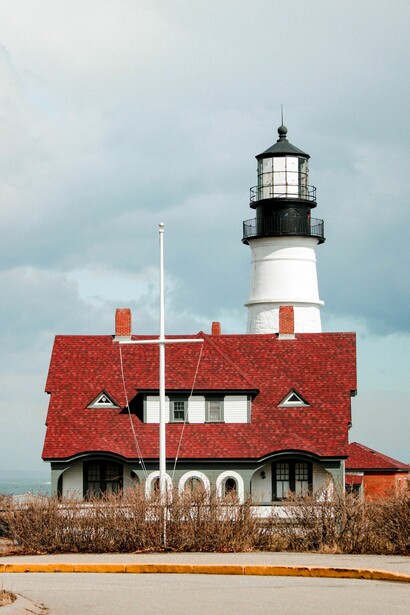
Small living quarters often accompanied the tower, creating homes where keepers and their families lived in relative isolation. Their responsibilities included cleaning the lens, trimming lamp wicks, polishing brass fixtures, monitoring weather conditions, and ensuring the light remained operational every night.
Their dedication saved countless lives by guiding ships safely to shore.
The most remarkable feature of any lighthouse is its lighting system. Early lights consisted of simple wood fires or candles that offered limited visibility.
Over time, whale oil lamps, kerosene lanterns, and eventually electric lighting dramatically improved performance. The greatest advancement came with the invention of the Fresnel lens, an innovative system of precisely crafted glass prisms that concentrated and projected light over extraordinary distances.
This breakthrough allowed mariners to identify individual lighthouses by their unique flashing patterns while significantly increasing the range and brightness of each beacon.
Modern lighthouses have evolved with technology. Many are now automated using electric lights, solar panels, remote monitoring systems, and backup power supplies.
Although automation has reduced the need for full-time lighthouse keepers, preservationists continue to restore and maintain historic structures as museums, educational centers, and cultural landmarks.
These preservation efforts honor the generations of workers, engineers, and keepers whose commitment safeguarded America’s waterways and maritime commerce.
The connection between lighthouses and the Fourth of July runs deeper than geography. Following the signing of the Declaration of Independence in 1776, the young United States faced the enormous task of building a safe and prosperous nation.
Maritime trade quickly became essential to economic growth, national defense, and communication among the states. Recognizing this need, the federal government invested in constructing and maintaining lighthouses along the Atlantic coast, the Gulf Coast, the Great Lakes, and eventually the Pacific shoreline.
These navigational aids became some of the earliest public infrastructure projects undertaken by the new nation.
Lighthouses also symbolize the enduring ideals celebrated on Independence Day. Their lights represent guidance during uncertainty, much as the nation’s founding principles continue to guide future generations.
Their unwavering presence reflects resilience in the face of adversity, standing firm through storms, wars, and changing times. Just as fireworks illuminate the night sky every Fourth of July, lighthouse beacons shine through darkness to offer safety, direction, and reassurance.
Communities across the United States continue to incorporate historic lighthouses into Independence Day celebrations. Coastal towns often host patriotic ceremonies, educational tours, historical reenactments, and evening fireworks near these iconic structures.
Visitors learn about maritime history while reflecting on the sacrifices of those who protected both sailors and the nation’s growing economy. These celebrations highlight how preservation of historic landmarks strengthens appreciation for American heritage.
Beyond their practical purpose, lighthouses inspire artists, photographers, writers, and travelers. Their timeless silhouettes against the Ocean remind us that strength often comes through steadfast service rather than recognition.
They quietly fulfill their mission night after night, asking for little while giving immeasurable value to those who depend upon them. This spirit of selfless dedication mirrors the countless individuals who have contributed to building and protecting the United States throughout its history.
As Americans celebrate the Fourth of July, the image of a lighthouse serves as more than a coastal landmark. It stands as a monument to innovation, craftsmanship, courage, and national progress.
Every carefully laid stone, polished lens, and guiding beam reflects the determination of a nation committed to protecting its people and advancing toward a brighter future. Like the enduring light that reaches across dark waters, the principles of liberty, opportunity, and unity continue to illuminate the American journey, reminding each generation that freedom, like a lighthouse, must be built with care, maintained with dedication, and shared with all who seek its guidance.