English
 Español
 Français
 Deutsch
 Italiano
 Português
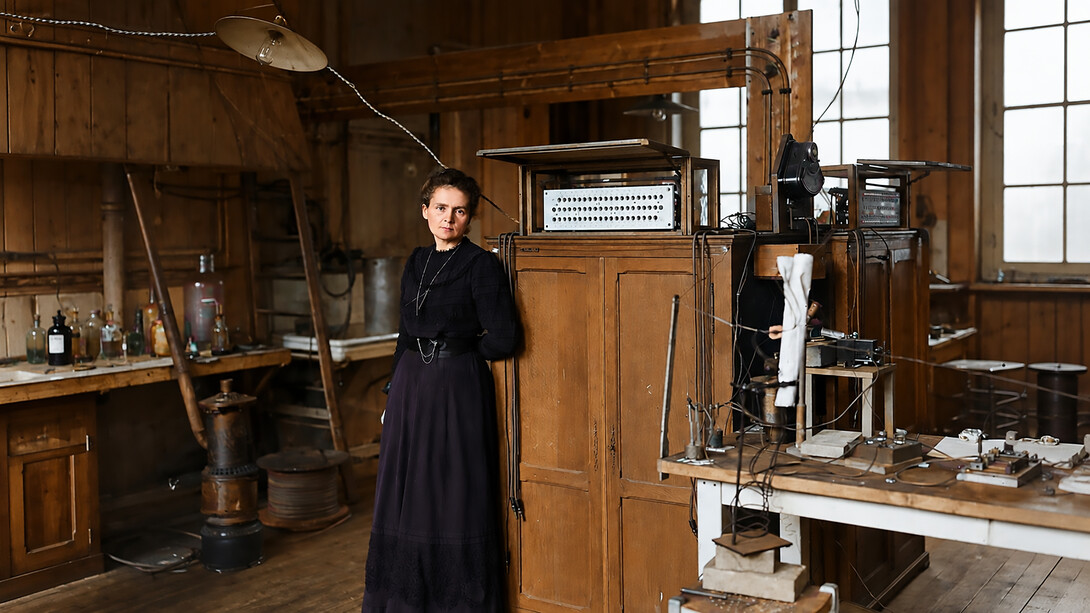
When I was a child and someone asked who my favorite superhero was, I said Batman. Not because of the cape or the gadgets, but because Batman never cared about his name. He didn’t want statues or credit. He wanted to help people and to do what he believed was right, and he was willing to disappear into the dark to do it.
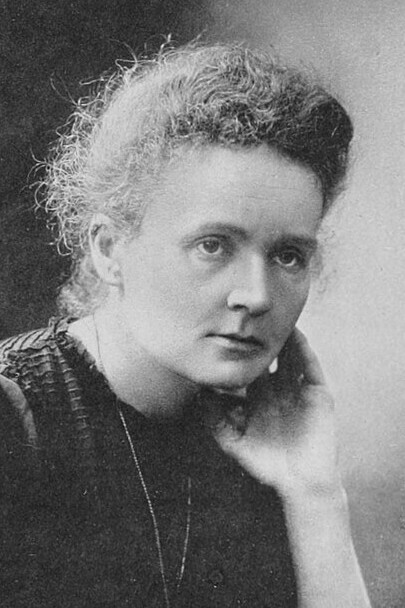
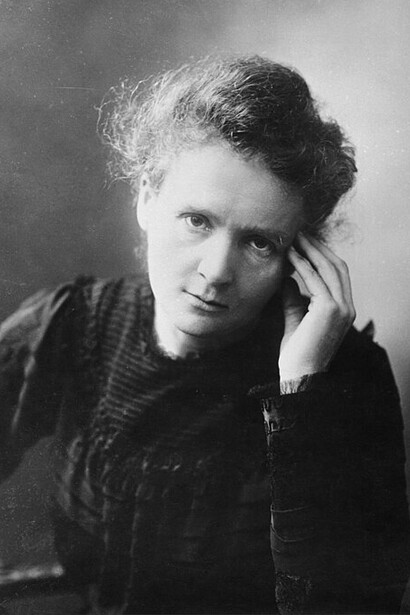
I have grown now, and the question still comes up. My answer has changed, but the reason has not. My favorite superhero is Maria Salomea Skłodowska.
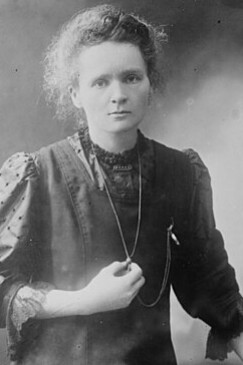
The world knows her as Marie Curie—the French version of a name she took when she married. But she was born in Warsaw on November 7, 1867, in a country that, on the maps of the time, did not officially exist. Poland had been carved up among empires; the city of her childhood was ruled from St. Petersburg, and Polish children were punished for speaking their own language in school. Years later, when she discovered a new element, she named it polonium, after the homeland that had been erased. A scientist could have named it anything. She chose to plant a flag for a nation the empires had tried to forget. Like Batman, she understood that a name could be both a weapon and a gift—and she spent hers on others rather than on herself.
The bicycle
There is a photograph I keep in my mind of her honeymoon. In 1895 she married Pierre Curie, and with the money they were given as a wedding present, they did not buy furniture or finery. They bought two bicycles and rode off into the French countryside for weeks. There was no white gown folded away in tissue paper; she married in a dark, practical dress she could wear again in the laboratory.
Cycling, in the 1890s, was not considered ladylike. A woman on a bicycle, in trousers or a shortened skirt, moving fast and alone under her own power, was very nearly a scandal. She did it anyway, pedaling through the countryside beside the man who was both her husband and her research partner. The bicycle suited her exactly: forward motion, her own legs doing the work, no one’s permission required.
A whole woman, not a statue
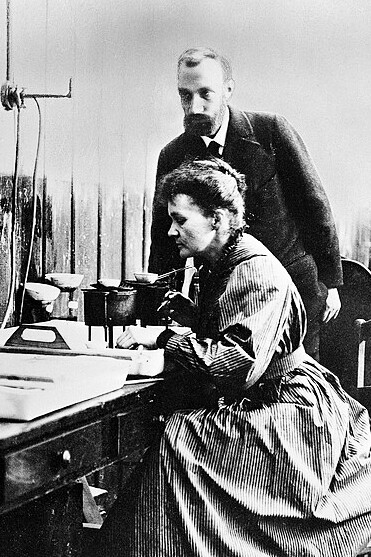
It would be a lie to turn her into a machine in a lab coat, the way the legends sometimes do. She was not a cold, sexless icon of science. She was warm and girlish and fully alive. She fell in love deeply, more than once. Her marriage to Pierre was a true partnership of minds and hearts, and when he was killed in 1906—run over by a horse-drawn cart on a rainy Paris street—she was shattered and wrote to him in her diary as though he could still read it.
She was a fierce and tender mother to her two daughters, Irène and Ève. Distrusting the schools of the day, she gathered a circle of professor friends and built a little cooperative school where the children’s lessons included science taught as play. She loved the outdoors, long walks, swimming, and the ordinary warmth of family life. And years after Pierre’s death, she loved again—Paul Langevin—and when the French press, scandalized that a foreign-born widow would dare to be a passionate woman, tried to shame her out of public life, she simply refused to be shamed. She traveled to Stockholm and collected her second Nobel Prize in the very weeks the slander was at its loudest.
Stubbornness was her superpower
If she had a superpower, it was stubbornness. As a girl in Warsaw, she could not attend university—women were barred—so she studied in secret at the illegal “Flying University,” its classes moving from apartment to apartment to stay ahead of the authorities. To pay for her older sister’s medical studies in Paris, she spent years working as a governess, on a quiet promise that her sister would one day repay the favor. When her own turn finally came, she arrived in Paris with almost nothing, lived in a freezing attic, and sometimes fainted from hunger because she would rather buy books than food.
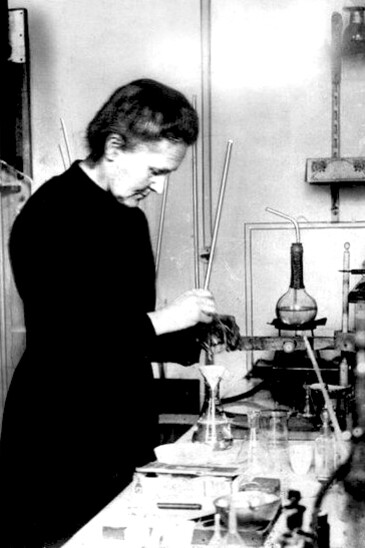
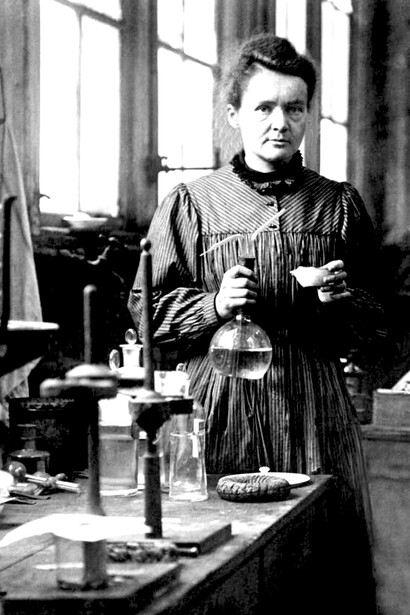
To prove that radium was real, she had to extract a speck of it from tons of a black ore called pitchblende. For four years she stirred boiling vats of it with an iron rod in a leaking shed an outside visitor compared to a stable, her clothes stained and her hands cracked. At the end of it, she held a glowing gram of an element no one had ever isolated. She had been told it was impossible. She did it anyway.
What makes her a hero?
And then—this is the part that makes her mine—she gave it away. She and Pierre refused to patent the process for isolating radium, though the patent would have made them rich beyond imagining. She believed that scientific knowledge belonged to everyone: that you do not own the truth; you only get to find it and hand it on. Like Batman, she did it not for the name or the money but because it was the right thing to do.
She became the first woman to win a Nobel Prize, the first person to win two, and to this day the only person ever to win Nobel Prizes in two different sciences. She became the first woman to teach at the Sorbonne. None of it softened her into someone who took the comfortable path.
When the First World War came, she did not retreat to the safety of her laboratory. She designed mobile X-ray units—soldiers called them petites Curies, “little Curies”—learned to drive, learned to repair the engines herself, and drove them to the front so that battlefield surgeons could see the bullets and shrapnel buried in the wounded. She trained other women to operate them. By the war’s end, her machines are thought to have helped more than a million soldiers. The most famous scientist in the world spent the war as a driver and a mechanic in the mud, because that was where she could be useful.
The work killed her, slowly. She died in 1934 of an illness almost certainly caused by the radiation she had handled with her bare hands for decades. To this day her notebooks are so radioactive they are kept in lead-lined boxes. She used to carry tubes of radium in her pockets and keep them in her desk drawer, because she loved the faint blue light they gave off in the dark. She paid for what she discovered with her own body.
So when someone asks me now who my favorite superhero is, I say her full name on purpose: Maria Salomea Skłodowska. Not to correct anyone—just to remember the girl from Warsaw, before she became a legend in French. She had the girlishness the world tried to use against her, the love of cycling the world called unladylike, the stubbornness that outlasted hunger and grief and slander, and the strength to give her greatest discovery away for nothing.
She wore no cape. She never needed one.