English
 Español
 Français
 Deutsch
 Italiano
 Português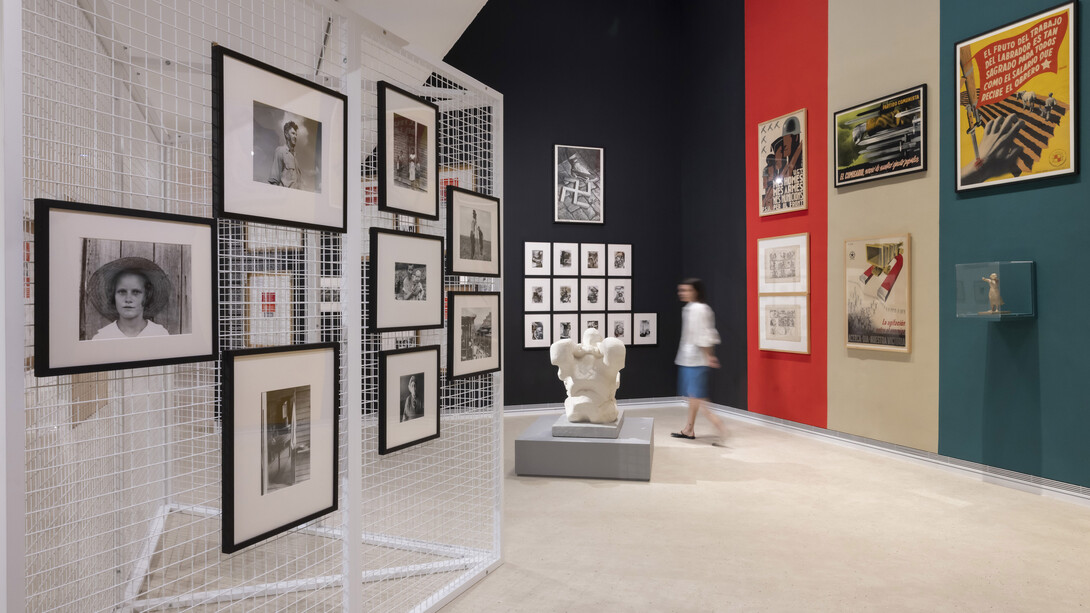
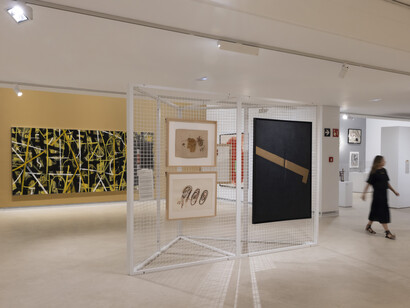
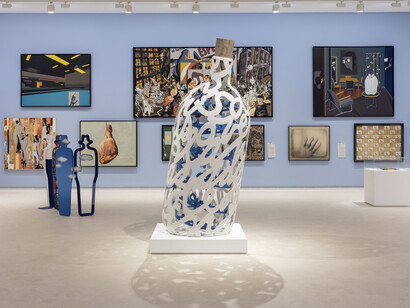
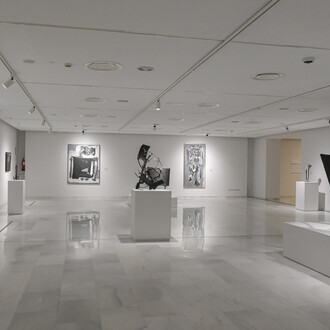
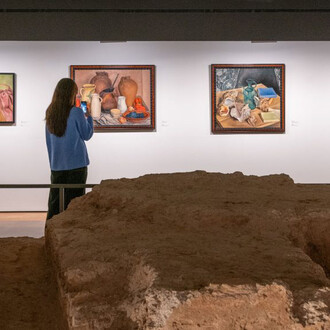
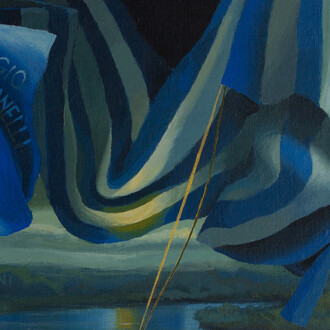
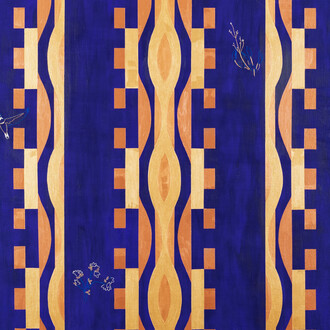
The Institut Valencià d’Art Modern (IVAM) presents its permanent exhibition The IVAM collection to date, a journey through the history of modern and contemporary Valencian, Spanish and international art. Galleries 4 and 5 of the museum bring together more than 500 key works from the collection, offering a historiographical reading of the major artistic movements of the twentieth and twenty-first centuries.
The exhibition takes a hybrid approach, structured around a central chronological narrative of works from the collection, woven from four dif ferent thematic threads: Colour, Ecologies, Feminisms and Conflict. With this multi-focus, the museum wishes to dispense with conventional linear narrative and instead foster multiple readings, generate critical intersections and open up spaces for dialogue between History and the various microhis tories that emerge from the particularities of the IVAM’s holdings. The idea behind this approach is to rethink the notion of the canon and of hegemonic historical narratives, offering innovative perspectives of the commonalities between major figures in art history and lesser-known names.
The historical circumstances of the founding of the IVAM led to a col lection shaped by European historiography, resulting in certain imbalances in terms of gender, race, inclusion and equity, and also, despite the coherence of the museum’s acquisitions over time, some historical gaps. That being said, such absences affirm the collection’s condition as a living entity and as an ecosystem of memories in which the work of artists, critics, curators, gallerists, collectors and many others intersect. Every contemporary art col lection is, by definition, infinite: an open, unfinished and multiple narrative. In keeping with the institution’s commitment to sustainability, the exhi bition design has been carried out by Smart & Green Design. Specialising in ecodesign and environmental auditing for exhibitions, this studio has designed a space that reinforces the idea of the show as an open-ended narrative adapted to contemporary ecological demands.
About the collection
The IVAM collection started to take shape in 1984 with the acquisition of works by artists such as Eduardo Arroyo, Equipo Crónica, Antoni Tàpies and Eusebio Sempere. The founding milestone, however, came in 1985 with the incorporation of a substantial group of works by Julio González, acquired through purchase and donation from his heirs, Carmen Martínez and Vivianne Grim minger. The presence of this artist proved decisive in grounding the narrative of the collection, establishing a direct link between international modernism and the Spanish context.
Another of the museum’s fundamental pillars is the work of Ignacio Pinazo, whose inclusion underscores the early connection between the Valencian art scene and modernity. Pinazo’s contribution is owing to his highly personal form of Impressionism and a formal experimentation close to abstraction. Within a national context marked by decades of disconnection from modern and contemporary art, the IVAM project was conceived from a historical perspective. Taking González and Pinazo as its initial points of reference, the holdings were built around the canonical narrative of art history. As such, the collection spans from historical avant-gar des and post-war abstraction—with particular emphasis on European Informalism—to Pop Art and New Figuration. At the same time, attention was paid to the local context, represented by groups such as Grupo Parpalló and Estampa Popular.
Beginning a collection of modern art in the 1980s presented significant challenges when it came to acquiring major figures and iconic works from the established narrative of art history. Yet it was this very circumstance that encouraged a strategy focused on less conventional works and media, including books, photomontages, drawings, prints and maquettes. This approach enabled a reading more focused on the particular and on aspects that had traditionally remained marginal or overlooked by mainstream discourses.
Chronological overview of the collection
The IVAM opens Gallery 4 with an immersion in the modernity of the early twentieth century. The exhibition follows a chronological walkthrough of the avant-garde movements that emerged between 1905 and 1930—Futurism, Cubism, Dadaism, Surrealism, Constructivism and others—which were driven by technological acceleration and industrial mechanisation, developments which transformed notions of space and time and led to unbridled urbanisation, the fall of empires, political revolutions, World Wars, mass consumerism and the rise of reproducible culture (press, photography and cinema), as well as the emergence of new social actors (workers’ movements, women’s growing public presence and political participation).
The avant-gardes provoked cracks in the sociocultural stasis associated with the nineteenth-century academic canon and invented new languages and materials through which to express themselves. Strategies such as collage, abstraction, automatism, photomontage and performance were grounded in a political, social and existential engagement that broke down the boundaries between art and life in big cities such as New York, Paris, Moscow and Berlin.
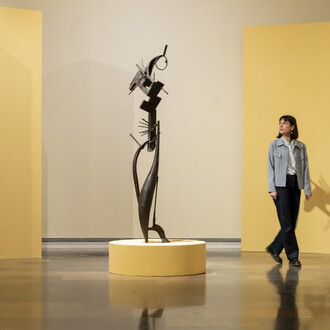
The IVAM collection is structured around Julio González, an artist whose work is situated at the heart of this modernity, bringing together the artisanal and the industrial, the figurative and the abstract. His work broke with the nineteenth-century sculptural conception of volume and took shape as a poetics of line and spatial structure. His involvement with the Parisian artistic milieu in the early twentieth century, his collaborations with artists such as Picasso and Brancusi, and his involvement in groups including Cercle et Carré and Abstraction-Création were all instrumental in shaping the museum’s earliest acquisitions relating to the historical avant-gardes and its mandate to contextualise and to affirm González’s significance within the broader history of modern art.
Soviet art
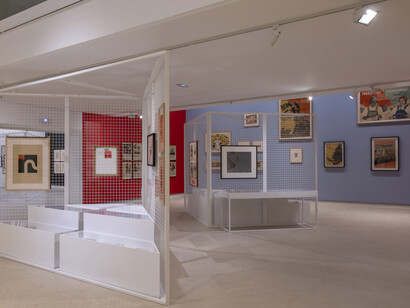
The presentation of the IVAM Collec tion continues in Room 2 of Gallery 4, a space that endorses the museum’s role as the holder of one of Europe’s most important collections of Soviet art. This remarkable group of works, whose origins date back to the very beginning of the museum, is particularly notable for its comprehensive holdings of posters, book design and photomontage. Apart from this legacy, the show also creates a dialogue with other key movements of the international avant-garde.
The Bauhaus and the european avant-garde utopias
The Bauhaus (1919–1933) advocated that art must play an active role in the construction of a new society. Under the direction of Walter Gropius, the school acknowledged its debt to the Arts and Crafts movement, particularly its emphasis on practical learning, the integration of disciplines and craftsmanship. The Bauhaus pedagogical model moved beyond the academic method based on copying, encouraging experimentation with materials, an understanding of essential forms and the importance of colour.
A second phase began in 1923 with the arrival of László Moholy-Nagy, who championed technological progress and the systematisation of work. Crafts manship gave way to the functionalism of the machine and industrial design under the motto “Art and technology: a new unity”. After relocating to Berlin in 1932, under the direction of Mies van der Rohe, the school was closed by the Nazi regime, underscoring the ideological dimension of the project. Its influence spread through initiatives such as the New Bauhaus in Chicago and Black Mountain College in North Carolina, as well as through the international dissemination of its furniture, objects and typography design.
De Stijl
The exhibition also explores the De Stijl movement, which grew up around the journal of the same name edited by Theo van Doesburg since 1918. Its leading exponents included Piet Mondrian, Piet Zwart, Paul Schuitema, Vilmos Huszár, Bart van der Leck and Karel Teige, among others. For this group, the art that depicted the modern world had to be both revolutionary and self-aware, grounded in a new aesthetic creed that called for the education of the public.
The 1930s
Room 3 of Gallery 4 explores the turbulent decade of the 1930s, a period in which the Wall Street Crash of 1929 and the rise of fascism in Europe radically transformed the cultural landscape. The closure of the Bauhaus and the forced exile of artists evinced the persecution of the avant-gardes by totalitarian regimes, which instrumentalised culture as a vehicle for propaganda. Against this back drop of extreme political polarisation, art increasingly moved away from formal experimentation to become an ideological weapon. Stalinism imposed Socialist Realism, while authoritarian regimes promoted a heroic and monumental figurative art intended to exalt national values in opposition to the abstraction of the 1920s.
In the face of growing political repression, Paris was the main destination for exiled artists and the epicentre of an intense aesthetic debate. The artistic discourse of the period was largely shaped by the confrontation between abstraction, Surrealism and the new realisms. Advocates of abstraction defended a universal and rational visual language; Surrealism championed imagination and automatism as forms of subversion; while the various realist tendencies explored more direct modes of social and political representation.
At the same time, the proclamation of the Second Spanish Republic in 1931 ushered in a period of remarkable cultural dynamism and an expansion of civil rights, including women’s suffrage, which contributed to the growing visibility of women artists and intellectuals. The debates of the European avant-garde were imported into Spain; however, the outbreak of the Civil War transformed artistic practice, and many experimental investigations were abandoned in favour of a politically engaged art oriented towards mobilisation, denuncia tion and propaganda.
European informalism and abstract expressionism
The works on view in Room 4 of Gallery 4 examine the profound transformation of Western art from the 1930s onwards, a period marked by Adolf Hitler’s rise to power, the spread of Nazism across Central Europe, the German–Soviet Non-Aggression Pact, the Spanish Civil War and, at the end of the decade, the outbreak of the Second World War. This sociopolitical collapse forced the migration and exile of artists and intellectuals, while reinforcing the need for forms of artistic expression capable of responding to yet another failure of Western culture, which had once again descended into a far-reaching process of destruction.
If Dada represented a radical break with the traditional Western values that had failed to prevent the First World War, European Informalism and American Abstract Expressionism likewise sought new answers to the role artists should play in society, as well as new theoretical and formal approaches capable of moving beyond the avant-garde movements of the early twentieth century. Both currents fostered a more direct and gestural relationship with the artwork, placing particular emphasis on materiality and painterly texture. Artists incorporated materials such as sand, sawdust and powdered glass, and employed techniques including scratching, incising and cutting. They also explored alternative sources of creativity and inspiration, ranging from folklore, crafts and ancient art to non-Western cultures, popular art, graffiti and children’s drawings.
Spanish informalism and normative art
The final room of Gallery 4 takes us to the late 1950s to examine how the Franco dictatorship instrumentalised abstract art as a tool of international diplomacy. In Spain, a period of economic recovery began as a result of the regime’s changing geopolitical position. Following the outbreak of the Korean War (1950–1953), Franco’s government placed the strategic location of the Iberian Peninsula at the service of the United States. This facilitated the signing of the Concordat with the Holy See and the Madrid Pacts with the United States in 1953, as well as Spain’s admission to the United Nations in 1955. The country subsequently embarked on a process of opening up aimed at attracting investment and projecting an image of modernity that would encourage international acceptance.
The Hispano-American Biennials, organised by the Institute of Hispanic Culture and held in Madrid (1951), Havana (1954) and Barcelona (1955), contributed to this goal while also fostering the renewal of the Spanish art scene, focused on the promotion of abstract art.
Following the model of the Eisenhower administration’s support for American Abstract Expressionism as a symbol of national identity, Franco’s government transformed abstraction into an instrument of political projection.
As a result, two movements associated with abstraction emerged in Spain: a gestural current represented by the groups Dau al Set and El Paso, and a geometric tendency known as Normative Art. Nevertheless, it was Informalism that received the greatest institutional support, owing to its affinities with the art of the Spanish Golden Age, one of the emblems of the Franco regime.
Between humanism and immediacy
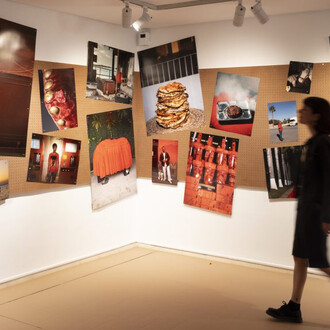
In this same room, a section is set aside for Gabriel Cualladó, the Valencian photographer, collector, writer and editor, and one of the cornerstones of the IVAM collection. The museum holdings include more than 500 of his photographs, as well as his library and personal archive. His photography collection, one of the earliest and most significant assembled in Spain during the 1970s, is on deposit at IVAM since 1993.
During the 1950s, photography in Spain developed largely within the framework of associations. Meanwhile, in the United States and across Europe, photography began to evolve outside the documentary tradition of the 1920s and 1930s. In the United States, photographers such as Robert Frank, Lee Friedlander and Diane Arbus produced images with a renewed aesthetic. Their work introduced new subjectivities and revealed the cracks in a society marked by victory in the Second World War. In Europe, Henri Cartier-Bresson and Robert Doisneau continued to develop a humanist approach to photography, that closely resonated with the Spanish context during the 1950s and 1960s. Carti er-Bresson inspired the search for what was known as the “decisive moment”.
This notion of the decisive moment can also be seen in the work of two Valencian photographers: Miguel de Miguel, through his images of Valen cia in the 1950s, and Joaquín Collado, whose photographs of Valencia’s Barrio Chino, taken with a concealed camera, introduced an aesthetic that broke with the conventions of earlier documentary photography.
The world goes pop
The birth of Pop Art unfolds in Room 6 of Gallery 5. The display transports visitors to the 1950s and early 1960s, a period defined by the economic boom of the post-war years in the United States, the migration of the middle classes to the suburbs and the emergence of rock and roll as the soundtrack to youth- ful rebellion.
Activists, intellectuals and artists challenged a conformist and increasingly suffocating social order against a back drop of mass protests against the Viet nam War, the civil rights movement’s struggle for racial equality and the rise of the women’s liberation movement.
In this climate of social upheaval, experimentation and consumerism, a new generation of artists in Europe and the United States looked for inspiration and materials in the world around them. They created works that reflected, critiqued and incorporated everyday objects, consumer goods and images culled from the mass media. Their desire to attract wider audiences and their commitment to popular culture gave rise to what became known as Pop Art. Pop artists looked for simplicity, using bold primary colours often applied directly from the paint tin or tube. They adopted advertising techniques, such as screen-printing, and favoured realism and everyday images with irony and wit.
Art in transformation. Between revolutions
Rooms 7 and 8 of Gallery 5 explore the turbulent decades of the 1960s and 1970s, a period when art broke its moulds in order to hold up a mirror to global social and political dissent. The new presentation of the collection offers a chron ological journey through May ’68, the Prague Spring, the rise of feminism and the Black Power movement, milestones that shook the foundations of hegemonic structures and forced a critical reassessment of artistic practice.
The works on view in these rooms examine the aesthetic transformations of the period, beginning with the revolution of Minimalism and its serial pro cesses. The exhibition narrative then advances towards Post-Minimalism and the “dematerialisation” of the art work, a conceptual shift in which the art object ceded prominence to the creative process and the viewer’s experience. Beyond the physical qualities of the work itself, increasing importance was placed on the exhibition space, temporality, audience experience and the involvement of the body.
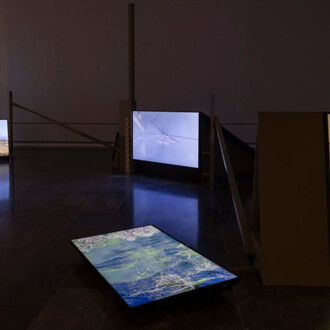
These changes brought about new practices in which nature and public space became supports for intervention, and the body became a site for action, giving rise to body art and performance. At the same time, new concerns emerged, including gender, institutional critique and a questioning of Eurocentrism. This period also witnessed the consolidation of new media such as video and photography, which acquired artistic autonomy beyond their docu mentary function.
Appropriationism and the collapse of stereotypes
From the 1970s onwards, the reuse of pre-existing images became a core strategy of appropriation, a signature practice of postmodernism.
Images taken from cinema, television, advertising and popular culture were appropriated and reworked through photography, video and other media in order to alter their original meanings and disrupt their conventional narratives. These strategies responded to a desire to deconstruct the visual codes inherited from modernism and to critically examine the dominant structures of meaning disseminated through the mass media. In doing so, artists challenged the power relations embedded in image production, including gender stereotypes and normative representations of the female body.
A world in transition
The penultimate room in Gallery 5 features artworks from the 1980s and 1990s, a period marked by profound political, social, cultural and technological changes. In this context, art practices expanded both languages and critical frameworks, engaging with issues concerning identity, memory, the body, feminism, the mass media, globalisation and processes of displacement.
Installation consolidated its position as one of the core languages of contemporary art, extending the artwork beyond the autonomous object and incorporating architecture, light, sound, moving image and industrial materials. At the same time, abstract painting was redefined through a more analytical approach, aware of its own material, institutional and spatial conditions. The works on view in this room evince the expansion of the artwork into space, the body and the perceptual experience of the beholder.
Readings in transit: bodies, territories, tensions and lights
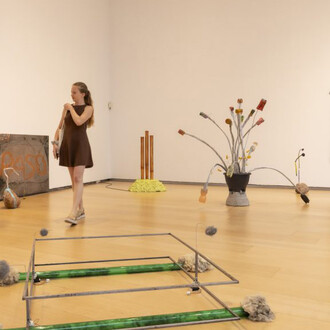
Dedicated to contemporary art produced since 2000, the final room brings together the different narrative threads running through the exhibition: ecologies, conflict, identities and feminisms and colour.
Conceived as the end of the exhibition walkthrough, this room explores some of the key lines of inquiry that define the present, ranging from the ecosocial crisis and contemporary forms of violence to debates surrounding identity, representation and colour as a critical device. Rather than offering a definitive conclusion, it functions as an open space on the issues that define our time and futures still to be imagined.
Alternative thematic walkthroughs of the collection
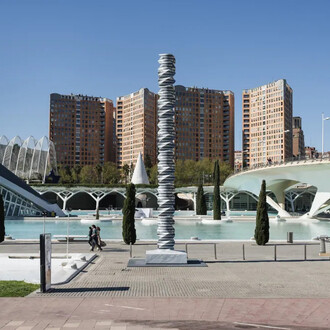
The first thematic route through the exhibition focuses on ecologies and brings together works that offer an ecosocial perspective through practices ranging from documentary photography to spatial intervention and socially engaged architecture. These works address issues such as the climate crisis, extractivism and pollution, while establishing connections with science and fostering processes of co-creation with communities, opening up new ways of imagining more desirable futures.
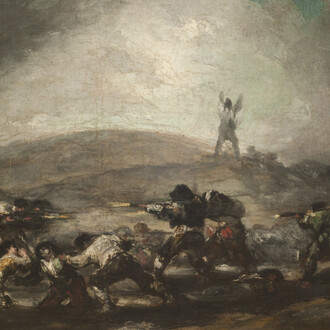
The second route explores conflict, looking at the connections between aesthetic experience and violence through a poetics of denunciation, the wound and mourning, derived not only from wars and genocides, but also from forms of structural violence and exile. Predicated on collective memory, they reveal the consequences of forced displacement, putting a spotlight on the condition and suffering of victims.
The third route focuses on identities and feminisms, addressing the rise of global feminism, sexual diversity and debates surrounding representation. Produced in different contexts, the art works bring to light what has historically been marginalised and create a field of tensions in which dissident bodies and silenced memories can emerge, while, at the same time, questioning stereotypes, discourses of power and heteronorma tive narratives, while asserting the dignity of invisibilised identities.
Finally, the route dedicated to colour presents it as a device for thought that can function as a sensory and for mal experience or as a sign charged with meaning that can activate critical reflections on memory and representation. In many cases, colour operates as a political code or as a metaphor for the reappropriation of the symbolic and the sacred, from which to deploy an ironic gaze on dominant narratives. In any case, colour acts as a transver sal language, able to produce meanings beyond the purely visual.