English
 Español
 Français
 Deutsch
 Italiano
 Português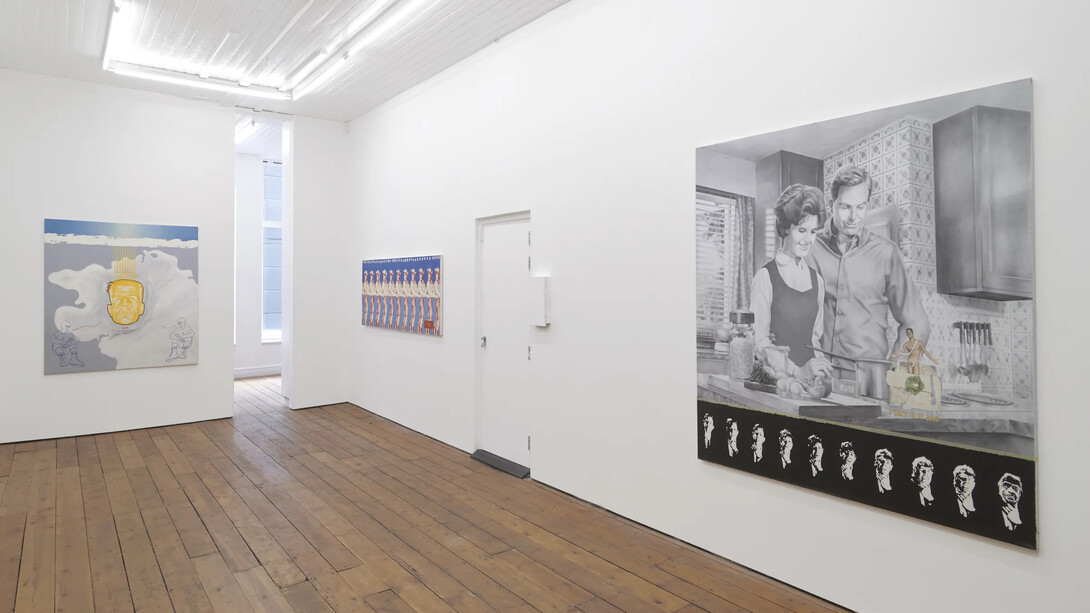
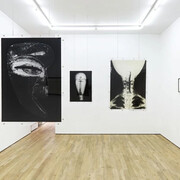
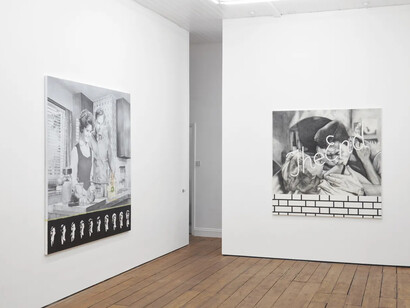
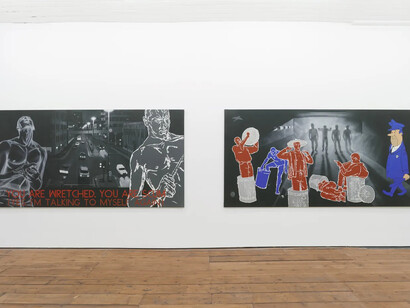
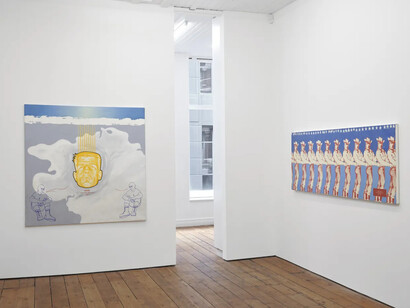
Amanda Wilkinson will present the first exhibition of Andrew Heard’s paintings in the United Kingdom in more than three decades. Heard’s post-pop paintings of the 1980s and early 1990s often integrated ‘low’ cultural references from British and American TV, film and music hall, with biting, sardonic or emotive textual components. His most characteristic paintings of the 1980s centre iconic or parochial personae from British popular culture: Charles Hawtrey, Terry-Thomas, Kenneth Williams and Benny Hill; or stars of ‘Golden Era’ British cinema, like Rita Tushingham, Deborah Kerr, and Albert Finney.
Art critic Louisa Buck wrote of Heard that ‘no artist has been as successful in capturing the tawdry Carry-On culture of Britain in the late Fifties and Sixties with its forgotten jingles, minor celebrities and suburban sitcoms. Yet there is nothing whimsical about Heard’s sharply witty, hard-edged [paintings].’ They are suffused with a melancholic attachment to a lost Britishness deemed both hallowed and ridiculous. This attachment is sincere and derisive, nostalgic and pejorative, and his wry humour is also attached to other orders of images, including gay-coded objects of attraction, like male pinups, boxers, and skinheads.
In 1988, after the death of his friend and former partner David Robilliard, Heard’s aesthetic sensibility took a more melancholic turn. His later paintings, including I want to be good (1992), which gives this exhibition its title, are shaped by the structures of feeling associated with HIV/AIDS, including fear, stigma, loss and grief.