English
 Español
 Français
 Deutsch
 Italiano
 Português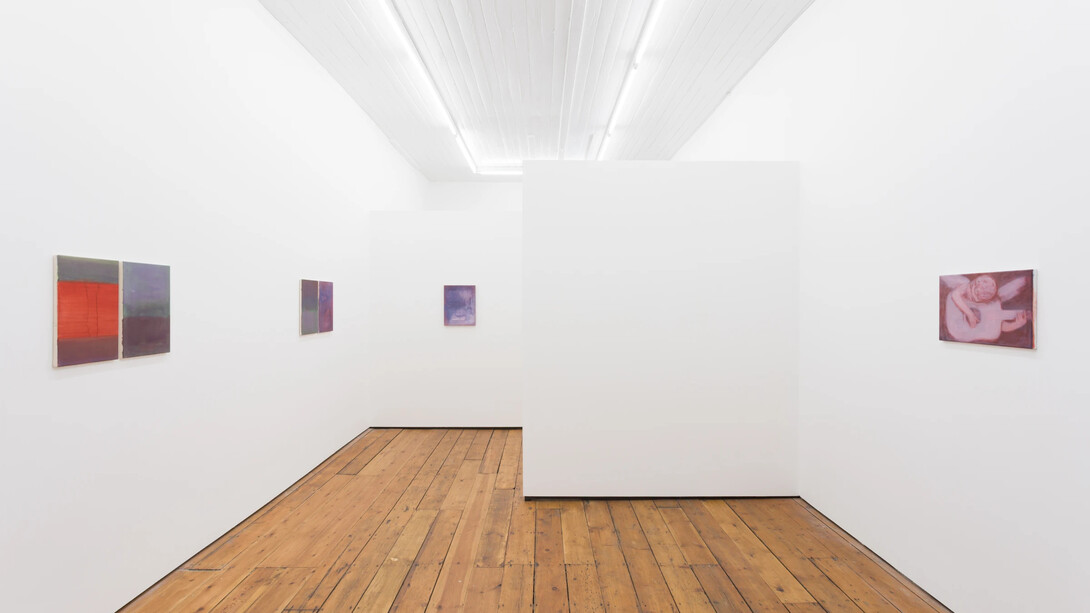
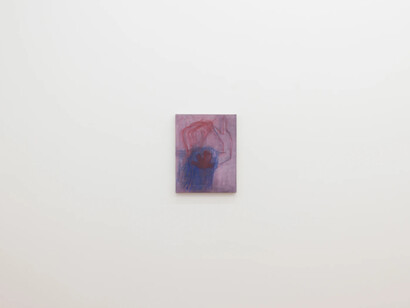
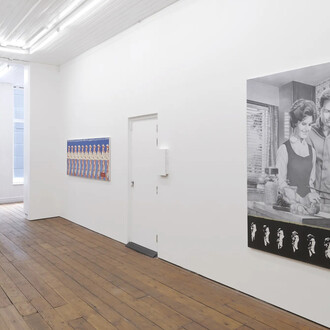
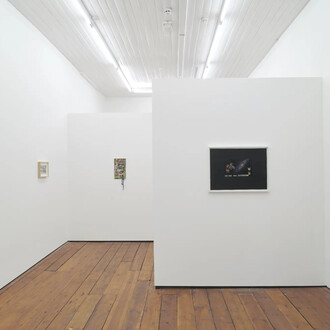
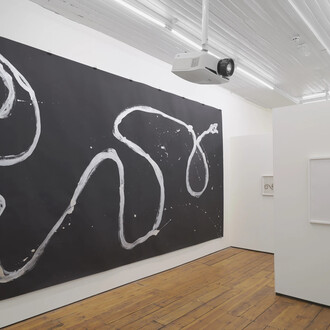
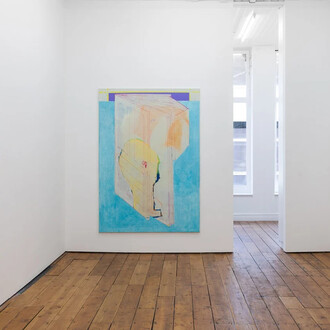
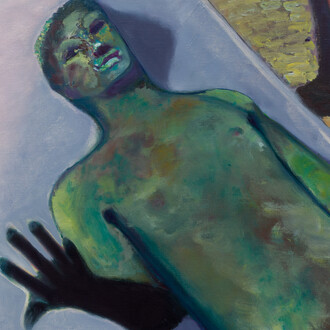
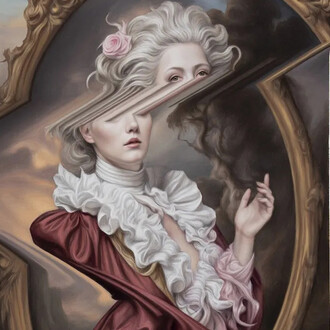
This exhibition presents a new body of work arising from Julia Dubsky’s suggestive meditations on the parallels between paintings and actors. A painting not only represents a subject, but also itself as a medium, much as our appreciation of an acted role is coloured by prior associations with the actor. Dubsky observes a “direct comparison between actors and paintings in that they perform a similar kind of alchemy, since an actor becomes a character in addition to themselves, not in place of themselves”.
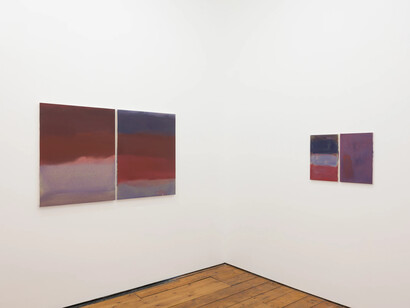
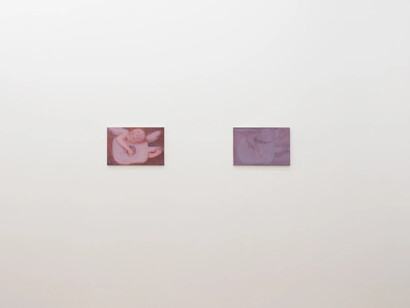
Many of the paintings in the exhibition are diptychs in the vein of ‘small colour fields’ paired with ‘light cartoons' which play on the notion of relationality, in terms of colour perception, material and picture. Others take a familiar motif such as Rosso Fiorentino’s cherub playing the lute, a painting thought to allude to Rosso’s favoured ‘instrument’, the medium of painting. As Dubsky redirects the gaze of the cherub toward the viewer, the painting shifts (like a dial) in attitude.
The exhibition is accompanied by a publication with a new essay by Dubsky in which she expands on these themes by weaving art historical observations through a rumination on her recent experiences in acting classes. She invokes, amongst other things, an imagined dialogue between Caravaggio and Tiepolo from Roberto Calasso’s Tiepolo pink (2009): ‘Caravaggio berates Tiepolo for failing to share his “craving for truth.” He insists Tiepolo should have painted gondoliers brawling instead of rosy-skinned ladies and mocks Venice for its widespread use of masks. Tiepolo’s reply punctures Caravaggio’s rhetoric of truth, showing it to be parochial, unable to accept disguise: even beggars wear masks in Venice. The mask, in other words, is not an evasion of reality but part of it.’