English
 Español
 Français
 Deutsch
 Italiano
 Português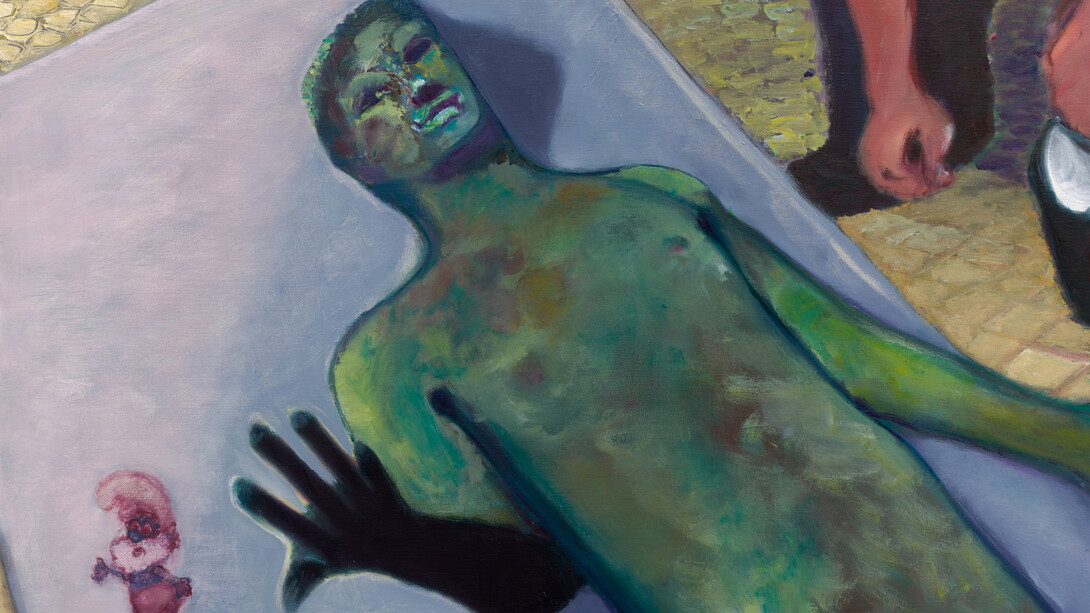
In 2013, a Palestinian fisherman (Joudat Ghrab) in Gaza spotted what looked like a badly burnt arm coming out of the sand on the seabed. He had discovered a life-sized, ancient Greek statue of Apollo. One finger was removed for testing; he was hoping for gold, but it turned out to be bronze. Having initially been put up for sale on eBay, it was soon seized by the Gaza authorities, and its whereabouts are now unknown to outsiders.
The only existing images all seem to have been taken
in one room, and show the magnificent sculpture lying
on a foam mattress with bed sheets emblazoned with
Smurfs, as men stand or crouch around it. Or, it
stands surrounded by the same men who reverently
place hands on its head and shoulders as if to receive
its power.
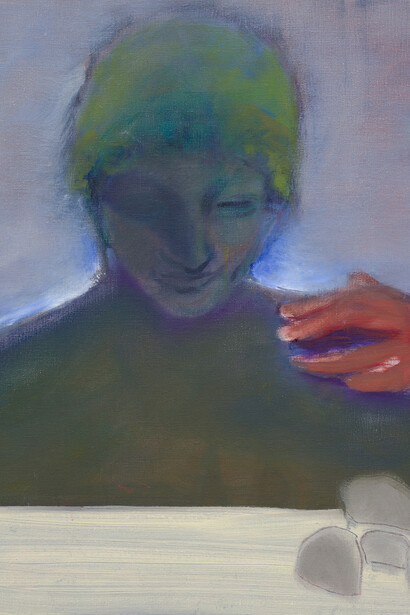
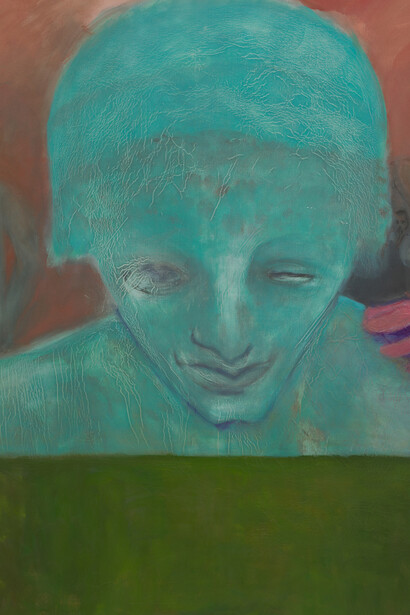
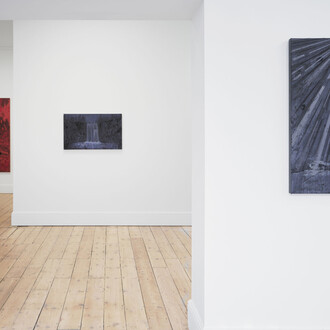
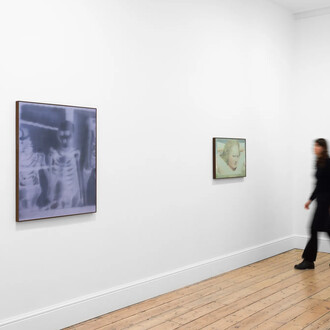
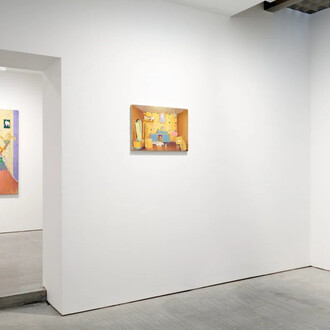
Four of the paintings in Nashashibi’s solo show depict this deity, and the men who take care of it in an unorthodox manner. According to the artist, the Gaza Apollo could be seen as a gift to the Palestinian people, a divine intervention coming in from the sea, where the earthly powers fail to intervene.
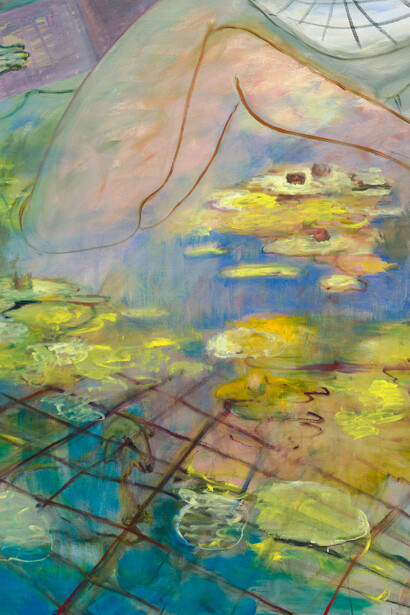
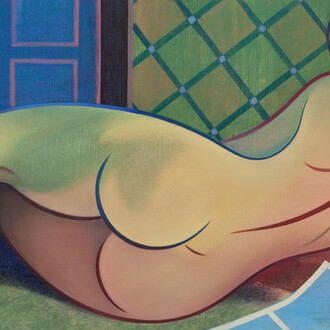
Several of the works contain a guiding hand or finger, hands which grasp and pull at others, fingers that reach out to touch what seems to be retreating into unreality. Some motifs return from earlier works and speak to the history of painting on the brink of modernity - a table with a still life, a horse, the reclining woman, a lamb, or water lilies. For the artist, these dives into historical painting are part of a continuous conversation between history and our actions today, and they are not separated from the task of evoking the materiality of the present world, without closing our eyes to the crimes and oppressions that haunt it.