English
 Español
 Français
 Deutsch
 Italiano
 Português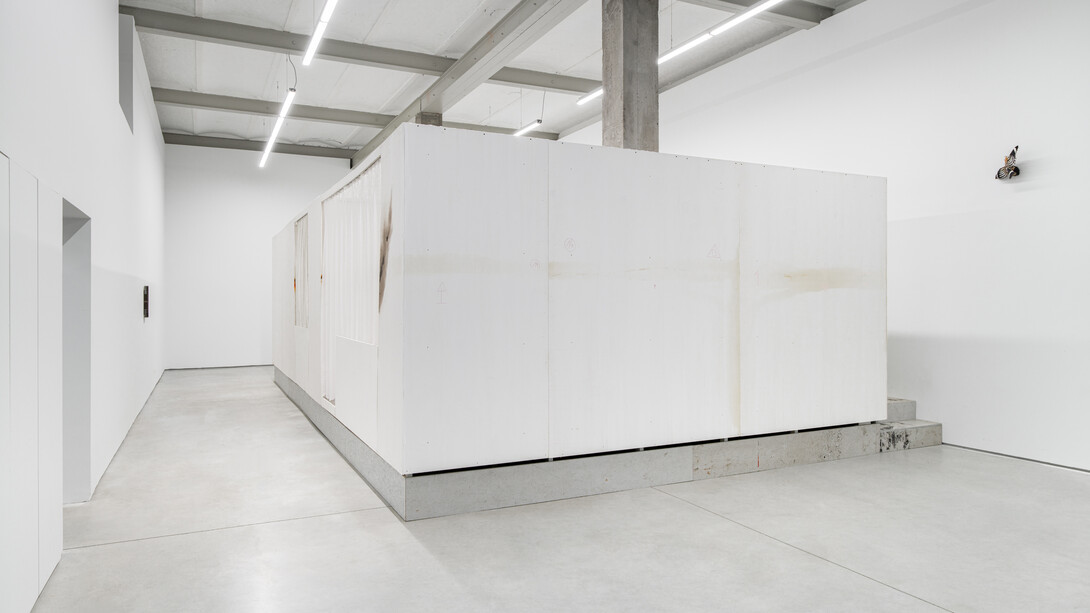
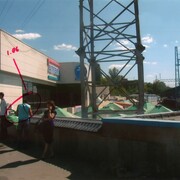
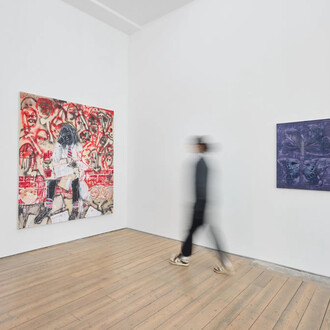
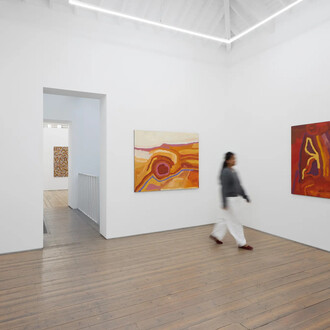
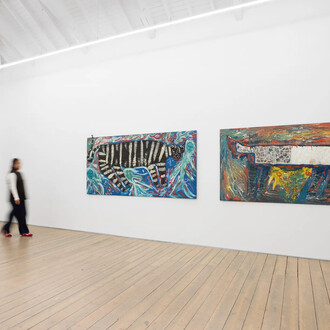
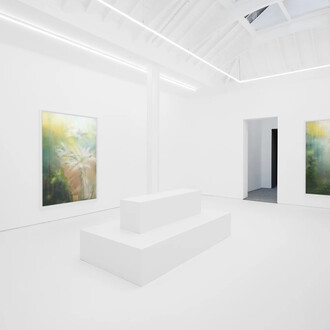
Edel Assanti is proud to present Pawilon, Marcin Dudek’s seventh exhibition with the gallery. Coming of age during the dissolution of the Eastern Bloc, Dudek’s practice appropriates strategies of improvisation and imagination that emerged from an environment defined by volatility and precarity. The titular ‘pawilon’ refers to the local supermarket within the Kraków housing estate where the artist grew up, providing a spatial and metaphorical structure for an exhibition exploring themes of consumption, scarcity, societal transformation and unstable histories.
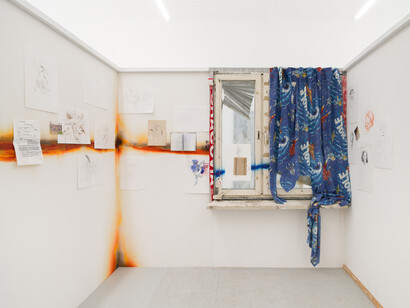
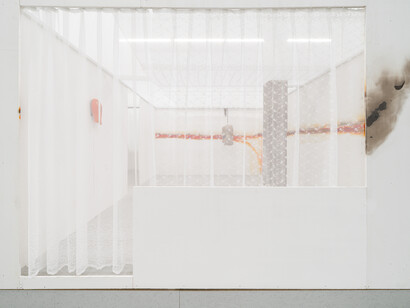
Pawilon coincides with Edel Assanti’s participation in Frieze London 2026, for which Dudek has created a specially-conceived ‘memory box’ using the exact footprint and dimensions of his childhood home. Navigating this compressed domestic interior, visitors will encounter works by gallery artists spanning video, painting, sculpture and drawing. Together, these works position home not as a fixed site of comfort or origin, but as a shifting structure shaped by recollection and reinvention.
In Dudek’s work, memory serves as both inspiration and medium. His installations take the form of sculptural environments reimagining lost spaces specific to his own experiences, lending themselves to critical inquiries around the construction of individual and group identity. Dudek strips architecture back to bare structures, employing repurposed objects with symbolic weight in skeletal frameworks – at once familiar and uncanny. Within these arenas complex dynamics play out, enriched by the inconsistencies and disjunctions that characterise our relationship to formative and traumatic episodes.
Pawilon explodes the supermarket of Dudek’s youth into fragmented pieces, exploring the changing structures and social functions of these third spaces around which society evolves. In the exhibition’s first room, Kolejka, a sculptural assemblage of ambiguous papier-mâché torso-like forms and steel shopping trolleys, forms a snaking queue to the entrance to the second gallery. Central to Dudek’s memories of the original pawilon are the hours spent queuing to enter the supermarket. Kolejka speaks to these memories as well as the contemporary use of manufactured scarcity in the form of exclusivity; object as fetish, and queuing as a ritual of desire.
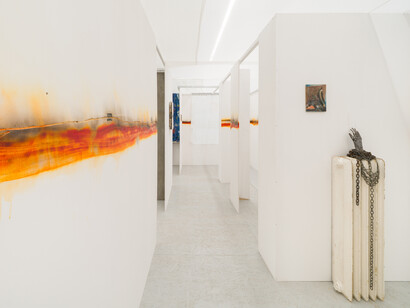
In the second gallery, Dudek has constructed a scaled-down replica of the supermarket. Passing through an artificial corridor, wall-based works are mounted at regular intervals. At first glance, their neutral surfaces appear as empty notice boards or sealed windows. In fact, they form part of a new series by Dudek, Pawilon, which can be manually opened by visitors to reveal intricate compositions, made up of meticulously collaged materials: paper mosaics, incised marks, found objects, image transfers and drawn elements narrate collective and autobiographical histories relating to the pawilon site, a place where borders become porous and thin.
Within the interior room, a shelving system displays a collection of found objects. As part of the preparations for the exhibition, Dudek conducted a small-scale archaeological dig behind the supermarket, excavating a midden of discarded capsules and broken bottles that relay a fragmented history. These unearthed products, along with weeds and other plant matter from the original site, are placed on the denuded shelves of Pawilon, drawing comparison between subjective recollection and documentary research.
The final room of the exhibition contains a single work, Barycz: a tribute to the waste production engendered by capitalism, and to Dudek’s own memories of habitually digging through the rubbish dump on the outskirts of the city with his friends in search of discarded items from the outside world, in a period defined by shifting definitions of what constituted “value”. A shallow wooden plane unfolds itself sideways and downwards, like the tilted bed of a dump truck. Burned and melted garbage has been applied to its surface, creating an accretive, sticky, tar-like substance that stains the joinery and threatens to spill into the gallery.
The supermarket of Dudek’s upbringing was a site in which subtle signs of transition and dysfunction coexisted with rapidly changing social forces and the artist’s own coming of age. This crucial food source concentrated the social dynamics of the community, acting as a barometer for periods of economic prosperity and decline: snaking queues stretching from the building’s entrance, early experiences of intoxication on the tree-lined lot, the frustration of incessant shortages soon replaced by the disillusionment of shelves stacked full of unaffordable items, and the ensuing onset of petty crime. Rather than wholesale recreation, Dudek places elements carefully, evoking Pawilon as a site of communality, violence, stupor, pleasure and boredom, conflict and survival.