English
 Español
 Français
 Deutsch
 Italiano
 Português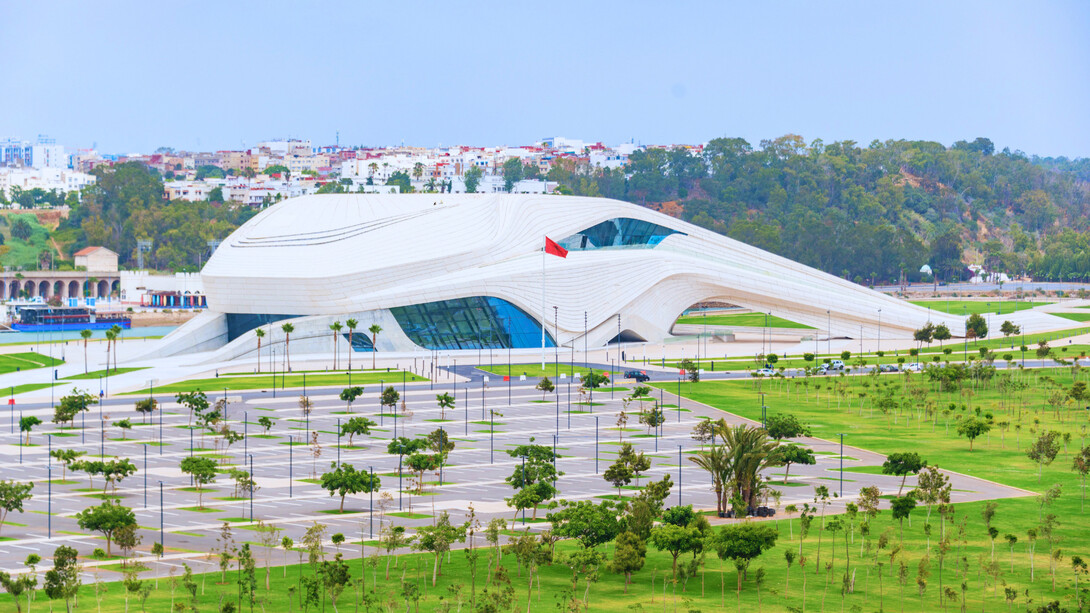
The Grand Theatre of Rabat stands as a testament to the vision of His Majesty King Mohammed VI and the creative genius of Zaha Hadid. Its inauguration by SAR Princess Lalla Khadija remains a landmark moment in the kingdom’s history, marking the transition of Rabat into a premier global capital of culture. It is a building that honours the movement of the water, the history of the land, and the limitless aspirations of the Moroccan people.
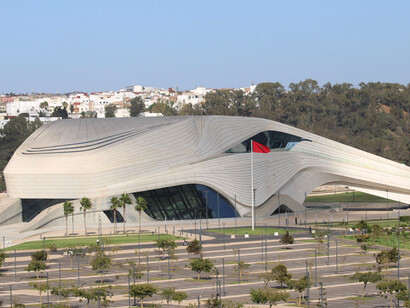
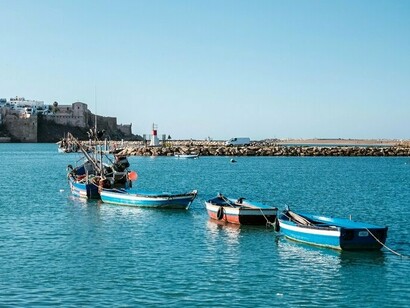
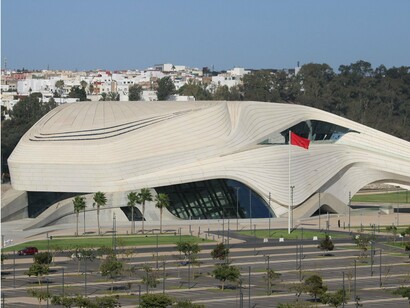
Rising majestically from the left bank of the Bouregreg River, the Grand Theatre of Rabat stands as a definitive landmark for 21st-century Morocco. Positioned between the historic ramparts of Rabat, the 'City of Light', and the ancient city of Salé, this architectural masterpiece represents more than just a performance space. It is a bold statement of cultural diplomacy and a vital component of the kingdom’s "Wessal Bouregreg" development project.
The official opening of the Grand Theatre was a momentous occasion for the Moroccan people, marked by the distinguished presence of Her Royal Highness Princess Lalla Khadija. Her leadership in the inaugural ceremony underscored the royal family's deep commitment to the arts and the intellectual development of the Moroccan youth. By having a young member of the Royal Family preside over such a significant event, the kingdom sent a clear message: the future of Morocco is intrinsically linked to creativity, modernity, and cultural openness.
This royal patronage also highlighted the theatre's role as a national priority within the "Rabat, City of Light" initiative. The inauguration was not merely a ribbon-cutting ceremony but a celebration of a new era for Moroccan performance art. It signalled to the international community that Rabat is no longer just an administrative capital but a global cultural destination capable of hosting the world’s most prestigious operatic and theatrical productions.
The building is one of the final and most ambitious designs by the world-renowned Anglo-Iraqi architect Zaha Hadid. Known as the "Queen of the Curve", Hadid’s vision for Rabat was to create a structure that felt like a natural extension of the river’s movement. Today, it serves as a bridge between Morocco’s storied past, represented by the nearby Hassan Tower, and its high-tech, culturally ambitious future.
World-class performance spaces
The heart of the complex is the 1,800-seat Main Auditorium, designed to host everything from grand operas and symphony orchestras to contemporary dance. The interior is a marvel of gold and amber tones, with lighting integrated directly into the architectural folds to create an atmosphere of warmth and prestige. Each seat was ergonomically designed to provide optimal sightlines, ensuring that the audience feels an intimate connection with the performers regardless of the scale of the production.
In addition to the main hall, the site features a spectacular 7,000-seat outdoor amphitheatre. This "Verde" theatre is designed to capitalise on Rabat’s temperate climate, allowing for large-scale festivals and popular concerts under the stars. By offering both an elite indoor venue and a massive outdoor public space, the Grand Theatre fulfils its mission of being an inclusive cultural hub that serves all segments of Moroccan society, from opera aficionados to fans of modern pop and folklore.
Constructing such a complex geometric form on the banks of a river presented immense engineering hurdles. The soft, silty soil of the Bouregreg Valley required the installation of hundreds of deep piles and advanced soil-stabilisation techniques to support the massive weight of the concrete shell. Engineers had to utilize cutting-edge Building Information Modelling (BIM) to ensure that the thousands of custom-moulded panels fit together with mathematical precision, a feat that pushed the boundaries of the local construction industry.
Furthermore, the interior of the main hall required a revolutionary approach to acoustics. In a space with no right angles, sound waves behave differently than in traditional rectangular halls. Specialists used computer simulations to design the internal "scales" and wall textures, ensuring that a whisper on stage could be heard clearly in the furthest seat of the balcony. The result is a perfect marriage of avant-garde digital design and traditional structural integrity, making it one of the most acoustically advanced venues in the world.
Architectural and cultural soft power
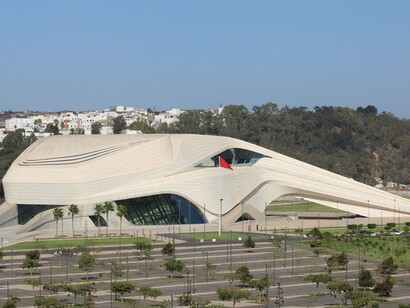
The design of the Grand Theatre is deeply rooted in the concept of "fluidity", a signature of Zaha Hadid Architects. The building’s form is inspired by the meandering path of the Bouregreg River, with its white concrete "ribbons" appearing to peel away from the earth and soar toward the sky. This creates a seamless visual dialogue between the built environment and the natural landscape, ensuring that the massive structure does not feel intrusive but rather like a crystalline formation emerged from the riverbank.
Beyond its aesthetic appeal, the architecture serves a functional purpose by integrating indoor and outdoor spaces. The sweeping curves create shaded walkways and plazas that invite the public to interact with the building even when no performances are scheduled. By eschewing the traditional "black box" theatre model in favour of a light-filled, translucent envelope, Hadid ensured that the building feels alive, reflecting the changing Moroccan sun from dawn until dusk.
The Grand Theatre of Rabat is a key instrument in Morocco’s "soft power" strategy, positioning the nation as the cultural gateway between Africa and Europe. By providing a venue that meets the highest international technical standards, Morocco can now attract major touring Broadway shows, global ballet companies, and world-renowned philharmonics that previously bypassed the region. This elevates the country's status on the global stage and fosters a deeper intercultural dialogue.
Locally, the theatre acts as a greenhouse for Moroccan talent. It provides domestic artists, directors, and technicians with a professional environment that matches the best theatres in London, Paris, or New York. The presence of the Experimental Studio (250 seats) and rehearsal spaces means that the building is not just a place for consumption but a place for creation, where the next generation of Moroccan playwrights and musicians can hone their craft and bring their visions to life.
Sustainability and urban integration
Despite its futuristic appearance, the Grand Theatre was designed with a keen eye on environmental sustainability. The building utilises the thermal mass of its concrete shell to regulate internal temperatures, reducing the reliance on high-energy air conditioning systems. The strategic use of glass allows for maximum natural light in the foyers and public areas, while the surrounding landscape uses indigenous plants that require minimal irrigation, respecting the local ecosystem of the Bouregreg valley.
Urbanistically, the theatre has revitalised a previously underutilised area of the capital. It serves as an anchor for a new pedestrian-friendly zone that includes parks, cafes, and walkways, encouraging citizens to reclaim the riverfront. This integration ensures that the Grand Theatre is not an isolated "temple of art" for the elite but a vibrant, living part of the city’s social fabric that contributes to the well-being and pride of all Rabatis.
As the sun sets over the Bouregreg, the white curves of the theatre glow with a soft radiance, mirroring the lights of the Hassan Tower across the water. It is a dialogue between centuries—a reminder that while Morocco is a land of deep traditions, it is also a nation that is unafraid to embrace the future. The Grand Theatre is more than just a stage for performances; it is a stage for the Moroccan spirit to shine before the entire world.