English
 Español
 Français
 Deutsch
 Italiano
 Português
The second half of 2026 will witness tremendous transformations in the global system and in the nature of relations between countries. Although the major powers used to employ traditional means (multilateral treaties, peace conferences, or formal agreements) to achieve these transformations, we are witnessing parallel crises that are developing and being managed more through strategic power, deal-making, and unilateral action instead of traditional means. This new chapter of "reconfiguration" represents a decline in the effectiveness of current international institutions and an increasing trend toward pragmatism and global competitiveness.
Donald Trump's re-election in late 2024 was just another indication of this trend toward 'economic nationalism', where foreign policy will be built on the use of tariffs, sanctions, and energy agreements as tools of power, rather than building diplomatic consensus. As a result of this trend, we are witnessing the transformation of individual crises in various regions (the Middle East, Ukraine, and the US-China rivalry) into a broader, more complex, and more integrated global geopolitical landscape.
For many middle-income countries, they currently stand at a critical crossroads, where they can either exploit the chaos surrounding them as an incentive to achieve greater regional independence or allow themselves to become mere pawns in the ongoing strategic rivalry between great powers. This article will address three key aspects of this global change: first, the fragility of stability in the Middle East amid escalating tensions with Iran; second, the ongoing war of attrition in Ukraine; and third, the shifting technological and economic rivalry between the United States and China, and how all these crises demonstrate that we live in a world increasingly governed by power and deals rather than "rules".
The Middle East's fragile balance
Military activity escalated in the Middle East on February 28, 2026, when US and Israeli armed forces attacked facilities inside Iran, marking a shift in regional security as the two countries moved from covert to overt conflict. Military operations now constitute a "war of attrition" and may escalate into an all-out, unchecked conflict.
Iran's response to US bases with missile and drone launches has raised concerns about continuing to maintain sufficient deterrent power on both sides of the Strait of Hormuz. Instability in the region is affecting energy markets, with prices rising rapidly as oil and gas suppliers and consumers worry about potential disruption to navigation in the Strait of Hormuz, a vital shipping lane for nearly 30% of the world's total transported oil and gas. Therefore, the escalation of operations in the Middle East will have an impact on the global economy, amid ongoing tensions resulting from the ongoing conflict.
Tensions arise when either side takes unexpected action or decision, especially given the lack or weakness of direct communication between Washington, D.C., and Tehran, which could lead to renewed fighting.
Regarding the new structure of post-war security arrangements, instead of seeking a comprehensive peace agreement with Israel, the parties moved to a model in which the role of international mediators is limited to assisting post-war reconstruction; the IDF continues to consolidate its control over the West Bank and, to justify this, expands its settlements to prevent a recurrence of the situation in Gaza in any other area.
Iran has adopted a strategic goal of rebuilding the military capabilities of its proxy forces (mainly Hezbollah and the Houthis) to launch indirect operations against American and Israeli forces. The interaction of these various elements may lead to the expectation of reaching a broader agreement before the end of 2026, which would establish an energy-saving mechanism, establish a missile defence mechanism, and restore relations with Israel to normal. However, the success of any of these agreements depends on achieving a real balance between providing security and guaranteeing political rights. Achieving these two things remains difficult given the tensions in the Middle East and the varying levels of support for these agreements among government leaders in the region.
War attrition and a window negotiation
The conflict between Ukraine and Russia has lasted more than four years and can be described as "modern trench warfare" given the existence of fixed front lines, Russia's gradual territorial advance, and a weary society heavily dependent on military and financial aid from Western countries. Although the Russian army has made very limited tactical gains by controlling some border areas and some key infrastructure, they have not achieved any strategic breakthrough so far, enabling them to force the Ukrainians (i.e., bring them to the negotiating table to hand over Kyiv) or change the Ukrainian government by military force.
However, Ukraine itself faces challenges that complicate its ability to continue its current defence efforts, such as mobilisation difficulties, fatigue among the general public, and declining morale among the armed forces. While Western support for Ukraine remains significant, it is likely to be constrained, to some extent, by the countries' domestic economic and political conditions, leading to discussions about creating a "European defense industrial base" to help reduce dependence on the United States for military resources.
The United States appears inclined toward a limited ceasefire or freeze of hostilities along the demarcation lines rather than seeking a comprehensive peace agreement. This would lead to a practical truce that would allow Ukraine to continue as an independent state while providing a basis for preventing a comprehensive escalation between Ukraine and Russia. Turkey or a Gulf state may broker a limited ceasefire that is a temporary arrangement until subsequent negotiations on long-term solutions to some of the most pressing regional conflicts. As the war continues, attacks on Ukrainian energy and mutual attacks within Russian territory are likely to link some of the drivers of this war to global energy and food supplies.
Although there is a window for negotiation, it remains narrow, as both sides have suffered greatly throughout this conflict. Now, the international community, especially Europe and the United States, needs to consider whether to engage in a protracted war of attrition or whether to seek a diplomatic solution to prevent further unnecessary loss of life and further destabilisation of the region.
From tariff war to chip war
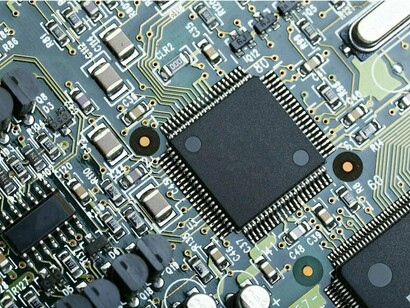
In recent years, the conflict between Washington and Beijing has evolved from being primarily about tariffs to one that focuses more broadly on issues such as advanced semiconductor manufacturing, artificial intelligence systems, and various types of communications infrastructure.
The US government has imposed restrictions on microchips and advanced machines since 2022, which are used to develop machine learning algorithms to train artificial intelligence models. To limit China's ability to develop advanced capabilities in the fields of artificial intelligence, quantum computing, and cyberspace, export regulations have been strengthened and expanded since the beginning of 2026 to include more components and software.
So far, relations between the United States and China have not witnessed any major economic confrontation. The two countries have taken steps toward what could be considered an informal trade truce over the past few months, agreeing to partially reduce some tariffs. This comes in preparation for the upcoming summit between President Trump and President Xi in Beijing, which will focus on managing tensions rather than resolving them. The summit is expected to focus on tactical deals, such as increased imports of US energy and agricultural products from China; vague commitments by China not to supply Russia and Iran with advanced weapons; and potential concessions by the US on tariffs while maintaining strict technological controls.
Taiwan remains a strategic focus of tension; reports indicate that China continues to exert pressure by conducting large-scale naval and air operations around the island, as well as making symbolic incursions across the dividing line, while the United States increases the amount of weapons delivered to Taipei and increases the frequency of visits by senior political officials to Taiwan.
Overall, most intelligence assessments and research have concluded that the likelihood of a large-scale invasion of Taiwan in 2026 is slim, given the serious risks China may face economically and militarily. As a result, Beijing resorts to symbolic military intimidation, methods of political influence through war, and means of economic penetration to change the balance of power between Taiwan and China.
The central powers are crucial to the rivalry between Washington and Beijing, representing key locations for this rivalry, including Southeast Asia, Africa, the Middle East, and Latin America, where countries compete for infrastructure, resources, minerals, and artificial intelligence. Because of this situation, these countries, if they adopt a well-thought-out foreign policy that balances the interests of both countries, can achieve positive results.
Venezuela and the new Monroe Doctrine
Following the Trump administration's escalation of counter-narcotics operations against Colombian and Venezuelan drug cartels, the Caribbean and South America, which have been less strategically important to the United States than they have been for many years, have become the focus of renewed attention by American policymakers. This interest resulted in an unexpected military operation in late 2015 and early 2016 targeting the government of President Nicolás Maduro.
Press reports and expert opinions describe this trend as a clear, if invigorating, revival of the Monroe Doctrine. Through sanctions, limiting military intervention (such as the non-entry of US forces into Honduras), using economically motivated obstructionist tactics (through economic sanctions and/or economically motivated military operations), and strengthening the military presence through the establishment of a naval base, the United States is exerting pressure on Latin America, while simultaneously seeking to change its security and political landscape, under the guise of combating drugs and securing energy supplies.
Venezuela, which has one of the world's largest oil reserves, is being used as a testing ground for this new US policy, which aims to manage a partial political transition, open the oil sector to US and Western oil companies, and try to curb Russian and Chinese influence in this strategically important country.
But implementing this approach comes at a high price. The risks associated with these operations are threefold: internal divisions within the country as a result of citizens forming "militias"; the growing number of militias (or informal economies) due to the absence of federal authority; and negative regional reactions against countries such as Cuba and Nicaragua and perhaps Mexico if it follows suit in adopting a model of "preventive intervention" (i.e., under the guise of combating drugs or terrorism) throughout its countries.
In the next few months, policymakers in many of the world's largest cities are likely to focus on finding ways to deal with the issue so that it does not turn into a protracted guerrilla war or an indirect conflict with Russia or China, both of which have invested large sums of money in the Venezuelan energy industry.
In contrast, other Latin American countries are trying to reach consensus on a new set of common principles to regulate the presence of foreign military personnel in their territories, something they believe can be achieved through organisations such as the Latin American Cooperation Council (CELAC).
The previous sections of this report reviewed different aspects of the United States, which are interconnected to form a background for understanding this matter from a domestic political perspective. Domestic politics will affect how we view our position in the world. For the Trump administration, the November 2026 midterm elections are a referendum on its performance domestically and internationally.
Based on current polls and analyst assessments, Democrats appear very likely to regain their majority in the House due to factors including voter fatigue from internal partisan divisions, concerns about the cost of foreign military interventions, and the emergence of new priorities on pressing social and economic issues. If that happens, President Trump will face a divided Congress and will be unable to move forward with his domestic agenda. In addition, foreign policy will become a two-pronged issue: First, it will serve as a means of easing the financial burden; second, it will be used to provide President Trump with an opportunity to quickly gain ground for his popular base.
This is likely to increase pressure on Kyiv to accept a truce or ceasefire inside Ukraine, even if it means making territorial concessions to the Russians in order to continue receiving financial and military assistance (but not enough for a sustained, unlimited commitment).
The White House may seek to establish a stable ceasefire with Iran and develop a security-energy alliance with the Gulf states and Israel, presented to the American people as a restoration of American deterrent power and a reduction in the risk of a major war in the Middle East. As for Venezuela, immigration, and the Mexican border, the strategy is likely to consist of overt symbolic measures, such as limited military operations, tightening border controls, and renegotiating immigration agreements, supporting the slogan "Take Back Control" that Trump has adopted on his political agenda since 2016.
Forgotten crises: the Horn of Africa, the Sahel, and the decline of multilateralism
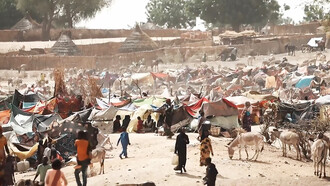
Behind-the-scenes conflicts, such as civil wars and armed conflicts within Sudan and the Sahel (where Sudan's western and northern borders lie), as well as the Horn of Africa, are just beginning to come into the spotlight with all the humanitarian deterioration and global competition for strategic locations (ports, sea lines, and military bases).
These regions do not receive sufficient attention in Western media, but they are vital to the calculations of major powers, such as Russia, Turkey, and China, in addition to the Arab countries bordering the Red Sea and Africa, due to their strategic location on the trade routes linking Asia to Europe via the Suez Canal and the Red Sea. Reports, including "Conflicts to Watch in 2026", indicate that potential risks may not be limited to conflicts alone but also include water and resource crises, illegal migration, and the increasing involvement of non-state actors. Therefore, medium-sized countries, such as those in the Arab and African continents, must take into account cooperative regional security arrangements that are not entirely dependent on Western powers.
All this is happening amid a marked decline in the effectiveness of multilateral institutions. Most of the Security Council's key issues remain unresolved after being paralysed by the use of mutual vetoes, and UN agencies suffer from severe funding shortages and increasing political interference. As a result, the vacuum filled by many types of arrangements is widening, including bilateral arrangements, smaller regional blocs, and mediation efforts by mid-level countries looking for work.
The global economy, resource scarcity, and the artificial intelligence revolution
The global economy is adapting to the so-called "new normal" of high trade protectionism and continued sectoral sanctions, but it has not yet reached the point of a complete collapse of the global trading system. Recent shocks to the energy sector, caused by the Iranian conflict, as well as ongoing supply chain disruptions due to the COVID-19 pandemic and the war in Ukraine, have prompted countries around the world to reassess their food and energy security and develop renewable energy sources, while simultaneously developing and expanding regional interconnections between their electricity grids.
The AI applications sector is seeing increasing demand for electricity, data centres, electronic chips and rare metals. Countries with abundant solar, wind, or mineral resources, such as North Africa and some regions of the Global South, could benefit from the potential of artificial intelligence if they successfully negotiate technology transfer and investments.
Restrictions imposed by the United States on the export of advanced electronic chips to China have led China to seek to create its own independent technology base. As a result, two contrasting technological environments will increasingly coexist, increasing pressure on most medium-sized countries to carefully choose their digital partnerships. Bottom line: "It is power that determines what is right" and the future opportunities available to medium-sized countries.
The broader context of your work, along with that of others involved in your collaborative network, is that global dynamics continue to evolve away from principles of the rule of international law and toward principles of "might makes right"; that is, the global environment after the second half of 2026 is likely to involve an increasing reliance on the economic, technological, and energy tools of government policy and the integration of these tools with traditional forms of military power in order to establish new standards and impose a new set of facts to support them.
U.S. midterm elections: foreign policy held hostage by domestic politics
Under Trump's leadership, America appears to be moving toward an economic nationalist perspective through means such as the reformulated Monroe Doctrine and pressure on its allies to share military expenditures. At the same time, China and Russia are seeking to develop a separate or parallel approach to their cooperation on various platforms, including but not limited to the Shanghai Cooperation Organisation and the BRICS group, and energy and currency cooperation contracts.
As the international system becomes increasingly unstable, Egypt, Saudi Arabia, and Turkey can no longer rely entirely on stability within this existing system. Therefore, these countries must adopt proactive hedging strategies by diversifying their partners, taking advantage of their geographical location, building highly credible deterrence capabilities, and playing a mediating role in neighbouring and surrounding crises.
These countries have many potential areas in which they can take advantage of economic opportunities in the areas of energy, trade, infrastructure and artificial intelligence, as well as play the role of mediator between a number of major competing international blocs. However, the risks these countries face have increased significantly if they form strict alliances with other countries or rely on security guarantees provided by a major power in this unstable global situation.
The next six months can be considered an extension of an ongoing transition towards a new international order, which is still evolving. As a result, decisions taken by middle powers (including Arab and regional powers) will have significant implications for whether this new international order becomes a complex but sustainable balance or whether we enter a spiral of managing protracted conflicts rather than resolving them.