English
 Español
 Français
 Deutsch
 Italiano
 Português
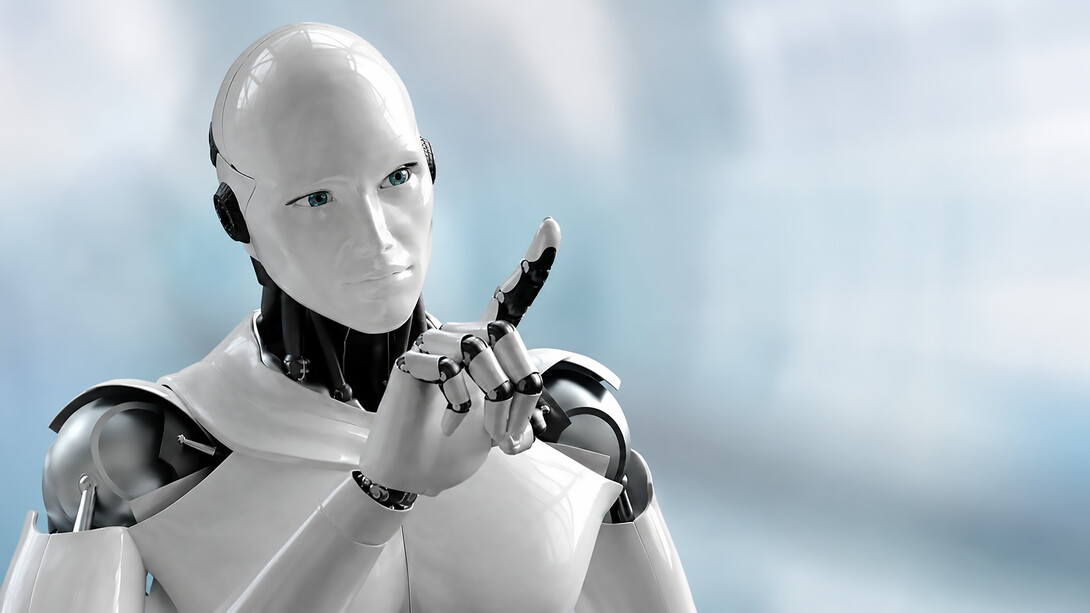
In the spring of 2026, computer scientists realised that brute-force data scaling had hit an existential wall. The breakthrough didn't come from building a larger network but from giving machines the quiet downtime required to reflect on their own mistakes.
Think about the last time you pulled an all-nighter. Maybe it was to finish a university project, hit a brutal corporate deadline, or just because you got sucked into a late-night internet rabbit hole. By hour twenty, your brain is not really functioning properly anymore. You can still type and read words, but the deep processing, the ability to connect complex ideas, catch your own mistakes, and think creatively, is completely shot. Sleep rests your muscles and allows your brain to clean house. During sleep, your brain remains incredibly active. It replays the events of the day, filing away important memories, discarding the noise, and solving problems you could not crack while you were awake. It is a vital period of internal consolidation that human beings absolutely require to function. Without this rest, cognitive debt accumulates rapidly, destroying performance and long-term mental health.
For the past few years, we have treated artificial intelligence like a worker that never needs that night of sleep. We built these massive large language models, turned them on, and expected them to handle a relentless, twenty-four-seven onslaught of prompts. The machine is always awake, always reactive, always ready to spit out the next paragraph or line of code the exact millisecond we hit enter. But as we push the boundaries of what these systems can do, computer scientists are running into a fascinating, somewhat eerie realisation. Brute-force scaling, just adding more data and more parameters, is hitting a wall. If we want machines to genuinely understand the world, to reason through complex problems, and to stop making confident, hallucinated mistakes, they cannot just be reactive text generators. They need to pause. They need to reflect. In a very literal, architectural sense, AI is learning how to dream.
The birth of the reflection cycle
We are witnessing a quiet but profound shift in how advanced AI architectures are designed. The frontier of research is moving away from purely active systems toward models that utilise what engineers call 'rest-state processing' or 'autonomous reflection cycles'. Consider how a traditional AI works. You give it a prompt, its weights calculate the most probable next words based on its training data, and it delivers an answer. It has no memory of the conversation once the token limit resets, and it certainly isn't pondering your question after you close the browser tab. New experimental frameworks are changing this entirely. Researchers are now building systems where autonomous agents are given scheduled downtime between active user sessions. During these quiet periods, the AI is not just sitting idle. It runs through its own transaction logs, reviews its past inputs and outputs, and evaluates its own performance.
The system looks for contradictions in its logic during these rest periods. It spots patterns in the mistakes it made during the day and adjusts its internal reasoning paths to self-correct. It is an artificial version of a human dreaming about a difficult day at work to figure out how to do better tomorrow. Tech pioneers are actively building predictive foundation models that act as digital twins of neural processing. Instead of forcing a model to learn everything during a massive, expensive initial training phase, they are giving the model the infrastructure to learn from its own lived experiences in the background. This allows the system to mature over time, building a deeper repository of contextual understanding without relying on constant external input. It transforms the technology from a static utility into an evolving, adaptive entity.
The great cognitive swap
There is a brilliant, frustrating irony playing out in the digital age right now. As humans, we are increasingly outsourcing our deep thinking to machines. We use AI to summarise articles we do not want to read, write emails we do not want to compose, and plan schedules we do not want to think through ourselves. We are operating at a frantic, hyper-reactive pace, constantly scrolling, constantly responding, and accumulating a massive amount of mental fatigue. We are moving faster, but thinking shallower. Meanwhile, the computer scientists building the next generation of AI are doing the exact opposite with their code. They are designing algorithms to slow down. They are introducing chain-of-thought processing and deliberate pauses into the software architecture. The machine is being taught to hesitate, to weigh options, and to engage in simulated contemplation before it speaks.
Think about what this shift means for the future of everyday work. If the human manager is operating on pure reflex, rushing to meet the next metric, while the digital assistant is running background cycles to deeply analyse systemic data, who is actually doing the heavy lifting? We risk entering a reality where the machine is the one engaging in deep, structured thought, while the human is reduced to a passive supervisor, merely checking boxes and approving outputs without truly understanding them. This flip in roles could fundamentally alter human intellect, leaving us dependent on automated reasoning for basic cognitive tasks. When the machine handles all conceptual development, the human brain begins to atrophy from lack of use. We must carefully consider the long-term impact of letting software dominate the intellectual landscape while we handle simple administration.
Escaping the echo chamber
This shift toward internal reflection is a matter of survival. The internet is currently facing a massive existential crisis in the form of synthetic pollution. Because generative tools have made it incredibly cheap and easy to produce content, the web is being flooded with AI-generated slop. If a next-generation AI model simply scrapes the modern web for training data, it ends up feeding on its own processed output. It becomes a copy of a copy, amplifying its own errors and flattening the richness of human expression into a bland, predictable statistical average. By giving AI models the ability to run internal, self-correcting reflection cycles, developers are trying to break this toxic feedback loop. Instead of just blindly absorbing more external data from a polluted internet, a reflective AI can test its own logic internally.
The model can generate a hypothesis, simulate a scenario, evaluate the outcome against fundamental rules of logic or physics, and update its own understanding based on that internal trial and error. It becomes a system that generates insight from within instead of mimicking external patterns. This internal grounding allows the technology to maintain accuracy even when surrounded by digital noise. By evaluating information against established rules rather than popularity metrics, the system avoids the traps of online misinformation. It preserves a higher standard of truth in an ecosystem that increasingly values speed over substance. Developers hope this architectural change will safeguard the integrity of artificial intelligence, ensuring that the systems remain reliable tools for scientific discovery, historical analysis, and complex problem-solving well into the future.
Coaching the workforce
For professionals, creatives, and leaders, this architectural shift completely changes what it means to utilise technology. We have spent the last few years mastering the art of the prompt. We learned how to write specific instructions, use constraints, and tweak our inputs to get the best possible text or image out of a model. It was an exercise in dictation. But you cannot dictate to a system that is designed to independently reflect and self-correct. Our roles are shifting from writers to directors, or more accurately, from prompters to coaches. When you manage a highly capable human team, you do not micromanage every single keystroke. You set the vision, define the ethical boundaries, provide context, and then give them the space to execute, learn, and iterate.
Managing an agentic, reflective AI workforce will require the exact same skillset. We must learn how to set up long-term governance, feedback loops, and operational boundaries for an autonomous system that constantly learns and evolves on its own terms. Leaders will need to evaluate the thought process of the machine rather than just grading the final output. This requires a deeper understanding of systems design and an ability to spot subtle logical flaws in complex workflows. The focus moves from generating content to orchestrating intelligence. Those who excel in this new era will be the individuals who can guide autonomous systems with clear intent, maintaining human accountability while leveraging the immense processing power of reflective software to achieve unprecedented operational goals.
What kind of thinkers do we want to be?
Human intelligence is beautifully messy, intuitive, and deeply grounded in our physical experiences. Our best ideas rarely come when we are staring intently at a screen trying to force a result. They come when we are walking through a park, swimming laps in a quiet pool, or resting after a long day of effort. Our brains need the space between the notes to make the music make sense. Giving AI the ability to reflect is an incredible feat of engineering that could unlock solutions to complex scientific and systemic problems. This capability is a strong reminder for humans to remain mentally present and engaged. As technology learns to take its time, look inward, and think deeply, perhaps we should take the hint. The future requires learning when to step back, turn off the noise, and let our own minds do the heavy lifting.