English
 Español
 Français
 Deutsch
 Italiano
 Português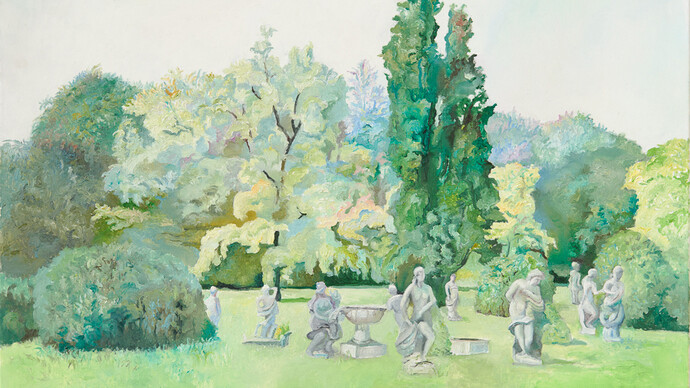
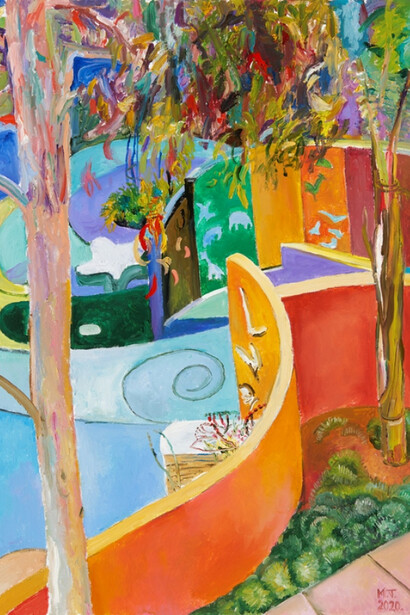
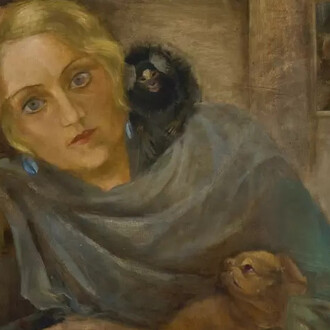
Maija Tabaka possesses a boundless imaginative world, which is one of the pillars of her compositions. In her paintings, fantasies, dreams, and memories become reality, much like in the films of Federico Fellini, where true reality is invention itself, because objective memories do not exist - only subjective ones are possible, just like every individual's fantasies. For Maija Tabaka, the 1970s were a creatively rich period, a time of major discoveries and successes.
Maija Tabaka once said: " I trully began with the large paintings of the 1970s. Real influences came from books, cinema, and life itself. At that time everyone was fascinated by italian cinema. Fellini was the closest to me. If you look at Wedding in Rundāle, it feels like a holographic fragment from Fellini film. I was drawn to the baroque aplendor, the marble, plaster flowers, and that mystically indefinable Fellini atmosphere, where the people around you transform into figures from earlier times, acquiring that invisible mystery over which time itself has settled." Maija Tabaka gives every event her own interpretation. She has no desire whatsoever to document reality literally; rather, her work became an example of what later would be called "Maija Tabaka's theatre." At first, the artist found this term offensive and dismissive of her painting, because her art is her conviction, her emotions, and her personal experience. It is her truth, not theatre. Over time, however, she accepted the comparison, and it eventually became the individual genre of her painting, with Maija Tabaka becoming the director of her own theatre, following Fellini's insight that everyday life is merely grey curtain behind which true life hides - colorful and vivid.
She selects her characters, dresses them dramatically, and makes them perform mise-en-scenes that cannot trully be described or narrated. Her theatre can only be painted, because it's essence lies in painting itself, with its rich and fascinating arsenal of expressive means. Painting is her instrument, her medium, and Maija Tabaka has mastered it brilliantly. Tabaka is striking personality. For her, painting is a form of existence. It is not merely a profession - it is a necessary and relentless daily practice. In it is embodied the mission of her life.
In 1992, the first solo exhibition of Maija Tabaka was held at the Latvian National Museum of Art. Hundreds of people filled the museum halls, hundreds more stood on the museum stairs and further down Valdemāra street - an unprecedented number of visitors for the museum, seemingly unsurpassed to this day. And people still continue to attend her exhibitions, eagerly savoring her painting.
There are many artists in Latvia who deserve the Purvītis Lifetime Achievement Award, but I am convinced that no one deserves it more than Maija Tabaka.Why?
In recent years, Maija Tabaka painted little, or only occasionally, because it was a difficult period filled with caring for the person closest to her, followed by saying farewell to him - Atis Kļaviņš. Returning to painting seemed impossible. Even if the desire remained, she physically lacked the strength. Maija has resigned herself to the idea that she would paint no more, that her time had passed.
In February, Maija Tabaka received news from Māra Lāce, director of the National Museum of Art, that she had been awarded the Purvītis Prize for Lifetime Achievement in Art. The artist called me to share the news - her voice sounded vibrant, and I had not heard Maija Tabaka like that for a very long time. I understood what recognition and appreciation mean to an artist, to her art, to her entire life. Not once did she mention the financial aspect of the prize - that was not what mattered.
A few days later, Maija Tabaka told me over the phone that she had almost needed an axe to scrape the old, hardened paint off her palette, and now she was sitting at the easel and painting again. She said she had never imagined she would feel so good standing at the easel once more. The next time we met, we began outlining the future exhibition. Maija Tabaka's 90th anniversary was approaching, and we would celebrate it with an exhibition.
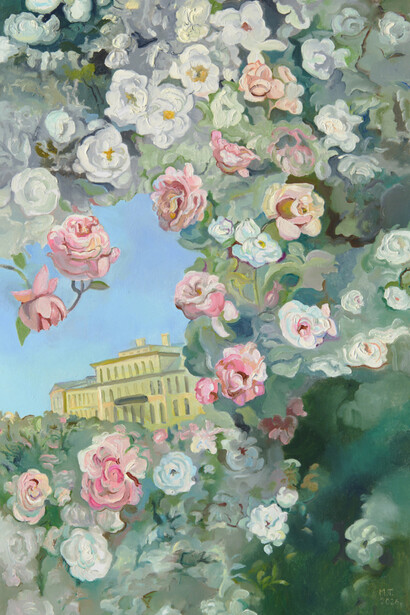
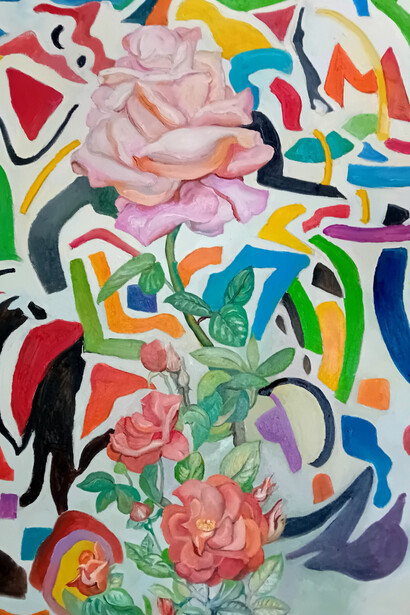
At that time Maija Tabaka was painting only flowers. Her fellow student and friend Imants Lancmanis once called Maija Tabaka the greatest figurative painter in the second half of 20th-century European painting. Indeed, Maija herself considered herself a figurative artist. After all, her theatre cannot exist without actors. Yet now, her models have become flowers. There is an immense richness of forms in them, not to mention colors. First came a bouquet of red roses, then crown imperials, tulips, water lilies, irises...what an astonishing world it is.
At one point it seemed enough. Maija herself laughs and says she never imagined she would become "a painter of flower". Indeed, flower painting is often not considered the highest form of art in artistic circles. Yet the old saying remains true:what matters is not what you paint, but how you paint it. And Maija Tabaka's painting remains a testament to her mastery of the brush. The great masters - Claude Monet with his water lilies, Georgia O'Keeffe with her world of flowers, Vincent van Gogh and his Sunflowers - there are countless examples proving that flowers are a magnificent subject for the expression of great painting.
And so Maija Tabaka paints. No longer in monumental formats - those belong to the past - but in smaller canvases that delight admirers of her talent and continue to attract collectors. Almost maraculously, young people also come to admire her flower paintings. At our gallery there was even a "collision" - two young men both wanted to purchase the same painting. In my thirty years as a gallery owner, that had never happened before, nor since. I had to use my modest diplomatic skills. Fortunately, it ended well. Maija painted another work according to the buyer's wishes, and the potential buyer was delighted. The flower painting was intended as a birthday gift for his daugther. The gallery gained new friends, not merely clients.
Maija would never do something she disliked, which is why I can confidently say she enjoys painting flowers. As she herself says, as flowers are beautiful - she cannot choose favorites, though "roses and roses." Still, I feel she has not yet painted her true rose. And yet, in one canvas at the exhibition there is a rose so refined in its color palette that it seems she has captured the very essence of the flower. Still, the real rose is perhaps yet to come...
Ther was a yellow one, extremely striking - one could sense the artist's fascination with the flower's form and the color yellow. The image of the flower lingers in the mind, yet there remains the feeling that the true Maija Tabaka rose is still emerging. Personally, I love the red tullips with a drop of dew and the white apple blossoms, which were gifted to Maija's life companion and husband., Atis Kļāviņš, and will not be exhibited. And it is wonderful that the artist has became captivated by such a splendid and mysterious world of flowers. For her own joy, and for all of ours.
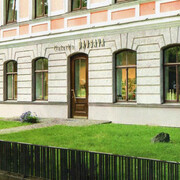
On May 20, the painter will be present at the gallery and will gladly meet her viewers and press. Whether she will have enough strength for the entire day, she cannot promise, but perhaps some of us will be fortunate enough to see Maija Tabaka beside her painted flowers.
Maija Tabaka paints again very day.
(Text by Anda Treija)