English
 Español
 Français
 Deutsch
 Italiano
 Português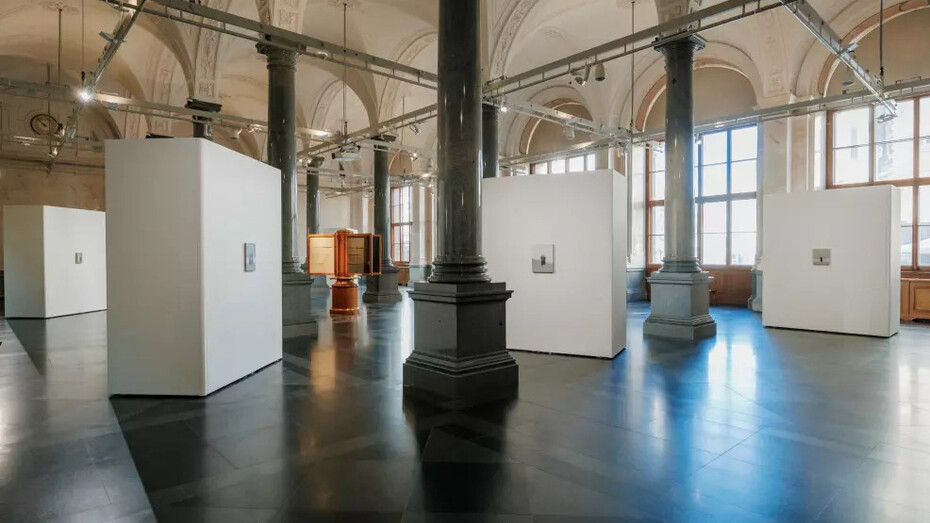
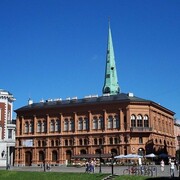
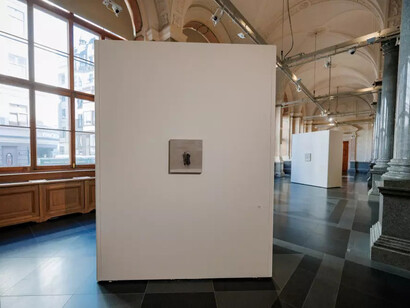
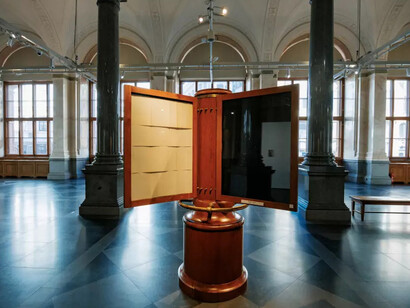
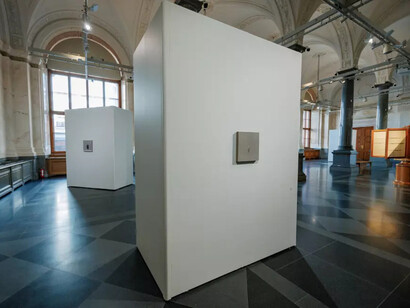
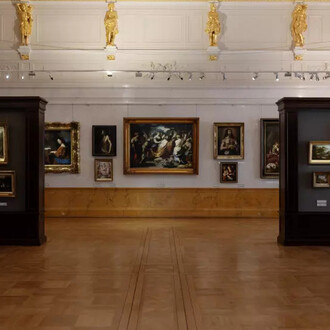
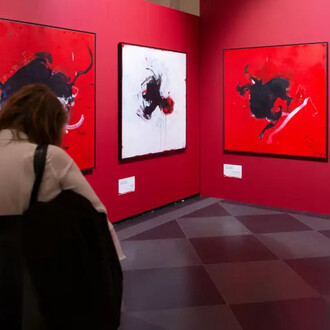
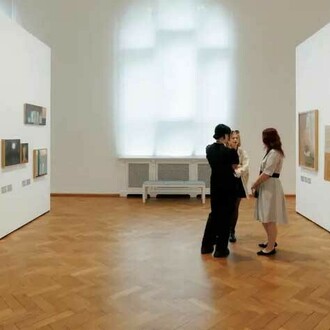
The concept of Jānis Avotiņš’ exhibition has developed in response to the architectural aesthetics of the Art Museum Riga Bourse. The museum’s Great Exhibition Hall, with its fully uncovered windows flooded with daylight and views onto the various perspectives of Old Riga, evokes the most magnificent Western European metro and railway stations built in eclectic and neoclassical styles. This has prompted the artist to continue investigating, in painting, the figure–space relationships characteristic of his work, concentrating the tensions of time, history and politics within the charged, intimate surface of the canvas.
In this exhibition, Jānis Avotiņš opts to work with the core of the fundamental idea that has shaped his practice to date: the recognisable historical connotations of one- or two-person figures in his paintings. The source is a photograph taken in Latvia before the Second World War, in the 1920s. From a bird’s-eye perspective, it shows several hundred people gathered in a broad open-air square around a large empty rectangle, at the centre of which, a ceremony, possibly military in nature, is taking place, although it is more likely an awards ceremony for Girl Guides or Scouts.
The ceremony protagonists are so tiny that only their outlines and choreographic constellation allow us to sense what is happening. In much closer proximity to the viewer, only backs, silhouettes and figures are visible... Photography is not part of the exhibition. Textual elaboration of philosophical metaphors is not part of the exhibition concept.
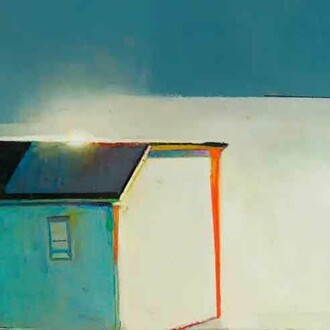
The exposition presents new works only and forms part of the Art Museum Riga Bourse exhibition series in which representatives of contemporary art engage with the museum’s historical heritage.