English
 Español
 Français
 Deutsch
 Italiano
 Português
Oxtail, chicken feet, and lobster. At different points in history, each of these foods occupied the same social position. They were inexpensive, abundant, and associated with people who did not have the luxury of culinary preference. They were eaten because they were available. They were prepared with care because waste was unaffordable. They carried no prestige. Today, at least two of these routinely command prices per kilo that rival premium cuts of meat.
The animals themselves have not grown rarer. Their nutritional properties have not transformed. What changed was perception. Desire shifted. The narrative shifted, and price followed. The elevation of working-class food into a luxury product is often framed as a triumph of evolving taste or a celebration of cultural cuisine. That explanation avoids a more uncomfortable question. Who determines value in the first place, and who absorbs the cost when value is rewritten?
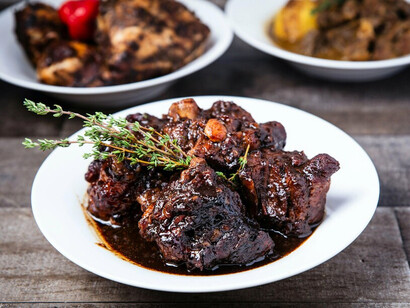
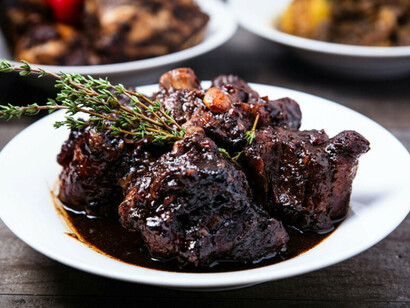
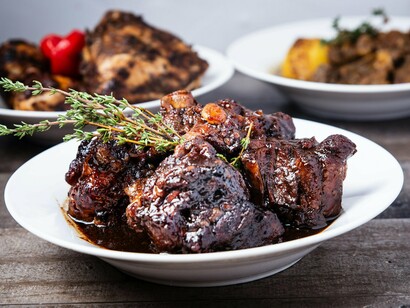
When abundance is recast as exclusivity and necessity becomes novelty, the impact falls on the people who relied on these foods long before they were curated for trend cycles. Oxtail illustrates the pattern with precision. It is the tail of a cow, low-yield and heavy with bone, cartilage, and connective tissue. Extracting its richness requires time and patience. Across Caribbean, African, Latin American, and working-class European cuisines, oxtail became a staple because it was affordable and filling.
Its preparation reflected ingenuity under constraint, transforming an overlooked cut into nourishment through technique rather than expense. Now it appears on restaurant menus framed as indulgent and artisanal. Pricing reflects that repositioning. Home cooks who depended on it encountered a different reality at the butcher counter. A staple becomes a status marker, and access narrows accordingly.
Lobster’s trajectory follows a similar arc. In eighteenth- and early nineteenth-century coastal North America, lobster washed ashore in such volume that it was fed to prisoners, servants, and apprentices. It was considered undesirable when served too frequently. Refrigeration and rail transport allowed lobster to travel inland, where novelty replaced familiarity. Restaurants cultivated an image of indulgence and rarity. The same species pulled from the same waters acquired a different social meaning once its audience changed.
Chicken feet occupy a parallel position within the contemporary food economy. In many Western supply chains they are discarded, rendered, or sold for negligible sums. In much of Asia, they form part of everyday cuisine: braised, fried, steamed, and seasoned without spectacle. During a visit to South Korea, in the Yadang area, four people shared four deeply satisfying meals for the equivalent of roughly twenty-four Australian dollars. One dish featured spiced chicken feet, rich in flavour and texture, cartilage and skin contributing substance rather than waste. There was no theatrical framing. It was dinner.
At the same time, exporters profit by shipping chicken feet and skins to markets where their social meaning supports higher margins. The product remains identical. Context shifts. Value rises. Scarcity alone does not explain these transformations. Supply remains relatively stable for many of these cuts. What fluctuates is prestige. Once influencers, celebrity chefs, and lifestyle media frame a dish as authentic discovery or hidden gem, demand accelerates rapidly. Social signalling attaches itself to ingredients that previously circulated quietly within specific communities. The supply chain adjusts toward consumers willing to pay more, and prices follow that incentive structure.
Economic language smooths the edges of this process. Supply and demand. Consumer choice. Market efficiency. Those terms describe mechanisms, but they do not address consequences. When a nutritionally valuable and historically affordable food becomes inaccessible due to trend amplification, the outcome carries ethical weight. The communities that sustained these dishes for generations often encounter higher barriers to the very staples they normalised. There is an additional layer worth examining. The broader consumer economy has shifted toward margin maximisation rather than durable value.
Products in many industries are designed with shortened lifespans. Aesthetic design trends converge toward safe homogeneity. Replacement cycles accelerate. Planned obsolescence operates as business strategy rather than fringe theory. Competitive pressure once pushed companies to differentiate through longevity, craftsmanship, and reliability. Today, market dominance and brand positioning frequently overshadow durability. The same incentive logic appears in food premiumisation. Once a product can be repositioned as aspirational, maintaining affordability offers little advantage. Rebranding abundance as a speciality enables higher returns per unit. Cultural familiarity becomes a marketing asset. Scarcity need not be biological; it can be psychological.
Competition is frequently celebrated as a universal benefit to consumers. That benefit materialises only when consumer behaviour exerts disciplined pressure. Individually, buyers respond to convenience, trends, and narrative. Collectively, they shape markets. Coordinated spending choices have historically forced companies to recalibrate quality, pricing, and production standards. The leverage remains. It is simply underused. Previous generations often demanded longevity as a baseline expectation. A refrigerator, a pair of boots, and a dining table carried an assumption of durability. Reputation travelled by word of mouth. A company that sacrificed quality for margin risked losing trust.
In the current landscape, accelerated consumption cycles dilute that feedback loop. Customers tolerate declining durability and inflated pricing because alternatives appear equally transient. Food operates within that same cultural environment. If consumers reward artificial prestige with premium spending, producers will continue converting staples into luxury experiences. If consumers resist that repositioning, pricing recalibrates. Markets respond to incentives. Incentives originate in spending patterns.
The moral dimension emerges when distinguishing between luxury access and essential access. Societies routinely regulate housing, water, fisheries, and energy to preserve baseline availability. Food rarely receives equivalent structural protection, largely because market neutrality is assumed. Yet food functions as foundational infrastructure. When affordable protein becomes subject to elite trend cycles, the social cost extends beyond culinary preference.
Policy conversations in this space need not revolve around resentment or restriction. Framing the issue as punishment invites polarisation. Framing it as protection of access clarifies priorities. Tiered pricing caps for historically working-class staples, export limitations when domestic affordability deteriorates, luxury markups on restaurant resale of protected ingredients, or community-priority allocation mechanisms resemble frameworks already applied to other shared resources.
Classifying certain staples as cultural nutritional goods would formalise their social role. Such measures acknowledge a hierarchy of needs. The discretionary consumption of high-income diners carries different moral weight than the baseline nutritional access of low-income households. Treating those scenarios as interchangeable flattens reality. Cultural exchange itself remains valuable. Food travels, adapts, and evolves. Curiosity enriches cuisine. The concern arises when appreciation transforms into extraction, when communities that normalised an ingredient encounter exclusion once it becomes fashionable. Prestige-driven inflation converts survival food into spectacle and assigns a premium admission price.
Value grounded in nourishment, sustainability, and fairness produces a different outcome from value grounded in social signalling. The current pattern reflects collective choices by producers, by media, and by consumers. Spending power aggregated across households outweighs the influence of any individual chef or influencer. Recognising that leverage is the first step toward using it. Artificial price inflation of common produce reveals a broader truth about modern markets. They amplify desire efficiently. They protect access only when compelled to do so. If affordable staples continue to migrate into luxury categories without resistance, inequality deepens under the language of taste and trend.
Progress would look like abundance remaining abundant; sustainable practises being as economical as agricultural; and maintaining equitable distribution where cost is no longer an inhibitor to any of the foods necessary to nourish a human being. It would look like communities retaining access to the foods they sustained. It would require consumers to understand the force of their collective purchasing decisions and to direct that force deliberately. Food should nourish before it performs. When spectacle eclipses sustenance, the market has drifted from serving people to staging experiences for those who can afford them. Reversing that drift demands clarity about what deserves protection and the will to defend it.