English
 Español
 Français
 Deutsch
 Italiano
 Português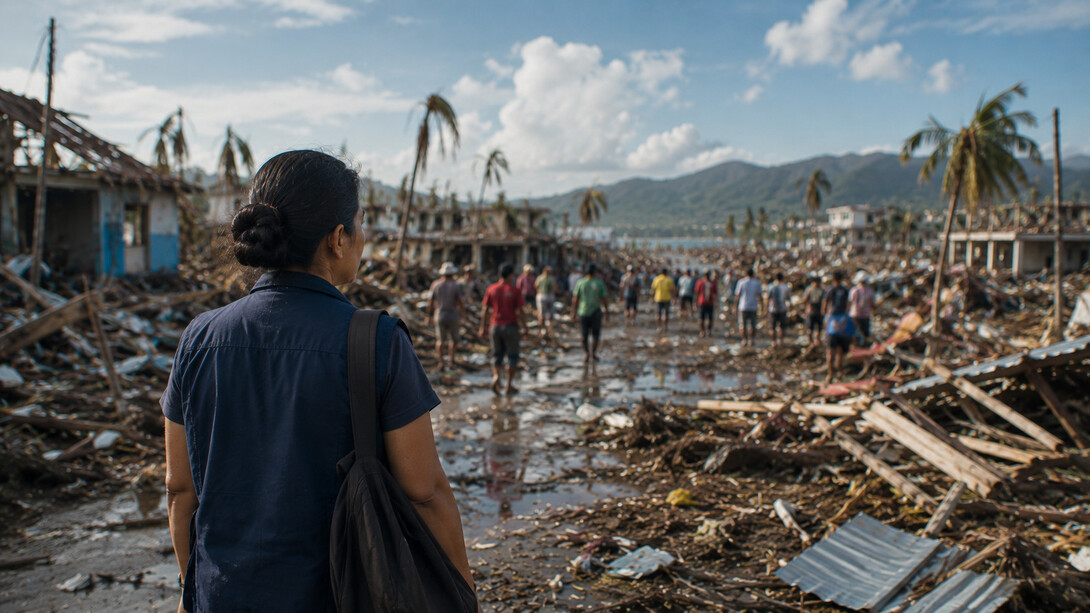
If memory is correct, the first time I heard of Typhoon Signal Number 1 was in La Union, a place located on the island of Luzon. I was working as a technical/cultural facilitator while I was related to the United States Peace Corps. It was daytime, and I can still recall how one of our American trainees was so amazed by the strong winds and heavy rain. For him, it was like a new discovery—an awe-inspiring moment of nature’s force.
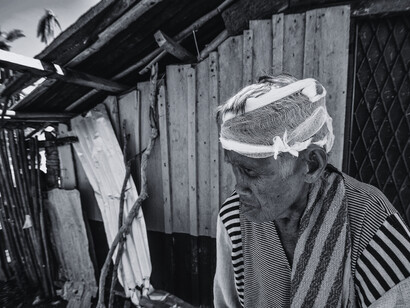
Coming from Mindanao, where storms are not as common as in Luzon or the Visayas, I must admit that it was also an important discovery for me. I discovered how resilient Filipinos are: how they manage to smile despite the storms, how they accept losses with grace, how they try to rebuild, and most importantly, how they keep moving forward.
Sometimes, when people compare the Philippines to other countries, I hope they understand that storms are part of our reality. All year round, typhoons visit our shores. Unless we develop some magic power to stop them, they will always be a part of our lives. Living with typhoons is not just an experience—it is a way of life. That is why it is difficult to blame Filipinos if sometimes our lives seem to revolve in cycles: we work hard, we save, and then the typhoon comes to test our resilience once again.
Facing one storm after another storm, we are reminded of the importance of the structures we build. Ormoc City, for example, invested in megastructures with the support of Japanese aid to mitigate flooding. These have given the city better protection, yet challenges remain in certain areas that still need stronger systems. Still, what stood out to me was how the whole city came alive, staying vigilant the entire night. This collective readiness reflects the spirit and determination of the Ormocanons.
Looking back, I realise that living with typhoons has taught me more than just survival skills. It has taught me to value resilience—that even in the face of loss, there is always room to rise again. It has taught me the importance of preparedness, because structures and systems matter when lives are at stake. It has shown me the strength of community, how people coming together can face even the fiercest storms with courage. Most of all, it has reminded me that acceptance and adaptability are not signs of weakness but of wisdom: that to endure, we must bend with the wind yet never break.
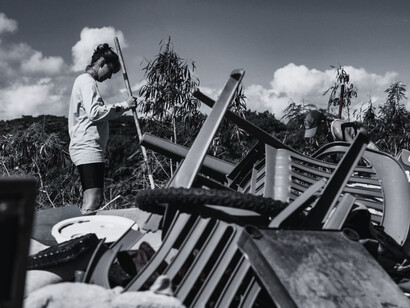
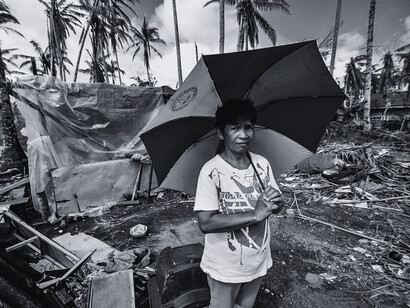
These lessons became even clearer during my work after Typhoon Haiyan (Yolanda), one of the most devastating disasters in Philippine history, which took almost a thousand lives. Serving as protection support for women and girls in a special project of the United Nations and the Commission on Human Rights, I saw firsthand the struggles of internally displaced persons. The death toll reached nearly 13,000, and the scale of destruction was unimaginable.
One image still burns in my memory: a snapshot of the Tacloban mass grave during our response in 2014. Thousands of people had gathered to bury their families. One person attended to twenty of his or her dead relatives; others tended to two or three. As a young social worker, I didn’t know whom to approach first. I questioned myself: Who has mourned more? Those with many dead, or those who cried so much for one person because of their deep significance in their lives? It made me realise that the degree of loss is not measured by numbers but by meaning. What is the weight of one life for another person? I did not know the answer.
Tacloban taught me one essential thing: to be there, to listen. In those moments, my task was not to fix or rescue but to witness, honour, and hold space for others’ pain. It also taught me to listen to my own breathing—to remember that life is not ours to command. In that graveyard, amid grief and chaos, I saw my own mortality reflected at me. I realised how short life is and how urgent it is to devote what time I must to what truly matters, not just to me but to the world.
That experience shifted my thinking about humanitarian work. It made me question what it really means to be humanitarian. Can we define it simply by the degree of our response? Who gets to define it? How can we decolonise its definition so that it reflects the lived realities of those most affected? Tacloban left me with these questions and the courage to wrestle with them. It also led me to think more deeply about sustainable development, gender equality, and women’s issues—not as abstract programs but as essential pathways for dignity and survival.
That was 2013, and then a few years back, when I passed by Tacloban City, it looked like there were no signs of such a horrible event. The town is back to life with big shopping malls rising, hotels opening, and even new structures being created that did not show any signs of such an event.
I also remember attending a conference after Typhoon Pablo, where therapists presented on how people process their losses. One presenter said something that has stayed with me: “Nothing and no one can separate us from the love of God.” He explained that sometimes, in the face of great sadness, we forget that God can create something new even out of a mess, even when so much has been taken away. He then sang the line, “Walang sinuman ang makapaghihiwalay sa atin sa pag-ibig ng Diyos.” Every time I feel overwhelmed by grief, I return to that song. It relieves me and reminds me that faith, like resilience, is also a source of strength.
This faith has carried me through my journey as a social worker. When systems fail, when communities are displaced, and when children cry from hunger or survivors grieve by mass graves, I hold on to the truth that God’s love is not separated from us—not by typhoons, not by poverty, not by disaster. If humanitarian work is about restoring dignity, then faith is the quiet anchor that makes such dignity possible even in the most unbearable times.
Long before Yolanda, however, I had already been introduced to environmental education through the Kinaiyahan Foundation. One of the most lasting lessons I carried from there was the concept of the Web of Life. It emphasises that humans are just a dot—a tiny speck in this vast universe. We are not the centre of everything, nor the owners of creation. The belief that humans are the most rational or powerful beings only creates dysfunctional thinking. The truth is, we are no better than the smallest creatures. We are simply part of the ecosystem.
This realisation came back strongly during Yolanda. Community stories spoke of swimming alongside snakes and dogs during the storm surge. Children recalled seeing countless dead bodies washed into rivers, with big fish feeding on them. It was horrifying, but it forced me to think deeper: the storm surge itself killed thousands, but the wider truth is that the deteriorating condition of the environment made these communities far more vulnerable. Mangroves had been cut down. Coastal ecosystems were weakened. And the people, already impoverished, were left exposed.
In social work, we call this perspective Person-in-Environment (PIE). To me, the Web of Life is the PIE. It reminds us that people’s well-being cannot be separated from the well-being of their environment. Through the lens of the ecological systems perspective, I now understand that if we want people to be socially functional, they must live in communities where the environment sustains their well-being—and in return, they must also take responsibility for protecting their habitat. This is why, as social workers, our advocacy must also include the fight for climate justice, because environmental destruction is itself a form of social injustice. This kind of work is the reason why I will continue to talk about the importance of green social work.
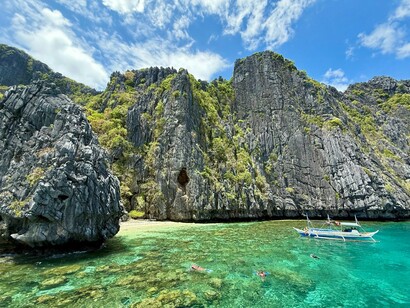
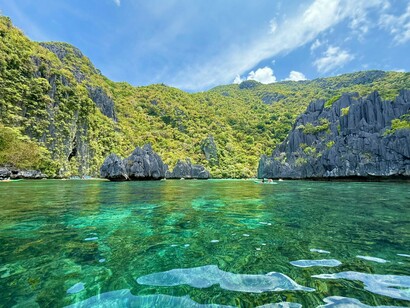
Wherever I go, I often hear people say, “Oh, the Philippines—it is such a beautiful country!” And undeniably, I agree. I have travelled to some of the most breathtaking places in my homeland—Palawan, Boracay, Siargao, and Tawi-Tawi—and I know there are still countless islands out of the 7,107-plus more that remain unnamed or even unmarked on our maps. By nature, the Philippines is indeed beautiful. But this beauty is fragile, and that is why protecting our environment is more important than any tourism campaign. What we have cannot be recreated once it is gone. In other countries, they build castles, skyscrapers, or artificial attractions to draw people in. Here, we already have the treasure: our islands, our seas, our forests.
Yet beyond natural beauty, another reality makes the Philippines unique. If you want to know what it feels like to face a typhoon, a flood, or an earthquake, this is the country where those experiences are lived. The Philippines holds both extremes—so much beauty and so much devastation. It is like the Chinese Yin and Yang: opposing forces that, when held together, create wholeness. This is the paradox of my country: the joy and the pain, the strength and the fragility, the smiles and the storms.
As a social worker, I embrace this paradox. To love the Philippines is to love both its beauty and its struggles. To serve its people is to honour their resilience, fight for their dignity, protect the land and seas that give them life, and to remember always—through storms, loss, and catastrophe—that nothing can separate us from the love of God.