English
 Español
 Français
 Deutsch
 Italiano
 Português
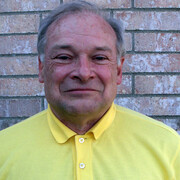
People around the world mourn the death of Doctor J. Craig Venter (October 14, 1946 – April 29, 2026). He died at the age of 79 on April 29, 2026, from unexpected complications and side effects that arose from treatment for a recently diagnosed cancer. He was a great scientist, pioneer, and explorer. He followed his own advice. If you want immortality, do something meaningful while you’re alive. Indeed, he did many things while he was alive.
His career in science and medicine began when he did medical triage for the Navy during the Vietnam War 1-2. His experience inspired him to study medicine. He received a Bachelor of Science degree in biochemistry in 1972 and a Ph.D. in physiology and pharmacology in 1975 from the University of California, San Diego.
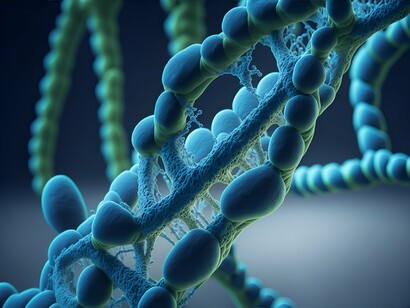
He was the founder and chair of the non-profit J. Craig Venter Institute. He worked as a professor at the State University of New York at Buffalo until he joined the National Institute of Health (NIH) in 1984. He did research on how messenger RNA (mRNA) is expressed in the human brain. He identified complementary DNA (cDNA) and named them expressed sequence tags, ESTs 3. An EST is a segment of a sequence from a cDNA clone that corresponds to an mRNA. This fast approach to cDNA characterization facilitated the tagging of most human genes in a few years at a fraction of the cost of complete genomic sequencing. It provided new genetic markers and served as a resource in diverse fields of medical and biological research.
By 1990, he had become a key figure in the Human Genome Project (HGP)—an international project to sequence the three billion bases in the human genome. In 1992, he founded the non-profit Institute for Genomic Research (TIGR) in Rockville, Maryland, which became a magnet for a host of talented researchers.
Together with the biopharmaceutical company Human Genome Sciences, built a directory of almost 300,000 human gene fragments. He co-founded the company Synthetic Genomics in 2005 (renamed Viridos in 2021). They reported the first synthetic minimal bacterial genome in 2016. In 2007, his colleagues at his non-profit organization, which was renamed the J. Craig Venter Institute, published the completed sequence of Dr. Venter’s genome. It was the first genome of an individual to be fully sequenced. The institute plans to open a new headquarters in downtown San Diego later this year. In 2009, he received the National Medal of Science from then-US president Barack Obama.
I heard Dr. Venter talk at the 1992 Human Genome Conference in Hilton Head, South Carolina. His ideas were controversial and pioneering. Most scientists thought that the genome should be sequenced carefully, one base at a time starting from the end of each chromosome. Using technology available at the time, that would have taken many decades to complete. Instead, Dr. Venter and his colleagues at TIGR suggested that the genome could be sequenced much faster by breaking each chromosome into much smaller pieces of 500 to 1000 bases, as if they were blasted with a shotgun.
The key obstacle was to put the pieces back together. The speaker before Dr. Venter said that it could not be done. His group was going to use the traditional method. This was contrasted by Dr. Venter’s talk. He not only said that it could be done, but he also described algorithms that TIGR had developed to put the pieces together. Moreover, they had several posters that gave details. They used a supercomputer to reassemble randomly sequenced DNA fragments while also using publicly available data from the HGP. They sequenced the genome of the bacterium Haemophilus influenzae in 1995.
TIGR’s attempts to receive funding from NIH went unheeded, while traditional sequencing was funded. This led Dr. Venter to join the Celera Corporation. They sequenced the genome of the fruit fly Drosophila melanogaster in 2000.
On June 26, 2000, Dr. Venter stood with Dr. Francis Collins from the NIH and then President Bill Clinton to announce the completion of the first draft of the human genome. The 14.8-billion base pair DNA sequence was produced from 27,271,853 high-quality sequence reads made from the DNA of five individuals 4.
Then, Dr. Venter’s interests turned to interpreting and synthesizing genomes. As an accomplished sailor, he circumnavigated the world on his yacht, Sorcerer II 5-6. He collected samples of bacteria in the ocean along the way and determined the base sequences of their DNA. I was impressed by the incredible variety of bacteria that he found, including many that are quite rare. I interpreted this as an indication of how Mother Earth (Gaia) is prepared to adapt to relatively fast changes in her environment during the current global climate crisis. I’m also impressed with this field of metagenomics, which is the study of all genetic material from all organisms in a particular environment. It revolutionized microbiology and our understanding of the human gut microbiome.
In 2020, Dr. Venter and his colleagues designed, synthesized, and assembled the 1.08–mega–base pair Mycoplasma mycoides JCVI-syn1.0 genome 7. They started with digitized genome sequence information. They transplanted it into an M. capricolum recipient cell to create new M. mycoides cells that were controlled only by the synthetic chromosome.
The only DNA in the cells was the designed synthetic DNA sequence. This included watermark sequences and other designed gene deletions and polymorphisms and mutations acquired during the building process. The new cells had the expected phenotypic properties and were capable of continuous self-replication. Since then, he and his colleagues have synthesized more new cells. This was described in his book Life at the Speed of Light: From the Double Helix to the Dawn of Digital Life 8-9.
Its central theme is the ability to write genetic code, moving from reading DNA to creating synthetic organisms. It described the concept of digitizing biology, in which DNA sequences are treated as digital information that can be transmitted and recreated. It also examined its potential impact on energy, medicine, environmental control, and human evolution.
This is leading to the production of data-driven synthetic microbes (DDSM) for a sustainable future 10. These are engineered microorganisms. They are designed by integrating omics, machine learning, and systems biology. The aim is to solve problems of degrading pollutants and reduce greenhouse gas production and the need for fertilizers made from natural gas, as well as sustainable biomanufacturing.
DDSMs develop and produce robust microbial systems. They are revolutionizing synthetic biology while producing environmental resilience and a sustainable bioeconomy. That is, omics technologies and computational biology use large datasets spanning all levels, from genes to metabolites. Combining these omics datasets enables a better holistic understanding of the microbe’s metabolism and its interaction with environmental factors. This includes identifying complex interactions between genes, proteins, and metabolites.
System biology leverages these datasets by using mathematical modeling, computational simulations, and machine learning algorithms to transform static information into a dynamic and predictive framework to learn about microbial function, communication, and behavior. Together, omics and systems biology form a powerful synergy. Integrating mined genomic data with systems science enhances metabolic networks.
This enables functional characterization and pathway design. By leveraging multi-omics datasets with systems biology, thermodynamically feasible metabolic routes can be detected. Also, non-native metabolic pathways can be designed and aligned with specific engineering goals. The goal is for synthetic biology to design and control metabolic pathways accurately in engineered microbes while optimizing them for specific sustainable applications.
So, Dr. Venter achieved some level of immortality. He did many extremely meaningful things while he was alive. He also inspired me in my career. I hope to make my contribution to distinguished teams that are developing ways to analyze a patient’s blood, breath, sweat, fecal material, and even individual cells to do proactive epidemiology. The goal is to identify biomarkers of the first stages of adverse side effects caused by prescription drugs, biologics, and medical devices. This way, treatments can be altered before they cause irreparable harm.
Hopefully, we can build on the vast body of knowledge provided by Dr. Venter and his many colleagues to make cancer treatments safer and more effective.
Notes
1 Venter, J. Craig. A Life Decoded: My Genome: My Life. Viking Adult. 2007.
2 Kevin Davies. J. Craig Venter obituary: Biotechnologist and entrepreneur who sequenced the human genome. Nature. May 6, 2026.
3 Adams, Mark D., et al. Complementary DNA sequencing: expressed sequence tags and human genome project. Science 252.5013 (1991): 1651-1656.
4 Venter, J. Craig, et al. The sequence of the human genome. Science 291.5507 (2001): 1304-1351.
5 Venter, J. Craig. The Voyage of Sorcerer II: The Expedition That Unlocked the Secrets of the Ocean’s Microbiome. Harvard University Press. 2023.
6 Venter, J. Craig, et al. Environmental genome shotgun sequencing of the Sargasso Sea. Science 304.5667 (2004): 66-74.
7 Gibson, Daniel G., et al. Creation of a bacterial cell controlled by a chemically synthesized genome. Science 329.5987 (2010): 52-56.
8 Venter, J. Craig. Life at the Speed of Light: From the Double Helix to the Dawn of Digital Life. Viking. 2013.
9 Venter, J. Craig & Smith, H.O. Synthetic Biology: Tools for Engineering Biological Systems. Cold Spring Harbor Laboratory Press. 2017.
10 Mariam, Iqra, et al. Data-driven synthetic microbes for sustainable future. npj Systems Biology and Applications 11.1 (2025): 74.