English
 Español
 Français
 Deutsch
 Italiano
 Português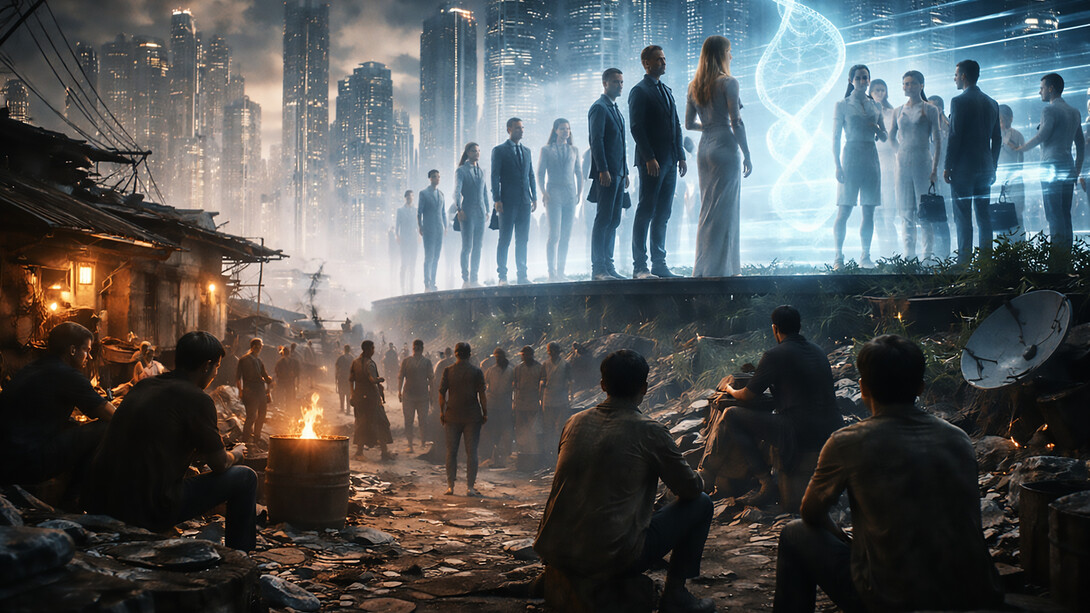
The AI revolution is moving at the speed of a Formula 1 car in the middle of the race. I say the middle because we haven’t crossed the finish line yet, and what worries me most is what’s happening along the way.
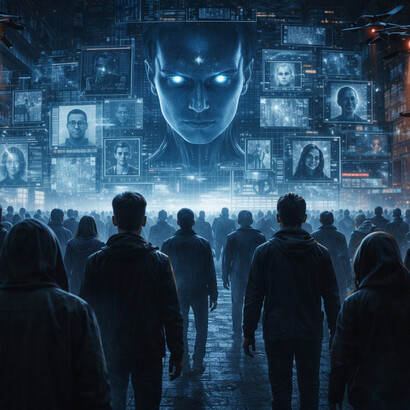
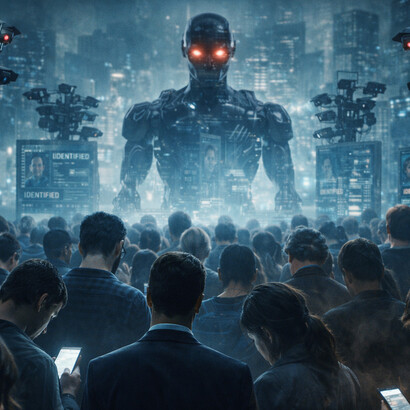
Everyone talks about AI taking over humanity with machines working on their own and a superintelligence becoming the boss of us all. It’s terrifying! I would feel like a shackled slave to its master. Already, it controls our data and the diffusion of information regardless of our wishes. But my concern is different, and I think it’s just as valid. I’m not worried about AI destroying all of us in one shot. I’m worried about how we will use it to split ourselves even more.
Right now, a number of companies and countries are wildly racing ahead with AI. Some are fueling development with massive resources while others struggle with lack of funding or irresponsible governance. As they lap one another, the gap between them widens. Eventually, the nations that invest the most will be so far ahead that the rest will be on an incessant Sunday drive, with little hope of catching up.
Here’s the thing though: the rush of countries and corporations to reach number one is not what concerns me most. It’s the people living in them. Citizens in AI-advanced nations won’t just have powerful smartphones or easier customer service. They’ll have access to what determines a person’s trajectory in life, from education to health and, eventually, from biology itself.
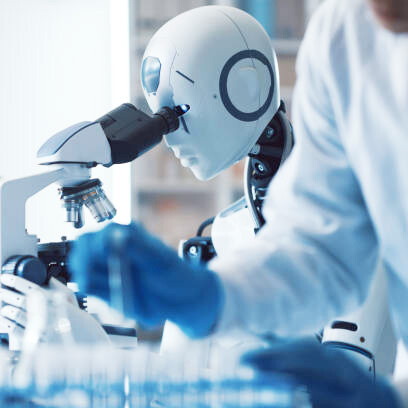
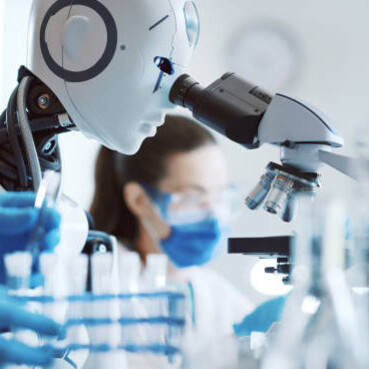
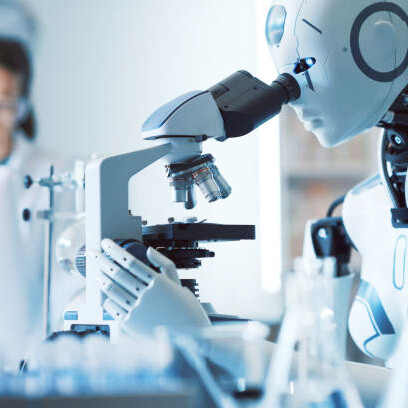
The revolution in medicine has already begun. AI is identifying disease prompts, predicting genetic risks, and innovating better treatments. That’s incredible progress! But if AI-guided gene therapy becomes available to prevent illness in my unborn child, I would never hesitate. Neither would any mom or dad. We want to protect our children from suffering by eliminating cancer or hereditary disease before it even appears.
But curing disease? That’s just the tech engine revving. The same tools that cure can also enhance. Once you change genes to prevent disease, you can manipulate them for less urgent reasons such as eye color, height, strength, and intelligence. That sounds reasonable, right? Say I always dreamt of being the next Einstein. Wouldn’t I want my child to have the advantage I didn’t? Why not! It sounds pretty harmless. As parents, we want to optimize our child’s chances at success. The truth is that the subtlety is not optimization but enhancement. And I grow wary when I hear that word, because I know the wealthy easily profit from any opportunity to improve their status. When only some people can afford genetic “enhancement,” I fear inequality will separate us from right before the embryo stage.
This reminds me of Darwin’s Theory of Evolution, but in a dystopian way. In Darwin’s theory, evolution happens slowly and naturally. Those with traits strong enough to survive their environment pass those traits on. These characteristics are not chosen but random, not specified but neutral. And it takes multiple generations. That was natural selection, whereas this is artificial selection. It’s quick, intentional, and deliberate. Something the wealthy think is their due.
People with access to AI-driven genetic enhancement will evolve faster and better than those without it. Human biology will become transactional rather than natural. It sounds cold, and I’m shivering! Populations will show measurable differences beyond wealth. Biological advantage will make humans taller, stronger, and smarter, but only by design. Whereas for some a spark to prosperity is given before breath, others will be left with nature’s choice.
If we thought we’d reached the limit of classifying humans in anthropology class, we’ve got an update to the curriculum coming. Not metaphorically but literally. New classes of humans, divided not just by wealth but biologically. Where the enhanced will dominate the unenhanced, not because they earned it or worked harder, but because they could afford the upgrade.
Now, if the doom and gloom of AI taking over, as some experts warn, comes true, it will dominate or destroy us equally. The irony is that it won’t distinguish one class of humans from another. To AI, we’ll all just be subclass creatures, a nuisance. At least that will be fair, in an eerie way.
But the future I’m describing isn’t fair at all. It’s a hierarchy we are creating. The danger is human-made, not machine-made. And it will be enhanced humans versus everyone else.
At the time of distinct species such as Neanderthals and early Homo sapiens, they shared the earth and were separated by the geography of rivers, mountains, and forests. If they encountered each other, sometimes it was violent, sometimes beneficial. But mostly, they remained ignorant of one another’s existence. Each group evolved independently, unaware of the others.
Today, connection is inescapable. With a quick touch, a child in a developing country can watch real-time scenes of life in a wealthy nation and understand exactly what they’re missing. The inequality is clear and frustrating. They’re fully aware of the gap, yet can only watch from a distance.
Imagine a world where that gap isn’t just economic or educational, but biological. Where people in some countries are visibly and measurably different because of the enhancements they received. Where genetics aren’t determined by unique biology but by chosen characteristics paid for by mommy and daddy. Not so special after all.
I could feel the resentment engine roaring louder and louder. As we numbly accept today’s inequality, resoundingly hurtful as it is, it can be blamed on circumstances or broken government systems. Genetic enhancement drives alone. Even if there is a momentum to adapt new laws, including rethinking distribution of wealth and access to technology, you can’t undo genetics once they’re built into a population.
How can we prevent this scenario? Are there viable solutions? Maybe this future is avoidable. Maybe we’ll create global agreements and ensure equitable access to cutting-edge scientific innovation. Maybe ethics can come before profits. Maybe.
I’m concerned. Knowing human nature, the temptation is too strong. If enhancement is possible, people will not hesitate. If one country bans it, parents will travel to wherever it’s allowed. Once people have the opportunity, there’s no going back. Especially for those who can afford it.
My true fear isn’t about AI wiping out the human race. It’s the scientific genetic breakthroughs designed to help us that will instead divide us irreversibly. It will be a business of human upgrades. Is that progress?
The race is not over. We are far from the finish line. But the decisions we make right now, about who gets access to biological enhancement and who profits from it, will determine our future. We can write an equitable path forward, or we can let technology rewrite our biology according to wealth. Either we move forward together, or our paths will fragment into classifications unknown.
That’s what really scares me.