English
 Español
 Français
 Deutsch
 Italiano
 Português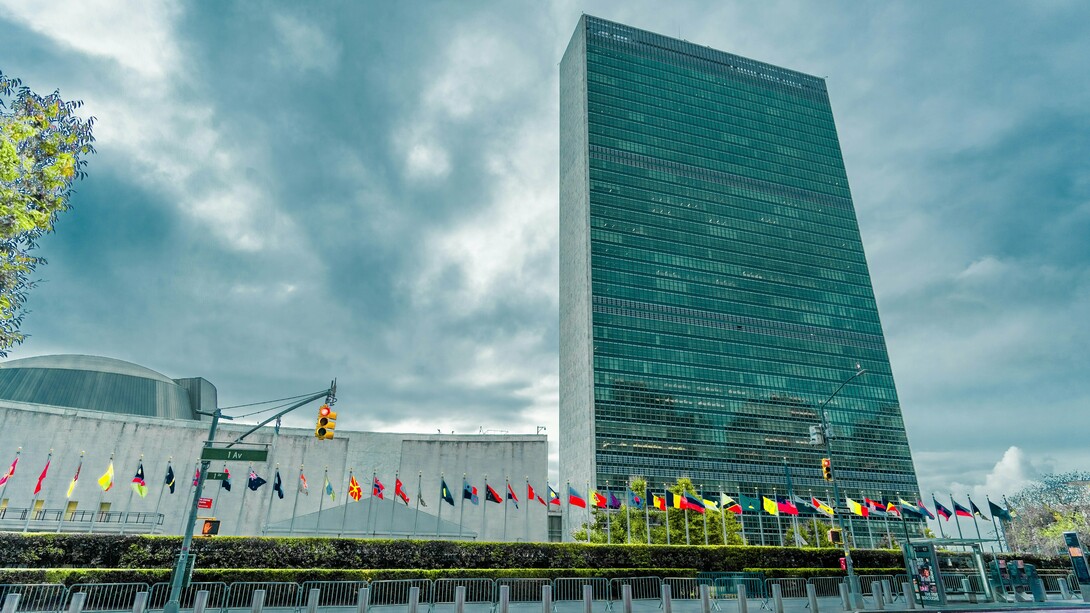
There is a consensus that the existing world order, established in 1945, is aging badly and that the United Nations, its most visible face, will become irrelevant if it is not reformed. Middle powers are demanding greater participation in global affairs, and the rest of the countries whose voices are not heard are joined by a public opinion that believes less in the international organization. In addition to the problems inherited from the 20th century, there are new threats to the planet, alongside the constant presence of war, which has never ceased to be a reality.
History teaches us that the international order has only ever changed in the wake of major wars. An example of this is the Congress of Vienna in 1815, which followed Napoleon’s defeat and brought nearly 100 years of peace to Europe. The Great War of 1914–1918 led to the creation of the League of Nations in Geneva the following year, with nearly 60 countries signing up. This was the first organization to have global ambitions for peacekeeping and disarmament, but it quickly lost legitimacy when countries preparing for war, such as Germany, Italy, and Japan, withdrew.
Paradoxically, the United States, the organization’s main driving force under President Woodrow Wilson, never became a member because it was not approved by the US Congress. The current international order was imposed by the victorious nations at the San Francisco Conference, which gave rise to the United Nations. In many ways, it extended the vision of the League of Nations: preserving peace and security among nations.
Can the world order be changed without a new war? Does international law—the foundation on which the United Nations is built and which enables states to coexist—exist, or has it become a fiction that no one dares to acknowledge? In practice, the five permanent members of the Security Council (China, the United States, France, the United Kingdom, and Russia), who have veto power, control a world order under their guardianship or protection. This undemocratic system, in its origins, defends the interests of the permanent members and their allies and does not prevent wars, massacres, and abuses of power by the strongest, as we see daily on television. Will they voluntarily relinquish their power to democratize the Security Council?
In the last quarter of this year, the five controlling members will present a name to the ten non-permanent members of the Security Council in secret sessions, which must be ratified by the United Nations General Assembly. According to an unwritten rule in the organization’s charter, the position rotates among continents and should correspond to Latin America this time. It is also expected that, for the first time, a woman will be appointed, though this is not guaranteed. Will the five permanent members allow it? Given the current state of international politics and the characteristics of its main leaders, it is reasonable to assume that reaching a consensus on a candidate will be difficult and that much will depend on the negotiations.
We can distinguish three groups of countries that have different perspectives and interests regarding the future of the United Nations, how it should be reformed, and who should be supported for the position of Secretary-General. The first group comprises the so-called "developing countries," which is not the same as the "Global South," which is a more geopolitical categorization. Both groups consist of countries with asymmetrical levels of economic development, differing ideological stances, varied alignments, and diverse interests, which are often influenced by the major powers. This makes it difficult for them to adopt common positions.
In the case of Latin America, none of its countries are developed according to international standards, and their current leaders struggle to communicate and disagree on many issues on the international agenda. A second group consists of middle powers such as India, Brazil, Turkey, Iran, South Africa, Japan, and Germany.
The European Union seeks to speak with a single voice on foreign policy matters. It already has France on the Security Council but not Germany—Europe's largest economy and the third largest globally—which also hopes to establish the continent's strongest army, as stated by its federal chancellor. Italy also aspires to be part of this exclusive group. All these middle powers are seeking to reform the Security Council and secure a permanent seat. Looking back to the founding of the United Nations in 1945, India — today the world's most populous nation — was a British colony, and only three of today's 54 African countries were independent states.
Then there are the five permanent members, three of which are among the world's largest economic and/or military powers: the United States, China, and Russia. However, all five resist change, such as opening up or democratizing the Security Council. The status quo is increasingly delegitimizing the United Nations as a whole, but it seems unlikely that any of the permanent members will push for greater openness or a genuine proposal for change. They have had absolute control over the organization for 80 years, using the main tool at their disposal: the right of veto.
Consequently, the Security Council failed to prevent the Korean War, the Vietnam War, the Iran-Iraq War, the Soviet Union’s war in Afghanistan, the war in Yugoslavia, NATO’s war against Serbia, the Gulf Wars initiated by the United States, the conflicts in Africa, Israel’s attacks on Lebanon, Russia’s war with Ukraine, the civil war in Syria, and the conflict between Israel and the United States and Iran. Today, the world continues to be burdened by the ideological divisions of the 20th century, compounded by global challenges such as climate change, melting polar ice caps, the energy crisis, military spending, and food crises and malnutrition affecting significant portions of the population in developing countries.
Four candidates from Latin America have been put forward for the position of United Nations Secretary-General: Rebeca Grynspan, who has the backing of her home country of Costa Rica; Michelle Bachelet, who has the support of Brazil and Mexico after being denied backing by the Chilean government; and Fernanda Espinosa, who is Ecuadorian and has been nominated by Antigua and Barbuda. The fourth candidate is Rafael Grossi, an Argentine with the backing of his government. This demonstrates the poor state of Latin American unity, characterized by a lack of coordination, dialogue, and political maturity. The inability of governments to agree on a single candidate weakens the region.
Given these circumstances, it is difficult to predict who will become the next secretary-general of the United Nations. If the stars align and the appointment goes to a woman from Latin America, then—without detracting from the other candidates—it should be Michelle Bachelet, given her experience and CV: she has been president of Chile twice, deputy secretary-general of the United Nations, and has led UN Women and served as high commissioner for human rights. It would be hard for a headhunter's office to propose a better candidate for the position of secretary-general.
The secret sessions of the five members will now reveal their nominations, after which negotiations will begin. The final decision rests with the five heads of state, who represent 24.6% of the world’s population and will recommend a candidate. The remaining 188 countries—that is, 75.4% of humanity—will then ratify, abstain, or reject the proposed candidate. The Security Council’s recommendation has never been rejected.
The recent summit between Presidents Xi Jinping and Donald Trump, held May 13–15 in Beijing, has shed some light on the world order. The Chinese leader noted that both countries must avoid the Thucydides Trap, where an emerging power threatens the dominant hegemony—a situation that has often led to war. He noted that with collaboration and understanding, everyone wins; this is not the case in conflict, where everyone loses.
Undoubtedly, during the working meetings—prepared months in advance—both presidents discussed the key issues on the global agenda, where, in addition to unresolved conflicts, both sides outlined their priorities: for China, Taiwan, as Xi explicitly made clear. For the United States and its staunch ally Israel, preventing Iran from developing nuclear weapons. The agenda must have been extensive, so much so that Trump invited the Chinese president to visit Washington next September, while Russian President Vladimir Putin is set to arrive in Beijing in the coming weeks.
Only collaboration and understanding—that is, working to build a new order—are the responsibilities borne by the three major powers, two of which are currently at war. All must weigh their interests and propose reforming the international order so that international law regains its value and prevails over force, to move forward together to face current challenges, give a voice to new actors, and not relegate the rest—most humanity—to being mere spectators.