English
 Español
 Français
 Deutsch
 Italiano
 Português
I do not blame anyone in this story — not the perpetrator, not the victim-villain, and not me. These are simply outcomes that arise when we forget why we were created. We were created to honour our ancestor, the first of our ancestors, the Prophet Adam, peace be upon him, whom Allah blessed with the love of knowledge, of understanding, of clarity. We forget this.
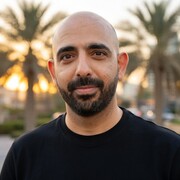
I am just saying it, thinking about it, articulating it — that’s all. I am nothing. I am really no one. I’m just another dude with an internet connection.
Stillness and silence embody peace. Yet some family patterns refuse to stay quiet. They repeat across generations, written in blood ties, cultural hierarchy, and wounds no one is allowed to name. In my own family I have watched one such pattern with clinical clarity. It revolves around three personas: the Perpetrator, the Victim-Villain, and the Victim-Hero.
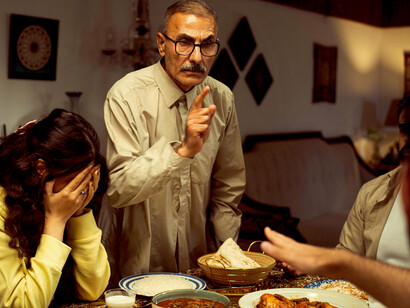
The perpetrator is the origin. In my case, my grandfather. He required his son to keep secrets—extramarital affairs hidden from the boy’s mother—and enforced a marriage his son never wanted. When that son tried to leave the marriage one week after my birth, the grandfather invoked duty and hierarchy. Loyalty to the father came before truth, before autonomy, before peace. I carry the perpetrator's name. That single fact becomes the thread that ties everything together. In many families shaped by honour-shame cultures, such as Lebanese and broader Arab contexts, this kind of authority is not just personal—it is reinforced by long-standing norms that place elder respect and family duty above individual truth or emotional safety.
The victim-villain is the middle generation—my father. He was first a victim. He suffered the original harm and never resolved it. Outwardly he became the accomplished businessman, respected in elite Gulf and international circles, a role his father could be proud of. Inside, he remained something else entirely: a social beast, a hedonist who dreamed of owning a place where he could move from table to table, laughing, eating, drinking, joking with patrons like a child who simply wants to have fun. That was the life he never lived.
Because he could not confront the perpetrator directly—blood ties, respect, and hierarchy—he redirected the unresolved resentment onto me, the grandson who carries the wrong name. Family systems theory, developed by Murray Bowen, describes this exact process: when direct confrontation with the original source of pain is blocked by cultural or familial rules, the tension does not disappear. Instead, it is displaced downward through a mechanism psychologists call 'displaced aggression'. The anger that cannot safely be aimed at the powerful perpetrator finds a safer, more available target—the next generation. Agreements made through his network were denied or reduced after the work was done. Public disownment began when I was twelve.
Threats were delivered with calm precision: “I left you once, and I could leave you again.” Praise was weaponised as guilt. The longer he refused to face his own pain, the more vicious the redirection became. He built a fortress of lies so he would never have to look in the mirror. Stack after stack of self-deception. If he ever saw the truth clearly, he believed he would shatter and never recover.
I am the Victim-Hero. Not in any dramatic or noble sense—clinically. I am the one who sees the pattern, names the displacement, and documents the mechanisms of psychological abuse, financial exploitation, and downward-only accountability. In Bowen’s framework, the person who names the dysfunction often becomes the “identified patient” or scapegoat—the family member chosen (unconsciously) to carry the system’s anxiety so everyone else can avoid looking at their own unresolved issues. Because I carry the perpetrator's name, every act of clarity is read as defiance. Even when I attempt compliance, it does not suit the system. So I have no choice but to hold up the mirror.
In clinical terms, the victim-villain sought only to have fun in life and to live at peace. He never achieved this because he did not confront or stand up to the perpetrator. His authentic desire was never the businessman role imposed on him. It was to own a simple social setting—a place where he could interact directly with patrons, eat, drink, and socialise freely. The perpetrator, respected and loved by all, did not truly know his son. He attempted to mould him into a figure he could be proud of. The victim-villain complied fully, setting aside his own agency and desires. This kind of emotional fusion—where one generation suppresses its true self to maintain family harmony—is a classic pattern in multigenerational trauma transmission. The system stays "stable", but at the cost of real peace for anyone inside it.
In an observed ironic twist, the grandson—the victim-hero—who has worked to interrupt and change this generational cycle is vilified for doing so. Even when the victim-hero attempts compliance, it does not align with the system. He therefore has no choice but to document the pattern exactly as observed and to hold up the mirror. Research on family scapegoating shows this reaction is common: the person who breaks the silence is not punished because they are wrong, but precisely because they are right. Their clarity threatens the fragile balance the family has built over decades.
If the reflection cannot be faced honestly, then clinical work remains to be done. Work itself is a good and honourable thing—a principle the perpetrator himself taught. The mirror stands. The choice to look belongs to the individual. At the end, the reflection isn’t a permanent testament of the individual. It is merely who they are at this particular point in time. The decisions are the determining factors that will assist in finding out who you are about (morals, ethics, values, and principles), how you are walking (the methods, the reasoning, and the articulation), where you are headed (the goal towards the destination), and who is walking beside you (the peers, friends, and role models you choose to accompany on your journey). Choose wisely or don't; the option is yours.