English
 Español
 Français
 Deutsch
 Italiano
 Português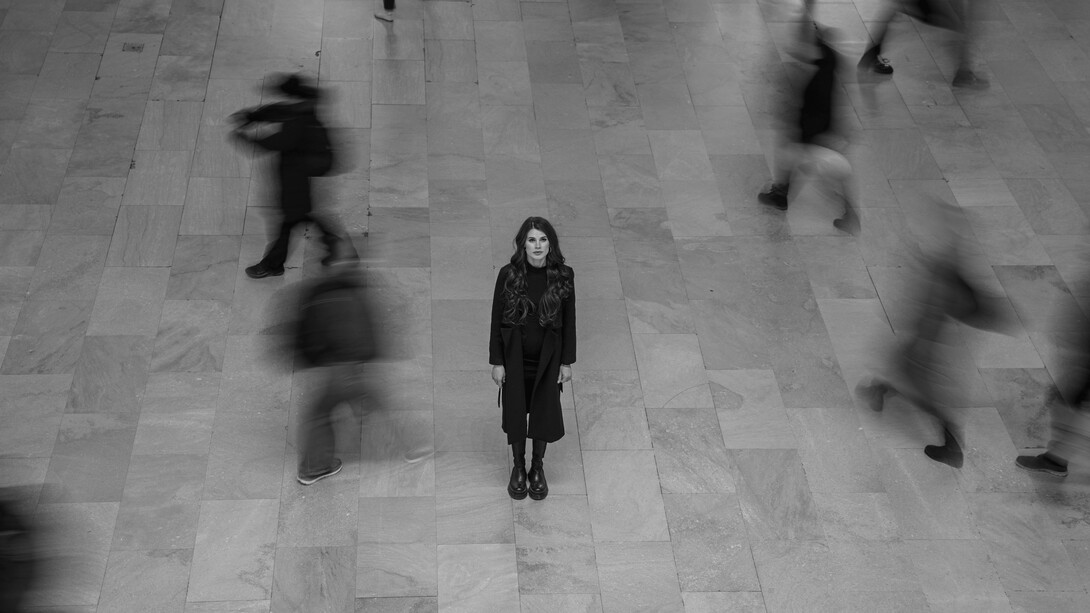
We’re broken—and the strangest part is that we don’t even know what to do about it.
We are the generation with access to everything: every kind of information, every perspective, every tool to dissect the human experience. Knowledge arrives instantly, effortlessly, almost passively. We scroll, absorb, and interpret. We are privileged enough to speak openly about trauma and identity—at least the language now exists. We have words for immigration, queerness, racism, neurodiversity, generational wounds, and burnout. We know how to name patterns, diagnose behaviors, identify toxicity, design the “ideal” routine, assemble the “correct” boundaries, and curate the “right” lifestyle.
On paper, we should be the most self-aware generation in history.
And yet—something still feels wrong.
There’s a subtle, persistent dissonance humming beneath our daily lives. Something out of place, misaligned, unresolved. A feeling like waking up in a house that looks familiar but doesn’t quite smell right—a quiet alarm you keep ignoring because you can’t prove anything is actually wrong. The most infuriating part is that we can identify the symptoms but never quite grasp the cause. It slips between our fingers like smoke, always forming a shape we can almost describe but never hold.
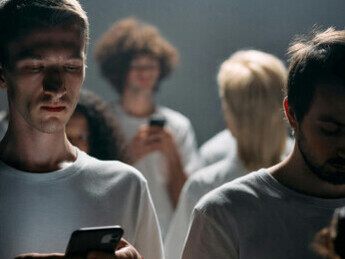
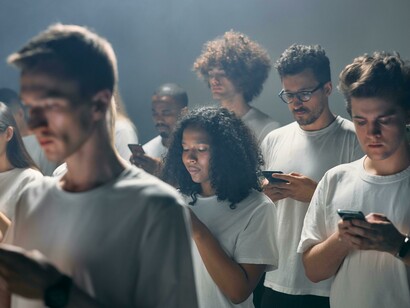
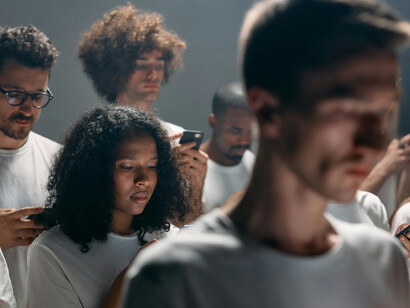
We keep hearing we’re the loneliest generation. Studies, articles, panels, podcasts—an entire ecosystem repeating the same warning. And loneliness in a hyperconnected world feels like the biggest paradox of all. How can we be surrounded by constant communication, millions of voices whispering in our pockets, endless content designed to accompany us minute by minute—and still feel like we’re drifting in separate, sealed-off universes? How can we live in a world where connection is immediate but communion feels extinct?
At the same time, we’re told creativity is dying—some claim it’s already dead. So I find myself asking the melodramatic question: Who killed it? Was it the shattering of our attention spans? The fact that everything we make feels like repetition, remixes, or watered-down nostalgia? Was it the cultural recycling, the safety of sameness, the fear of failure, or the algorithmic flattening of taste? Are we living in a world where originality is impossible, and imitation is the norm?
If creativity is dead, then yes—we’re the responsible ones. And this, what we’re living in now, is our sentence.
But honestly? This crisis has very little to do with A.I. The rot began long before that.
We are wrestling with impossible expectations: to heal generational trauma, build meaningful careers, stay politically informed, maintain mental health, create original work, be socially conscious, be joyful, and be productive—all at once. We’re expected to be everything, everywhere, all the time. We carry an entire moral ecosystem on our backs: the expectation to care, to act, to optimize, to improve, to correct. No wonder exhaustion has become a baseline, a new form of identity.
So yes, we’re broken.
But maybe the real problem isn’t the breaking—it’s the silence around it.
We have all the vocabulary in the world, but we still don’t know how to speak honestly about what we feel. We know the theory of healing better than the practice of living. We can explain attachment styles, but can’t maintain relationships. We know what burnout is, but don’t slow down. We can dissect our trauma, but can’t stop repeating the same cycles. We have language, but we lack instinct. We have insight, but we lack embodiment.
And I’m not trying to propose a solution — I don’t have one. But it does feel like the more we learn, the less willing we are to actually change anything. We’re overwhelmed, over-informed, and too tired to truly acknowledge what’s wrong or imagine a different way forward. We can describe alternative futures, but we cannot initiate the smallest shift in our own present.
If you have no idea what I’m talking about, let me explain with something simple.
When I was in primary school, we learned about the ecological crisis—how dangerously depleted the planet would become if we continued on the same path. Thirty years later, we’re having the exact same conversation. The same warnings. The same urgency. The same narrative of “awareness.” We have had three decades to act, innovate, and transform—and yet so often we default to symbolic gestures that soothe guilt but change nothing.
Yes, things have progressed in some areas—and yes, many people are fighting for real change. But here’s where my frustration explodes:
We refuse to take flights to reduce emissions but order fast fashion shipped halfway across the world.
We cut plastic to protect the oceans, but eat fish without asking where it came from.
We criticize capitalism while religiously following influencers whose entire existence is selling us something—even the ones promoting mental health, sustainability, or spirituality.
Knowledge now arrives with a curated shelf of products:
Buy this book.
Buy this supplement.
Buy this ritual kit.
Buy this lifestyle.
Solutions wrapped in branding.
It’s schizophrenic, isn’t it?
It’s like being offered a dreamlike ice cream—something promising delight, uniqueness, authenticity—but beneath the sweetness there’s poison. And we eat it anyway. We keep taking candy from strangers, knowing full well how the story ends.
And amid all of this, spirituality feels thinner. Connection feels abstract. Art feels distant unless it’s trending. Silence feels unbearable. Presence feels impossible. Attention evaporates in seconds. We’re overstimulated yet undernourished.
Someone once told me you can learn more from finger painting with a child than from years in art school. And I haven’t stopped thinking about that. Because maybe that’s the point:
We’ve become so informed that we’ve forgotten how to feel.
So connected that we’ve forgotten how to be present.
So aware of the problem that we’ve gone numb to actually solving it.