English
 Español
 Français
 Deutsch
 Italiano
 Português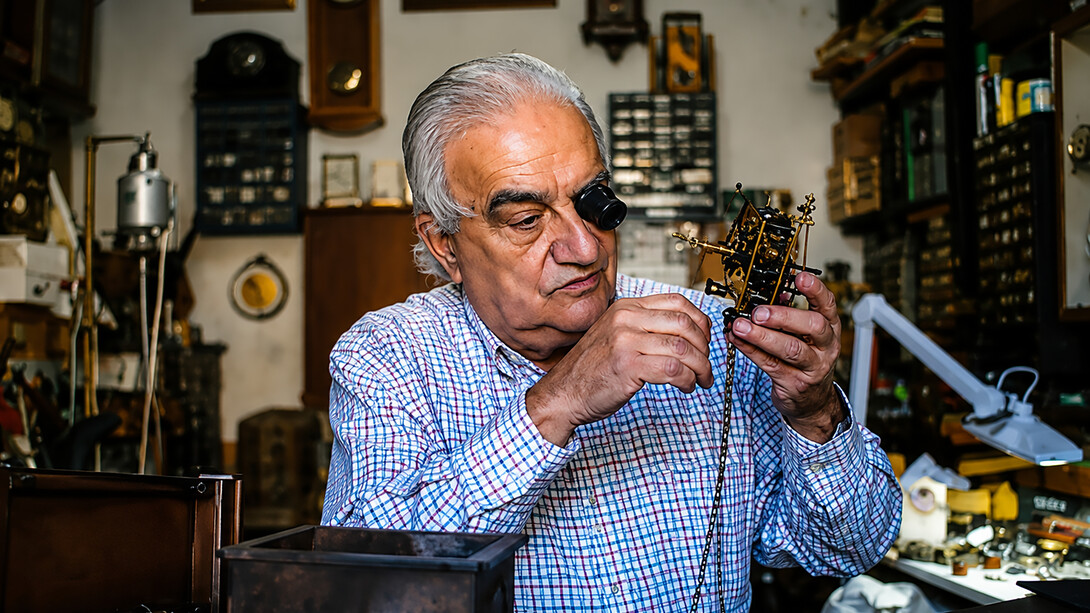
I wasn't looking for a watch. Which is probably why I ended up buying one.
I'd heard about a watch dealer in Hong Kong. Not a luxury boutique. Not the sort of place where someone in a suit offers you sparkling water before showing you something worth more than your car. A tiny shop in Mong Kok. The kind of place you'd walk straight past if you didn't know it was there.
Hong Kong has always felt like a city in motion. Everyone moving. Everyone selling. Everyone is negotiating something.
The watch shop felt strangely different. Quiet. Unhurried. Almost detached from everything happening outside.
The owner was a man called Raymund Chung. When I walked in, he didn't get up. He didn't ask if I needed help. He didn't launch into a sales pitch. He didn't ask my budget. He didn't ask what brands I liked.
He let me look around for a few minutes. Then he folded his newspaper, looked at me, and asked:
"What suits you?"
Three words. That's it.
Not "What do you want?" Not "What are you looking for?" Not "What's your budget?"
"What suits you?"
I remember standing there for a second longer than I should have because I genuinely didn't know how to answer. Nobody had ever asked me that before in a sales conversation. And the more I think about it, the less I hear it anywhere else either.
Most people start with the thing: the product, the solution, the framework. Raymund started with the person.
We talked for nearly forty minutes, mostly about things that had absolutely nothing to do with watches. How I spend my time. The sort of work I do. The things I value. Whether I wanted a watch because I enjoyed watches or because I liked what they said about me.
At one point, I laughed and said, "You haven't actually tried to sell me anything."
He shrugged.
"If I don't understand you, how can I know what to show you?"
Then he pulled out three watches. Not thirty. Three.
Within five minutes, I knew which one was mine. No pressure. No closing technique. No urgency. No negotiation. Just a recommendation that felt obvious because he'd taken the time to understand who was standing in front of him.
I bought it.
Then I went for a walk. That's usually how I know something has landed. I need movement to think.
As I walked through Mong Kok, I found myself asking an uncomfortable question: How often do I actually do that?
Not with watches. With coaching. With sales calls. With conversations.
How often am I genuinely trying to understand someone? And how often am I trying to get somewhere?
Because those aren't the same thing.
I think a lot of coaches get trapped here. Not because they're bad people, but because they're taught to. They're handed a discovery call framework, a list of questions, a process, and a structure. Before long, they're listening with an agenda. The conversation has a destination before it begins.
The prospect can feel it. Maybe they can't explain it, but they can feel it.
Every question starts pointing somewhere. Every answer becomes an opportunity to position a solution. Listening becomes waiting. Curiosity becomes strategy.
The strange thing is that most coaches think they're hiding this. They're not.
People are remarkably good at sensing when someone is trying to understand them and when someone is trying to move them.
Raymund never felt like he was trying to move me. That's why I trusted him.
The watch wasn't the reason I bought. The trust was there. The watch simply arrived afterwards.
The more I think about it, the more I realise the best coaches I know operate exactly the same way. They don't start with a methodology. They don't start with a framework. They don't start with what they sell.
They start with the person.
What do they want? What matters to them? What kind of life are they trying to build? What are they optimising for?
Only then do they decide what advice makes sense.
When Dan and I built The Coach Trap, we made a conscious decision that we didn't want people squeezed into a system. We wanted the system to adapt to the person.
That's harder. It's slower.
You can't automate understanding. You can't template curiosity. You actually have to pay attention.
But the results tend to stick because the solution belongs to the individual, not to the framework.
I still think about those three words:
"What suits you?"
Not because they're clever. They're not. Not because they're profound. They're not that either.
They're useful.
And useful beats clever every time.
If you coach people, lead people, sell anything, or spend your days helping others make decisions, it might be worth looking at your last few conversations.
How much time did you spend understanding?
How much time did you spend positioning?
How much of your listening was actually waiting for your turn to speak?
Most coaching businesses don't have a lead problem. They don't have a funnel problem. They don't have a content problem.
They have an attention problem.
People can tell when they are being processed. People can also tell when they are being understood.
The gap between those two experiences is where trust lives.
Raymund built an entire business in a tiny watch shop in Hong Kong based on that distinction. The watches were almost secondary.
The real product was feeling understood.
The rest just happened to be made of steel.