English
 Español
 Français
 Deutsch
 Italiano
 Português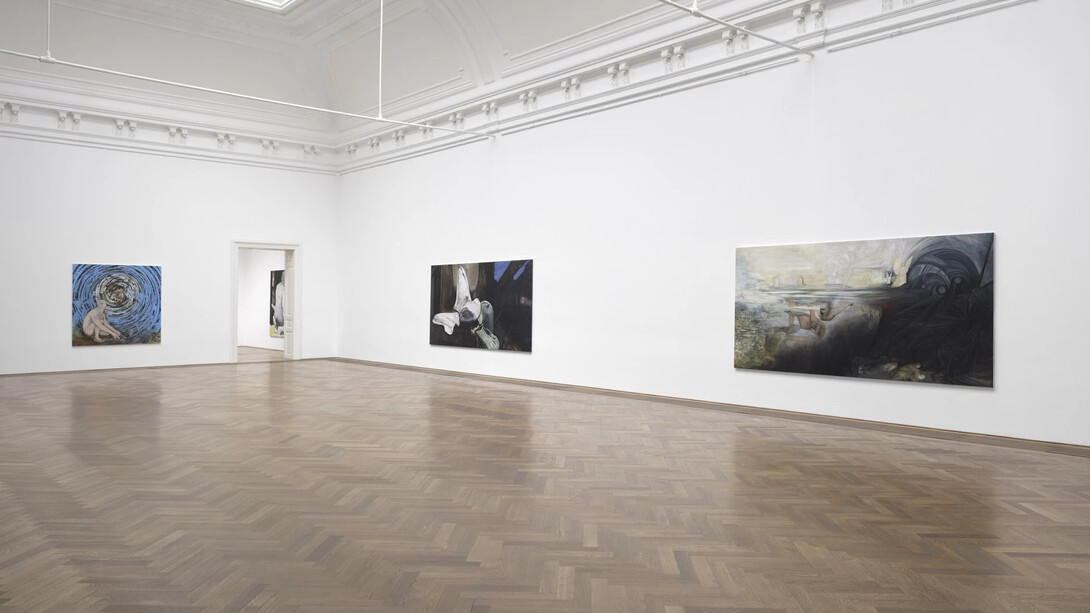
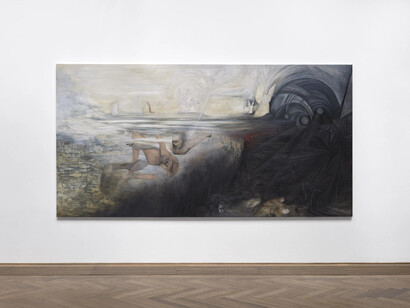
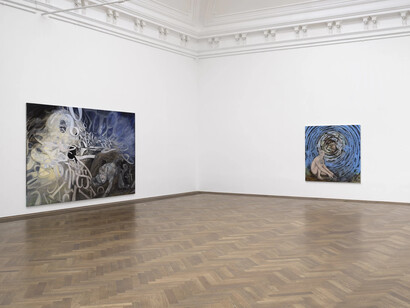
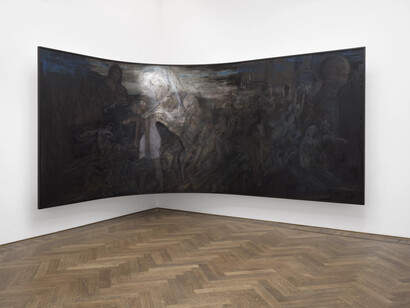
Janiva Ellis’s (b. 1987) first institutional solo exhibition in Europe opens with a dialogue across eleven paintings made specifically for this occasion. The works incorporate representational imagery and abstraction, moving through contradictions and complexities.
Three threads traverse the exhibition: the religious, the landscape, and the erotic. Each carries a long association to painting and has been renegotiated repeatedly throughout art history. Ellis works her way through the existential questions that European art history has passed down as universal and unavoidable. These are not mere subjects but inherited, canonical structures of meaning that the artist inhabits and metabolizes, laying bare what they keep silent. Language runs through the work in a similar way: it can hold meaning together but also allow it to drift apart, thus revealing simultaneously what the act of naming omits.
What rises to the surface in each painting may at first glance appear to be the final layer, but it is in fact the most recent state of something that has been reworked over time. Earlier decisions lie beneath the surface, gestures that have been revised, erased, or covered over. Ellis’s process accumulates in layers, drawing motifs from digital images, archives, and chance encounters. Her paintings move across several different registers at once, technical and cartoonish, monumental and oblique, with the comic and the catastrophic remaining in close proximity without necessarily explaining each other.
The exhibition’s title, Geneva, has accompanied Ellis for some time. In English, the title is phonetically similar enough that the artistʼs first name, Janiva, can be mistaken for it, leading to a recurring assumption. As in the paintings themselves, recognition here begins with the familiar before gradually dissolving. The fact that this moment now finds its place at the Kunsthalle Basel lends it a particular poignancy.