English
 Español
 Français
 Deutsch
 Italiano
 Português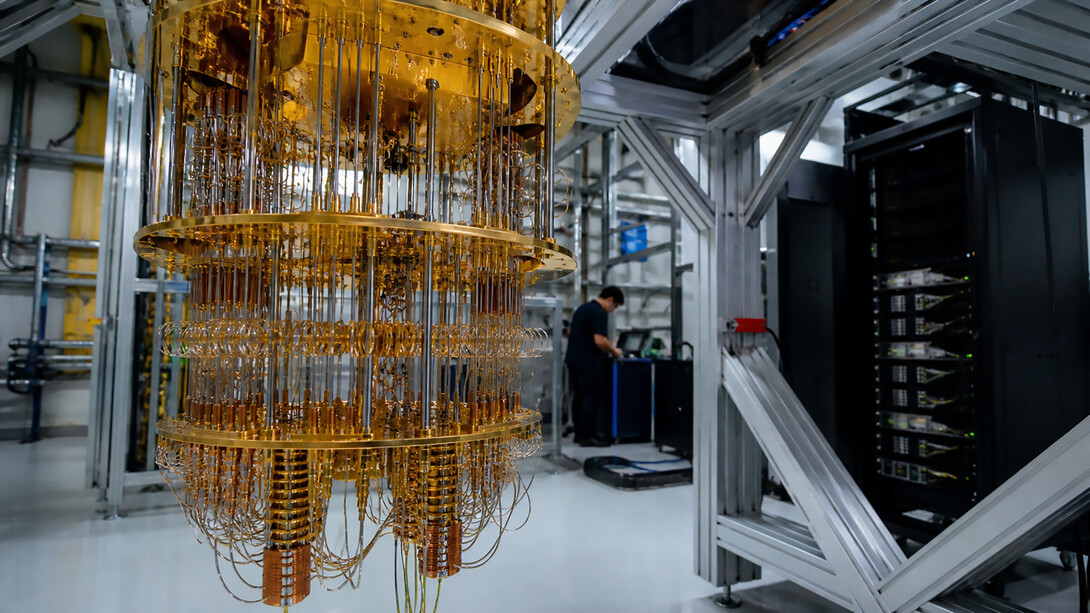
For decades, quantum computing remained confined to theoretical physics papers and small-scale laboratory experiments that seemed perpetually decades away from practical use. The machines required temperatures colder than deep space, produced error rates that made classical computers laugh, and demanded a level of isolation that seemed fundamentally incompatible with real-world deployment. Yet something remarkable has happened over the past five years: quantum computing has walked out of the lab and into commercial facilities, pharmaceutical research centres, financial modelling departments, and logistics optimisation hubs around the world. The transition from scientific curiosity to practical tool represents one of the most rapid technological evolutions in modern history, accelerated by trillion-dollar tech giants and ambitious startups alike.
The watershed moment arrived in 2019 when Google's Sycamore processor claimed quantum supremacy, performing a specific calculation in 200 seconds that would have taken the world's fastest supercomputer approximately 10,000 years. While critics rightly noted the calculation had no practical application, the psychological barrier had been shattered. Suddenly, boardrooms that had dismissed quantum computing as science fiction began scheduling briefings, venture capital flowed like never before, and governments from the United States to China announced billion-dollar quantum initiatives. The message was unmistakable: quantum computing was no longer a question of "if" but "when", and that "when" appeared to be arriving much sooner than anyone had predicted.
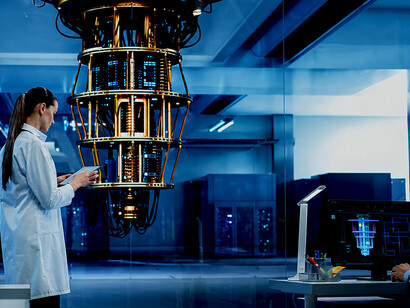
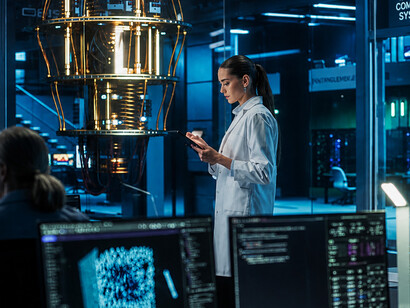
Today's quantum computers operate in what researchers call the Noisy Intermediate-Scale Quantum (NISQ) era, a name that honestly acknowledges current limitations while highlighting unprecedented capabilities. These machines typically contain between 50 and 400 qubits, far fewer than the millions needed for a fully error-corrected universal quantum computer, but sufficient for meaningful advantages in specific applications. The "noisy" part of NISQ refers to error rates that remain significant, yet clever algorithms have emerged that can extract useful results despite this imperfection. IBM, IonQ, Rigetti, and Quantinuum have all placed commercial systems online, accessible through cloud platforms that allow companies to run experiments without building their own dilution refrigerators or training PhD physicists.
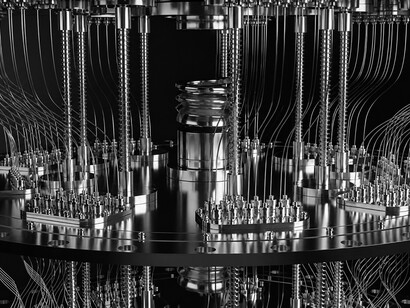
The hardware landscape has diversified dramatically, moving beyond the early dominance of superconducting circuits. Trapped ion systems from IonQ and Quantinuum offer longer coherence times and higher-fidelity operations, though they struggle with scaling to larger qubit counts. Silicon spin qubits, leveraging existing semiconductor manufacturing infrastructure, promise a path to millions of qubits on a single chip. Neutral atom arrays from companies like QuEra and Pasqal have demonstrated remarkable scaling, recently reaching over 1,000 qubits by arranging atoms in reconfigurable grids using precisely aimed lasers. This diversification means that different quantum computing architectures will likely excel at different problems, creating a rich ecosystem rather than a winner-take-all market.
Financial services firms have emerged as some of the most aggressive adopters, seeing clear competitive advantages in quantum-accelerated portfolio optimisation and risk analysis. JPMorgan Chase has partnered with IBM to explore quantum algorithms for options pricing, a problem that classical Monte Carlo methods handle poorly due to the exponential growth of variables. Goldman Sachs collaborated with QC Ware to demonstrate that quantum algorithms could accelerate derivative pricing by orders of magnitude once fault-tolerant hardware arrives. Meanwhile, Spanish bank BBVA has used quantum annealing systems to optimise credit card reward allocations, achieving better results than classical solvers while reducing computation time from hours to seconds. These early deployments generate real business value even with current hardware limitations.
The pharmaceutical industry has embraced quantum computing with particular urgency, recognising that simulating molecular interactions at quantum accuracy could slash drug discovery timelines from years to months. Classical computers struggle exponentially as molecule size increases, making accurate simulation of anything larger than simple molecules computationally impossible. Quantum computers, by contrast, naturally simulate quantum systems using algorithms like the Variational Quantum Eigensolver (VQE) and Quantum Phase Estimation. Pfizer, Roche, and Merck have all established quantum research groups, using current hardware to simulate small molecules while preparing for the breakthrough when machines can handle complex drug targets like protein folding. ProteinQure and Menten AI, startups focused entirely on quantum-enabled drug design, have already identified lead compounds that are moving toward laboratory validation.
Logistics and supply chain optimisation represent another domain where quantum advantages are appearing today rather than in some distant future. D-Wave's quantum annealing systems, often dismissed by gate-model purists, have found legitimate commercial applications in route optimisation, workforce scheduling, and inventory management. Volkswagen demonstrated a quantum traffic flow system in Lisbon that reduced journey times by optimising signals across the city's network. SavantX, working with Los Alamos National Laboratory, used quantum annealing to optimise loading operations at the Port of Los Angeles, increasing throughput by an astonishing 23 per cent without any infrastructure investment. These successes prove that near-term quantum devices, despite their limitations, can solve real optimisation problems that classical methods handle poorly.
Materials science stands poised for transformation as quantum computers enable the design of novel substances with precisely tailored properties. Researchers at IBM and Samsung have used quantum simulations to investigate the magnetic properties of new materials for next-generation data storage, while automotive giants like BMW and Ford explore quantum-designed battery electrodes for electric vehicles. The potential applications extend to room-temperature superconductors, more efficient solar cells, lighter aircraft alloys, and carbon capture materials. Classical approaches to materials discovery rely on trial-and-error experimentation that takes decades; quantum simulation could compress that timeline to months by accurately predicting how atoms will behave before any physical synthesis occurs. Several quantum startups now offer materials design as a commercial service, with early customers already receiving candidate compounds for testing.
Artificial intelligence and quantum computing are converging in ways that amplify the strengths of both technologies. Quantum machine learning algorithms promise exponential speedups for certain linear algebra operations that underpin neural networks, including matrix inversion and principal component analysis. More intriguingly, quantum computers may excel at tasks where classical machine learning struggles: identifying subtle patterns in high-dimensional data, sampling from complex probability distributions, and solving optimisation problems embedded within training procedures. Companies including Zapata Computing and QC Ware offer hybrid quantum-classical frameworks that run quantum kernels for feature mapping while using classical systems for everything else. Early results in quantum-enhanced natural language processing and generative chemistry suggest that even modest quantum processors could provide meaningful advantages over purely classical approaches.
The energy sector has begun deploying quantum computing for grid optimisation, carbon capture simulation, and nuclear fusion research. Spanish energy giant Repsol uses quantum algorithms to optimise refinery operations, reducing energy consumption while maximising output. BP and ExxonMobil have quantum initiatives focused on catalyst design for more efficient chemical reactions, potentially reducing the carbon footprint of industrial processes. Perhaps most dramatically, Commonwealth Fusion Systems, which spun out of MIT, uses quantum simulations to model plasma behaviour in its SPARC fusion reactor, aiming to demonstrate net energy gain by 2025. Quantum computing's ability to simulate plasma dynamics at atomic resolution could accelerate fusion development by years, with obvious implications for clean energy generation worldwide.
Encryption and cybersecurity present a more concerning aspect of quantum computing's rise, as Shor's algorithm threatens to break essentially all public-key cryptography currently protecting internet communications, banking systems, and government secrets. A sufficiently powerful quantum computer could decrypt historical encrypted traffic, forge digital signatures, and undermine the cryptographic foundations of the modern digital economy. The timeline for this threat remains debated, with optimistic estimates suggesting five to ten years before such machines exist, while more cautious researchers warn that progress is accelerating faster than anticipated. The response has been the rapid development of post-quantum cryptography (PQC), new encryption algorithms resistant to both classical and quantum attacks. The US National Institute of Standards and Technology (NIST) finalised its first PQC standards in 2024, and migration of global systems has already begun.
Cloud access has democratised quantum computing, allowing thousands of developers to write and test quantum code without purchasing expensive hardware. IBM Quantum Experience, Amazon Braket, Microsoft Azure Quantum, and Google Quantum AI all provide cloud-based access to multiple quantum hardware platforms, with integrated development environments and extensive educational resources. This accessibility has spawned a vibrant ecosystem of quantum software startups, open-source frameworks like Qiskit and Cirq, and online communities where developers share algorithms and best practices. The number of quantum developers worldwide has grown from a few hundred in 2019 to over 50,000 today, and major universities now offer quantum computing courses to thousands of students annually. This talent pipeline will prove essential as hardware capabilities continue expanding.
Error correction remains the central challenge on the path to fault-tolerant quantum computing, but recent breakthroughs have transformed pessimism into cautious optimism. Surface codes, the leading approach, require hundreds of physical qubits to create a single logical qubit with acceptable error rates. However, advances in qubit coherence, gate fidelities, and novel error-correcting codes have steadily reduced this overhead. In 2023, Google demonstrated a logical qubit that operated below the threshold for fault tolerance, meaning errors could be corrected faster than they accumulated. Quantinuum achieved even better results with trapped ions, creating logical qubits with error rates ten times lower than previous records. These experiments prove that error correction is not merely theoretical but practically achievable, though scaling to the thousands of logical qubits needed for truly transformative applications remains years away.
The investment landscape reflects growing confidence that quantum computing will deliver substantial economic value. Venture capital funding for quantum startups exceeded $2 billion in 2023, triple the amount from just two years earlier. Public markets have followed, with IonQ, Rigetti, D-Wave, and Quantum Computing Inc. all going public through SPAC mergers, despite the inevitable volatility that accompanies early-stage technology companies. Governments have committed over $30 billion to quantum research and development globally, with China, the United States, and Germany leading the investment race. This funding supports not only hardware development but also quantum workforce training, standards development, and exploration of quantum's implications for national security. While some comparisons to the dot-com bubble are inevitable, the fundamental science behind quantum computing is far more substantial than the hype that drove Pets.com to absurd valuations.
The competitive dynamics between nations and companies will shape quantum computing's trajectory for decades. China has emerged as a formidable force, demonstrating photonic quantum supremacy in 2020 with Jiuzhang, which performed Gaussian boson sampling 100 trillion times faster than classical supercomputers. Alibaba, Tencent, and Baidu have all established quantum research divisions, while the National University of Defence Technology continues producing record-setting trapped-ion systems. The United States responded with the National Quantum Initiative Act, coordinating efforts across NIST, NSF, and DOE laboratories while fostering public-private partnerships. Europe's Quantum Flagship programme has funded over 5,000 researchers across the continent. This technological race carries profound implications for economic competitiveness and national security, ensuring that quantum computing will remain a strategic priority regardless of near-term commercial returns.
Looking ahead to the next five years, several milestones appear within reach. First, demonstrations of quantum advantage for genuinely useful problems rather than artificial benchmarks, likely in chemistry simulation or optimisation. Second, the first logical qubit with error rates below one in ten million, enabling longer quantum circuits without failure. Third, quantum processors exceeding 1,000 qubits with sufficient quality to perform calculations impossible to simulate classically. Fourth, integration of quantum processors into conventional high-performance computing centres, where they function as specialised accelerators for specific workloads. Fifth, the emergence of quantum software platforms that abstract away hardware differences, allowing applications to run across superconducting, trapped ion, and photonic systems without modification. Each milestone will expand the addressable market and attract new customers and developers.
The transition from laboratory curiosity to mainstream technology rarely proceeds smoothly, and quantum computing will almost certainly encounter setbacks alongside its successes. Error correction may prove more difficult than current models suggest, scaling challenges could stall qubit counts, and algorithms that work beautifully on simulators may fail on actual hardware. Yet the pattern of progress over the past decade suggests resilience rather than fragility. Each time a physical limit appears insurmountable, researchers find a clever workaround or a novel approach that circumvents the problem entirely. Quantum computing has benefited from the same engineering culture that transformed the internet from a military research network into a global infrastructure and turned room-sized mainframes into pocket-sized supercomputers. That culture of persistent incremental improvement, combined with occasional revolutionary breakthroughs, suggests that the current pace of progress will continue accelerating rather than slowing.
For business leaders watching from the sidelines, the appropriate response is neither blind enthusiasm nor dismissive scepticism but strategic engagement. Companies should identify specific problems where quantum algorithms might provide advantages, run experiments on cloud-accessible hardware to understand current capabilities, build internal expertise through training and hiring, and establish partnerships with quantum vendors before the competition locks up scarce talent and resources. The companies that will dominate the quantum era are not necessarily those building the hardware but those learning today how to extract value from it. Quantum computing has gone mainstream not because the technology is finished but because waiting for perfection means arriving too late. The transition from lab curiosity to real-world applications is no longer coming; it is already here.