English
 Español
 Français
 Deutsch
 Italiano
 Português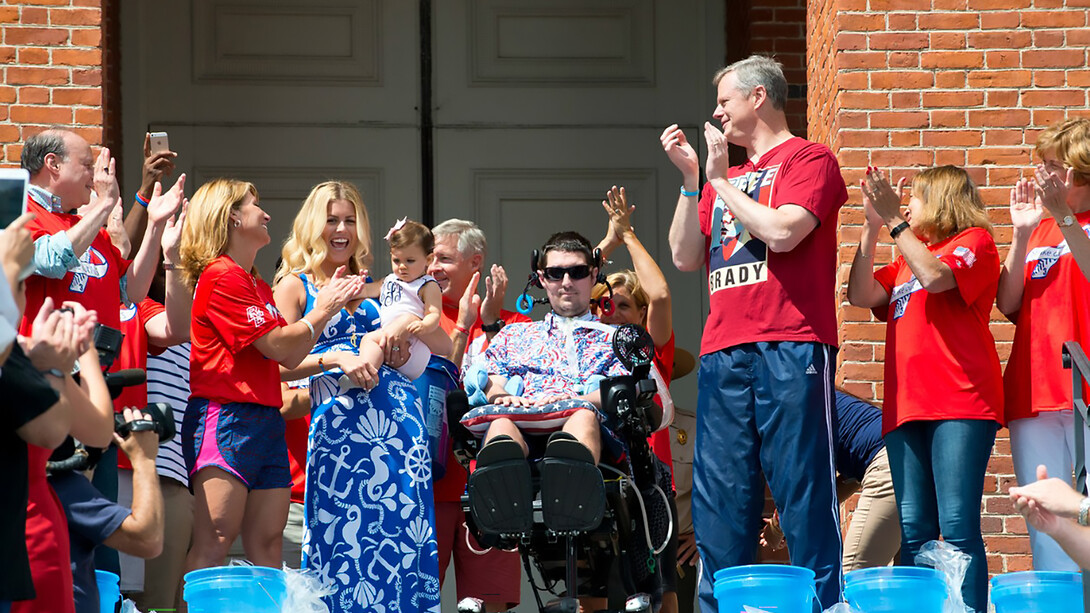
Amyotrophic Lateral Sclerosis (ALS), also known as Lou Gehrig’s disease or Motor Neuron Disease (MND), is a progressive neurological disorder characterized by the degeneration of motor neurons in the brain and spinal cord. These neurons control voluntary muscle movements and vital processes, including breathing. As these neurons degrade, they lose communication with the muscles, resulting in muscular weakness, twitching (fasciculations), and atrophy. Individuals suffering from the disease eventually lose the capacity to start and control voluntary actions such as walking, speaking, and breathing. Causing gradual paralysis and, often within two to five years, respiratory failure and death, ALS is a harsh and devastating disease.
Some early symptoms of ALS include muscle twitches, cramping, stiffness, weakness in the limbs or neck, slurred speech, and difficulty chewing or swallowing. As the illness worsens, additional complications arise, such as difficulty breathing (dyspnea), speech problems (dysarthria), drooling (sialorrhea), and emotional dysregulation. Symptoms and their appearances can frequently vary in individuals, as there is not a linear progression of the disease. Its development can be influenced by various factors such as age, sex, health history, and more.
ALS has a variety of clinical manifestations, each of which has a unique relationship to survival rates. Important presentations include flail arm or leg syndrome, which is characterized by symmetrical flaccid limb weakness and is connected to improved outcomes, while bulbar palsy, which is characterized by dysarthria and swallowing difficulty, has the worst prognosis. Though there are some exceptions, the majority of ALS cases start locally and spread aggressively, typically impacting nearby areas. A prion-like spread of neurotoxic proteins, possibly through phagocytosis or a time-to-failure model, may be responsible for this process. Lower motor neuron failure, which may be evaluated non-invasively to examine cellular spread patterns, is the main cause of weakening in ALS.
Why the different names?
The term “motor neuron disease” (MND) describes a number of disorders marked by the early degeneration of motor neurons, which are separated into upper and lower motor neurons. MND is characterized by muscular atrophy (amyotrophy) and scarring of spinal pathways (lateral sclerosis), which were first described by Jean-Martin Charcot in the 1800s. Charcot created the term "amyotrophic lateral sclerosis" (ALS) after recognizing the concurrent presence of both processes. The ALS variant, which has a variable course, affects nearly 90% of MND patients. The remaining 10% have either upper motor neuron degeneration with mild muscle atrophy (primary lateral sclerosis) or primarily lower motor neuron damage (progressive muscular atrophy).
Charcot’s discovery is the reason ALS can also sometimes be encountered by the name Charcot’s disease, more often in Europe. In the UK, the term MND is most commonly used for the disease due to the majority of the cases being ALS. In the USA, besides ALS, the disease may also be called Lou Gehrig’s disease. Born in the US in 1903, Henry Louis “Lou” Gehrig was a successful baseball player. Known as the “Iron Horse,” he had a great career before his performance plummeted. In June 1939, at the age of 36, he received an ALS diagnosis. Two days later he quit his career. Gehrig died on June 2, 1941, just two years after the diagnosis.
Causes
Although the exact causes of amyotrophic lateral sclerosis are unknown, they include a number of genes that have been found to contain variations linked to the disease, as well as some environmental risk factors. Males are slightly more likely to develop the disease, with the peak age of onset being 55 to 70 years.
Medical experts have determined that certain genetic variants have a major role in the development of MND in different populations. About two-thirds of people with familial ALS had these mutations, compared to 10% of patients with sporadic ALS. C9orf72, SOD1, FUS, and TARDBP are the most commonly implicated genes, especially in individuals of European heritage. Nevertheless, having a gene mutation linked to the disease does not ensure that the illness will manifest.
The majority of cases do not show obvious genetic connections, suggesting that the disease’s presentation is probably influenced by a mix of genetic predispositions, environmental variables, lifestyle decisions, and occupational factors. Numerous studies that have been conducted over the years point to potential links between MND and a number of illnesses and exposures. These include exposure to agricultural chemicals, high amounts of exercise, military service, mechanical electrical damage, and contact with various heavy metals.
However, the data from these investigations has frequently produced contradictory findings, making it challenging to reach firm conclusions. As a result, precise recommendations for reducing ALS are still elusive. Despite these obstacles, research continues being done to delve deeper into these factors and understand the disease, its treatment, and possible prevention better.
Diagnosis
ALS is challenging to diagnose early due to overlapping symptoms with other diseases. Diagnostic tests may include electromyography (EMG) to assess muscle and nerve function, nerve conduction studies to detect nerve damage, MRIs for imaging the brain and spinal cord, and blood and urine tests to rule out other conditions. Spinal taps for spinal fluid analysis and biopsies of muscle or nerve tissue for further investigation.
The journey to receive a diagnosis can be a difficult and devastatingly long process for the individuals and their families. Usually the patient has been to a vast number of doctors hoping to get an answer for the reason for the strange symptoms they are experiencing. However, a lot of patience is often involved in this process, due to the difficulty of the diagnosis. Another factor that plays its role is the rarity of ALS, which makes it not one of the first assumptions doctors make when seeing the symptoms in a person. More common diseases with similar symptoms have to be ruled out first. But, in order to rule them out, they have to be tested, which stretches the path to diagnosis even more. This is also the reason some patients get diagnosed with the disease when it has already progressed devastatingly far.
Prognosis and treatment
Although there isn’t a defined staging system for ALS like there is for cancer, experts employ techniques to track the disease’s advancement. In order to measure functional changes, the ALS Functional Rating Scale (ALSFRS-R) evaluates daily activities in twelve domains, each of which is graded from 0 to 4. The total score ranges from 0 to 48. Additionally, decisions about feeding tubes and respiratory support are guided by Forced Vital Capacity (FVC), which assesses breathing ability over time and is suggestive of ALS progression.
At the moment, amyotrophic lateral sclerosis has no known cure or treatment that can undo the damage. Nonetheless, there are certain therapies that can reduce the disease’s course. The mainstay of treatment for MND is the utilization of multidisciplinary care teams and drugs that may slow the disease’s progression. These teams, which are made up of a variety of experts, help patients and their families deal with the difficulties brought on by ALS by using various tools and treatments to control symptoms and change the level of independence.
Riluzole (Rilutek, Teglutik) and Edaravone (Radicava), two FDA-approved drugs, have demonstrated in some cases a moderate level of effectiveness in delaying the course of the disease. Although its results can vary highly depending on the form and stage of the disease the individual has. Some patients reported no or even negative effects due to strong side effects. ALS weakens the body a great deal, which naturally means that heavy medications may have very different effects, depending on the disease’s stage and progression rate.
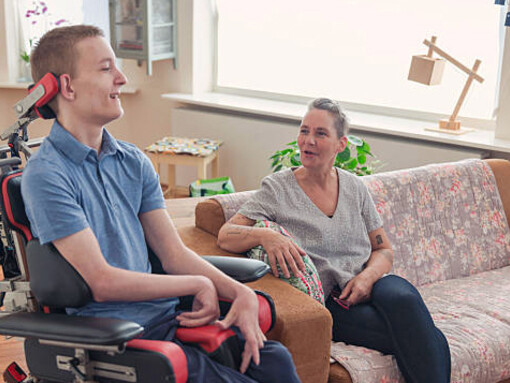
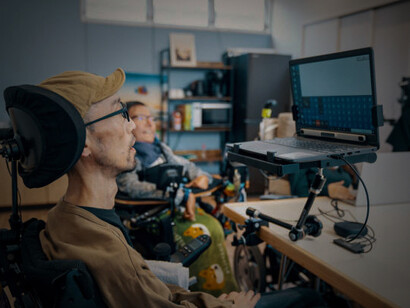
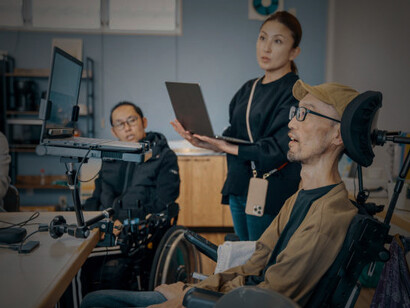
Additionally, numerous clinical trials are being conducted all around the world, providing important information on possible treatments for ALS. People suffering from the disease can improve their everyday lives with a variety of assistive technology and therapy approaches, such as right body placement, personalized workout plans, physical therapy, and occupational therapy. Mobility-assisting devices, such as walking aids, can also provide great relief. Splints and braces to support the limbs, personalized wheelchairs, and evaluations of homes to improve accessibility are some other ways patients’ lives can become a little easier. Devices for technological communication can help with keeping communication active, as the loss of it can become emotionally difficult. Diaphragm pacers, feeding tubes, and devices for breathing support are often inevitable and will become part of patients’ lives as they battle with ALS.
Because it is difficult to measure respiratory function non-invasively, respiratory impairment is a crucial end-stage in the care of ALS and is frequently used to direct respiratory assistance rather than for prediction. Clinical characteristics and biological indicators such as albumin and neurofilament levels have been investigated in prognostic modelling. Studies reveal that patients with limb dysfunction, especially those with symmetrical patterns and upper motor neuron predominance, have longer survival rates and are younger when their symptoms first appear. On the other hand, early respiratory involvement, rapid weight loss, and cognitive impairment indicate a dismal prognosis. Interestingly, a longer time between the beginning of symptoms and diagnosis is associated with a slower rate of illness progression.
The mental health aspect
Besides the tremendous changes and losses the body of ALS patients experiences, there is also the component of the immense mental burden. Losing step by step the ability to move, to do everyday tasks, and eventually even to speak and breathe properly is something that—should come as no surprise to anyone—can be quite difficult to handle. The emotional toll of the diagnosis makes mental health issues like anxiety and depression more common in people with ALS. As individuals deal with their changing health, they frequently experience shock, grief, and different phases of acceptance.
While self-advocacy is essential, help can be obtained through counselling, medication, and support groups. Depression affects approximately over 25% of ALS patients, especially in the early stages after diagnosis. Grief, anxiety, and depression are just a few of the major psychological difficulties that patients and their families face as a result of ALS. Patients need assistance in adapting to changing circumstances because they experience continuous loss and anticipatory sadness. Parenting can also be impacted by ALS; when symptoms worsen, engagement and communication are limited, which can result in feelings of anxiety, depression, and guilt that eventually influence the process of parenting.
Family members and caregivers require a great deal of emotional strength as well. This can increase the risk of burnout and other impacts on their mental health. Caregiving can be a stressful task with an overload of responsibility. And then, of course, comes the part of watching someone close to them battling a brutal disease. This worry caregivers and family members go through is frequently another part that can be difficult to mentally handle for patients. Individuals with MND may experience the feeling of being a burden or even guilt for putting the people they care about in this position. It is therefore of great importance that every task involved is made from the heart with love. Not the person, but ALS is the burden, and this burden can be shared—at least the emotional component of the load.
People suffering from this disease are challenged to depict the utmost amount of patience, courage, hope, and will to fight. As the years go by and more research and clinical trials are being done, the chances increase that a breakthrough will happen and a cure will be found. There are a number of attempts to reach such a goal that show promise. Remaining hopeful and optimistic is essential for everyone impacted.
What can we do?
If you feel the urge to help in the process of finding a cure for ALS but do not know how or where to start, there are ways you can be of assistance. Even if you are not active in the medical field or are directly linked to people impacted by ALS, you can nonetheless contribute your fair share. The first step is education. Understanding the disease and talking about it in your circle is essential. It is a real disease with people battling it every single day. Knowing about it makes them visible and still an active part of the society. The truth is, it can happen to anyone, and no one is excluded from the possibility of it occurring. Being aware of it is one step closer to empathizing with patients.
Another way is donations. It does not have to be a huge amount of money. Small gestures matter as much as big ones. Try searching for local organizations that support the cause and are directly providing help to patients. ALS is a costly disease, with almost every new appearing symptom needing new equipment to continue navigating life. Research is also often underfunded, which means donations are most welcome in this sector as well.
One further thing someone who wants to help can do is advocate. Closely connected to our first step, education. Advocating can happen in many ways, in the form of a media presence, taking part in fundraising events, volunteering for organizations, and much more. If you know someone fighting ALS, reach out to them and let them know of your abilities to be of service. Please keep in mind, though, that it is always the decision of the patient to let someone be part of their challenging journey.
If you are an individual impacted by ALS, reading this; remember you are not alone.
Sources
The ALS Association. (n.d.). ALS risk factors. The ALS Association.
Association, A. (2025). ALS Genes and Mutations. The ALS Association.
HSS. (2025, January 3). ALS (Amyotrophic Lateral Sclerosis). Hospital for Special Surgery.
Massachusetts General Hospital. (n.d.). The Basics of ALS for Mental Health Clinicians.
MND Association. (2025, February 14). What causes MND?
Strachan, S. (2023, May 23). ALS and mental health | ALS News Today.