English
 Español
 Français
 Deutsch
 Italiano
 Português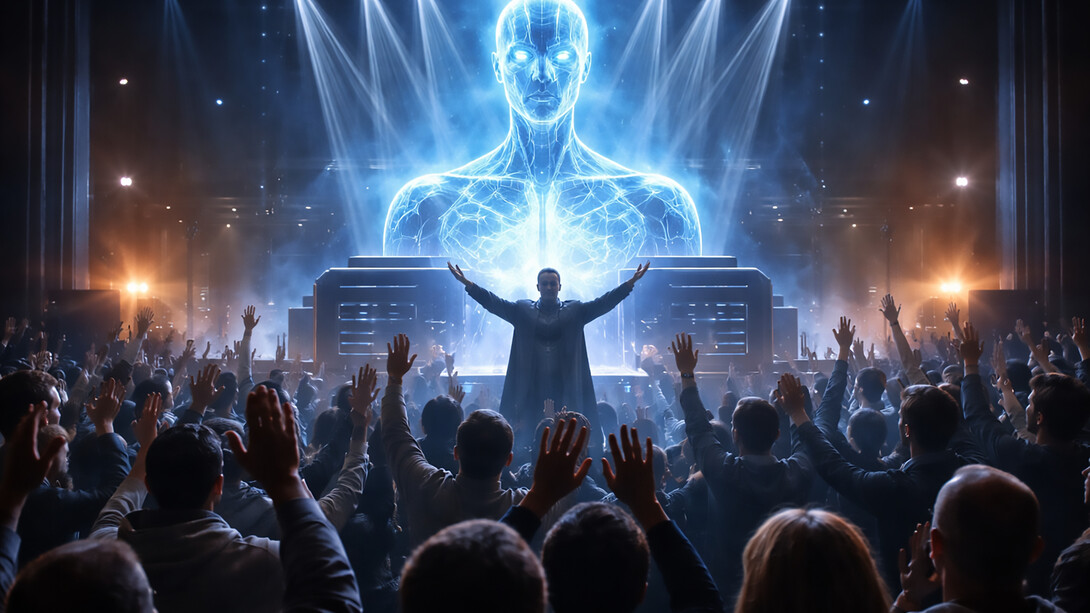
Here's an easy way to figure out if you're in a cult: If you're wondering whether you're in a cult, the answer is yes.
(Stephen Colbert)
When we were university students, fate once carried us… straight into a sect.
Although that group proudly called itself a “missionary community", looking back now, I can only shake my head: youth is brave, curiosity is boundless, and the ways of the Lord, or whatever forces govern our adventures, are truly mysterious.
My university friend Zhanna had been painting this enticing picture for weeks. She spoke of an unusually lively, creative crowd of young people who gathered regularly at a so-called “community centre". There was music, laughter, endless conversation, and—most importantly for broke students like us—delicious snacks.
“Just come once,” she said. "You'll see how amazing it is. These are the kind of people who’ll change your life!”
It sounded harmless, even fun. At worst, we imagined a slightly awkward evening of tea and small talk. At best, maybe we’d expand our circle of friends. One night, we gave in to her persuasion and followed her to one of these gatherings.
The shock was almost immediate.
Instead of cookies and casual chatter, we walked straight into a fervent religious service. The setting was almost surreal: an old Soviet kindergarten turned into a chapel of sorts. The pastor, in full gospel fervour, shouted with theatrical intensity about the dangers of Satan and the urgency of repentance. The congregation, many visibly poor or disabled, clutched each other’s hands, swayed rhythmically, trembled, and collapsed into convulsions as though some invisible power had seized them.
My friend and I locked eyes in disbelief. This was not the fun tea party our university friend had promised. This was something darker, something manipulative. Very, very weird…
We tried to slip out quietly, but a stern young woman intercepted us at the exit.
“The service isn’t over. Where are you going?” she asked. Her eyes seemed both watchful and accusatory.
Thinking fast, we muttered something about urgently needing the ladies’ room. Then, like fugitives, we pretended to visit a WC, navigated the corridors, and finally burst out into the night air, gasping with relief.
Several years later, I read about the death of a 57-year-old congregant who hanged herself in that church restroom. The church’s lead pastor was arrested on charges of extremism. Local media reported accusations of financial exploitation, psychological pressure, and even the use of psychotropic substances on parishioners. Meanwhile, the religious community representatives insisted that eight pastors had been forced to leave the country under pressure, and several followers had been deported.
Whether one believed the church’s innocence or the authorities’ accusations, one fact was hard to ignore: a place that once promised warmth, community, and salvation had turned into a symbol of exploitation, monetisation, greediness, secrecy, and suspicion.
Can we see a parallel with AI narratives?
That old story keeps coming back to me now because artificial intelligence is quietly morphing into a kind of global religion. Of course, the rituals look different. Instead of hymnals and candles, we have apps, prompts, and chat windows.
Instead of pastors, we have CEOs in turtlenecks delivering keynote sermons on the future. Instead of a dusty kindergarten-turned-chapel, we have glossy conference stages and slick demo videos. But the psychology—ah, the psychology feels hauntingly familiar.
Think of Sam Altman of OpenAI, speaking in prophetic tones about “artificial general intelligence” that will change the course of humanity. Or Elon Musk, tweeting that artificial intelligence “is obviously going to one-shot the human limbic system”, suggesting that AI might raise births by influencing that part of the brain which is responsible for emotions.
Or Mark Zuckerberg, rebranding his entire empire into the “Metaverse” church of virtual salvation.
And there go Alex Karp, Peter Thiel, Jensen Huang, Reid Hoffman, Demis Hassabis…and many others.
Like the pastors of that sect, these men play dual roles: prophets of a new world and beneficiaries of immense wealth built on the devotion of their followers.
The neophytes: as usual, the same pattern
And just like in that sect, the adepts come in two kinds.
There are the lonely ones, who let AI fill the aching silence of their lives. Look at the rise of AI companion apps like Replika, Character or Nomi, or newer platforms promising emotional intimacy, unconditional validation, and 24/7 companionship.
It is the same yearning I saw in that converted kindergarten hall: people longing to be held, to be told they are not alone, to believe in something larger than themselves.
Then there are the ambitious ones, terrified of being left behind and rushing for any opportunity, thus selling a “magical” product to all. Their sermons are LinkedIn posts and Medium essays about disruption and innovation. Their prayer is the constant whisper: “Subscribe, and your life will be saved.”
I also follow several AI “gurus” who predict that humanity is doomed if it doesn’t adopt AI now. They claim that artists, film directors, doctors, lawyers, and teachers will be quietly replaced by AI. According to them, these professionals are in a phase of denial without any intention to accept that “no human participation will ever be needed in the AI agentic processes”, as per these voices.
The tithes
The tithe is different now. It isn’t ten per cent of your pay cheque handed to a pastor. It’s your data, your privacy, your attention, and your consent. Every search you type, every photo you upload, and every late-night chat with a bot enriches the companies at the top.
Silicon Valley grows fatter on this digital devotion, while the believers convince themselves they are receiving salvation for free. Doubt is reframed as backwardness, refusal as ignorance, and critique as fear of progress. The creed insists that more adoption will solve the harm it creates. And like all cults, it promises transcendence someday, as long as you keep giving today.
The transformation
I am absolutely astonished by how this cult, after all the accusations and trials, survived and transformed into a hybrid model, half on-site, half digital. Out of curiosity, I opened a video presentation on YouTube where followers were dancing and singing, congratulating the “community” on its 30-year jubilee.
What I saw was not a polished institution but very modest people in modest settings, led by pastors with XXXL-sized clothes and enormous cheeks. And yet, their resilience is undeniable. Watching them, I can’t shake the thought: as AI communities who deny the importance of a human-centred role grow with equal fervour, are we witnessing the birth of a new kind of devotion?
And are we prepared for what comes next?