English
 Español
 Français
 Deutsch
 Italiano
 Português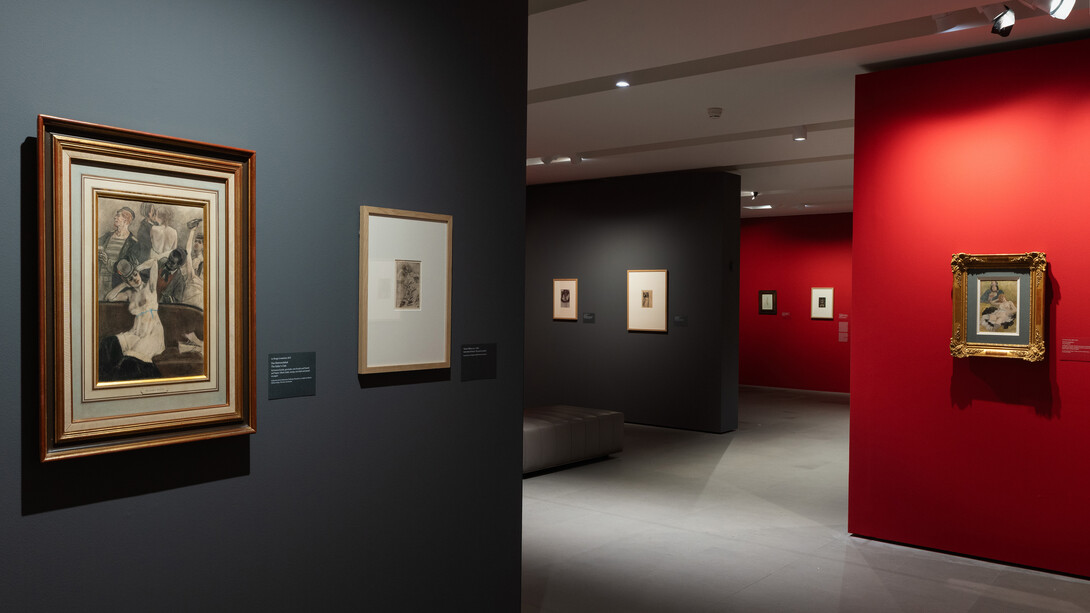
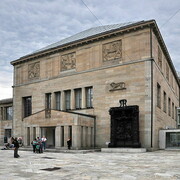
In the landscape of late nineteenth-century European art, few figures are as unsettling and radical as Félicien Rops. The 2026 exhibition Laboratory of lust at the Kunsthaus Zürich does more than present a selection of works; it reopens a crucial question: how can eroticism be exhibited and interpreted today? Bringing together around seventy works from major international collections, the exhibition offers a layered and compelling insight into one of the most enigmatic and controversial figures of Symbolism.
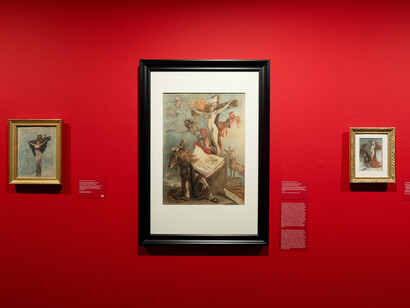
Rops emerges in the fin de siècle as a disruptive force, often described as an enfant terrible and a threat to bourgeois sensibilities. His visual language directly challenges the moral and social conventions of his time, constructing a world suspended between the sacred and the profane, desire and death, irony and cruelty. Through refined graphic techniques—etching, aquatint, and drawing—he stages a demonic-erotic universe that resists reconciliation with the viewer, instead provoking discomfort and reflection.
Admired by writers such as Charles Baudelaire and Joris-Karl Huysmans, Rops belongs to an intellectual milieu that saw art as a powerful instrument of critique against bourgeois society. His work engages deeply with the contradictions of modernity, exposing the fractures beneath its polished surface. Eroticism, the central theme of both the exhibition and his oeuvre, is never merely celebratory. It is charged with ambiguity, functioning simultaneously as seduction and threat, attraction and condemnation.
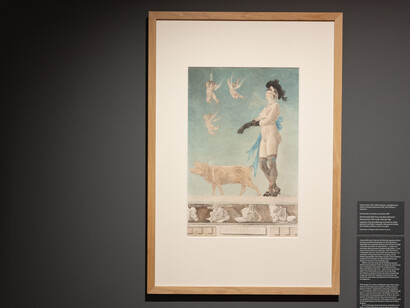
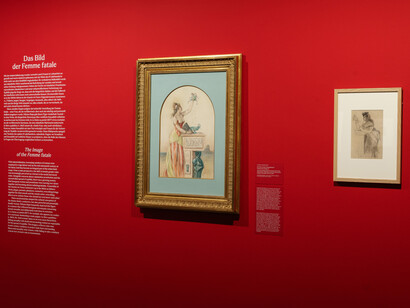
The female figures that populate his works—often depicted as dominatrices or demonic temptresses—embody and exaggerate the gender stereotypes of the time in order to expose their underlying hypocrisy. Through these representations, Rops dismantles the double standards of bourgeois morality, revealing the gap between public respectability and private desire. His art, therefore, operates not only as provocation but as a form of cultural analysis, interrogating the very structures that produce scandal.
The exhibition’s title, Laboratory of lust, provides a key to understanding his practice. Rops’ work can indeed be seen as a laboratory—a site of experimentation where the limits of representation and morality are tested. His images open what the curatorial project describes as “creative niches,” spaces in which human energy, not yet fully constrained by civilization, can manifest itself freely. This idea, which indirectly recalls the thought of the Marquis de Sade, underscores the theoretical depth of Rops’ art. His work is not simply transgressive; it questions the repressive foundations of modern society itself.
Alongside its thematic focus, the exhibition also highlights Rops’ extraordinary technical skill. His graphic works stand among the most accomplished achievements in printmaking at the turn of the twentieth century. The precision of his line, the richness of his compositions, and his ability to merge realism with fantasy make his images both innovative and deeply unsettling. Each work functions as a carefully constructed visual device, where every detail contributes to an atmosphere of tension and ambiguity.
This formal complexity helps explain his influence on later artists such as Edvard Munch and Max Beckmann, who would inherit his fascination with the darker dimensions of the psyche and society. Yet what makes Rops particularly compelling today is not only his historical significance, but his continuing relevance. In an era marked by renewed debates around gender, sexuality, and artistic freedom, his work offers a disturbing but necessary mirror.
The exhibition also explores the distinction between Rops’ public and private production. Alongside works intended for publication and circulation, he created a more intimate body of images, often deliberately withheld from public view. This duality reflects a broader tension characteristic of the period: the increasing visibility of images alongside the persistence of moral taboos. Rops navigates this boundary with calculated ambiguity, turning it into a space of both provocation and critical inquiry.
A crucial extension of the exhibition is the accompanying catalogue, Félicien Rops: laboratory of desires, published by Hirmer Verlag. Conceived as both a scholarly monograph and a visual compendium, the volume gathers essays by an international group of contributors and offers a comprehensive reassessment of the artist’s work. Edited by Jonas Beyer in collaboration with the Zürcher Kunstgesellschaft and curators of the Kunsthaus, the book reflects the same critical ambition as the exhibition, situating Rops within a broader art-historical and cultural framework.
With approximately 208 pages and 93 illustrations, the catalogue balances analytical depth with visual richness, foregrounding the centrality of drawing and printmaking in Rops’ practice. Rather than presenting his works as isolated provocations, the publication emphasizes their coherence as a sustained investigation into the moral and psychological tensions of the fin de siècle. It also highlights how Rops consciously positioned himself against bourgeois hypocrisy, famously declaring his unwavering artistic identity in defiance of convention.
Importantly, the catalogue frames Rops not only as an erotic artist but as a sharp social critic whose imagery interrogates gender roles and the ideological structures of nineteenth-century society. The essays explore recurring motifs—such as the femme fatale, the satanic allegory, and the theatrical staging of desire—while also examining the technical innovations that made his prints a high point of graphic art around 1900.
By combining rigorous scholarship with high-quality reproductions, the volume functions as an essential tool for understanding the complexity of Rops’ œuvre. It extends the exhibition experience beyond the museum space, allowing readers to engage more deeply with the artist’s provocative imagination and its cultural implications. In doing so, the catalogue reinforces the idea that Rops’ “laboratory of desire” is not confined to a historical moment but remains an active site of interpretation, where art continues to challenge, unsettle, and illuminate.