English
 Español
 Français
 Deutsch
 Italiano
 Português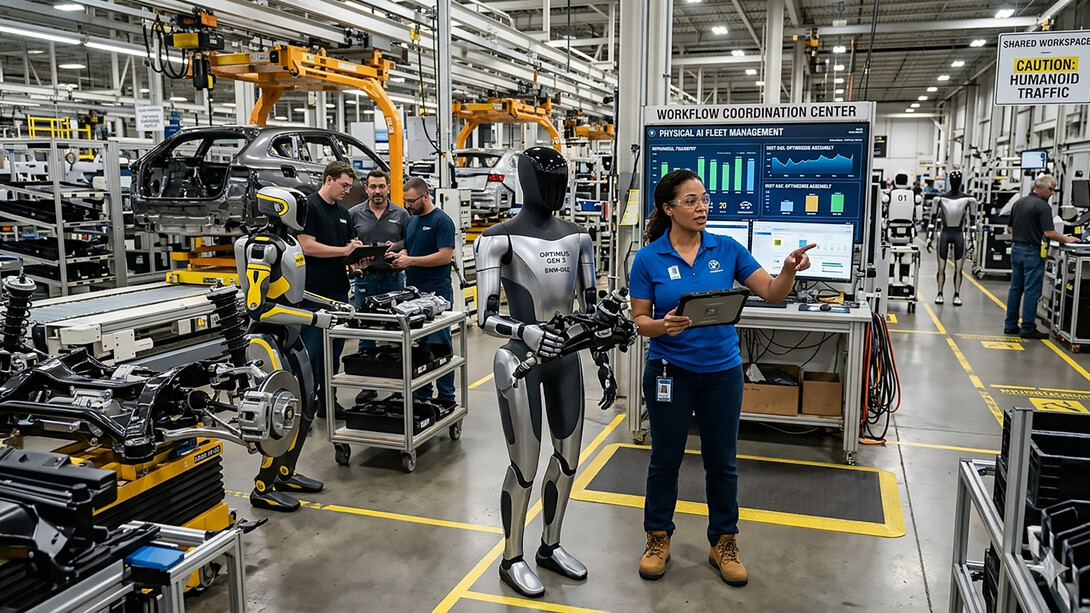
The year 2026 marks the official transition of the humanoid robot from a laboratory novelty to a commercial staple. For decades, the bipedal robot was a distant dream, relegated to viral videos of backflips or dancing prototypes. We dismissed them as expensive toys for wealthy research firms. But the data from March 2026 proves the era of physical AI is here. Global shipments of humanoid units have breached the 50,000 mark this year alone, a staggering jump from the early pilot programmes of 2025. We have moved beyond managing digital agents in browsers; we are now managing agents with bodies.
This surge is fuelled by an aggressive race to scale. In California, Tesla has repurposed its Fremont facility to focus on the mass production of the Optimus Gen 3. Musk has targeted a production capacity of one million units annually by the decade's end. Simultaneously, Chinese firms like AgiBot and UBTECH are flooding the market with industrial-grade humanoids. These machines are the new grunt workers of the global economy, arriving at price points that rival the annual salary of a human labourer. This shift creates a profound leadership challenge: managers must pivot from digital oversight to spatial orchestration.
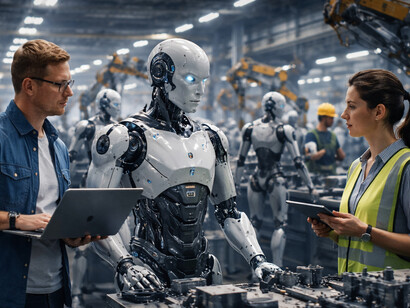
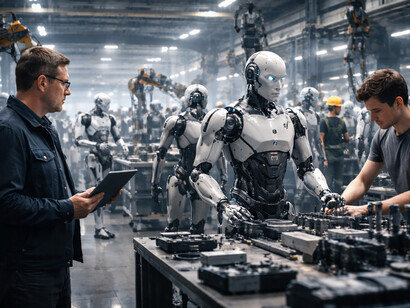
A humanoid robot occupies space, moves through corridors, and interacts with physical objects like a person. Leading a hybrid team requires a change in perspective. You are no longer just managing tasks in a virtual dashboard; you are managing a physical environment where man and machine coexist. The primary responsibility of the 2026 manager is the design of the shared human-robot workspace. Unlike old industrial robots kept in cages, today’s humanoids use advanced force-limiting sensors to work side-by-side with people. However, safety in this new era is about psychological security and avoiding collisions.
Architecting this workflow involves minimising friction. A manager must define clear zones of operation and create handoff protocols where a human can pass a component to a robot without breaking production flow. The presence of a metal coworker can be unsettling for human staff. Reports of "uncanny valley friction" are common in warehouses where workers feel watched or judged by robotic counterparts. A successful coach must address these anxieties by framing the humanoid as a specialised tool for the dull, dirty, and dangerous. By positioning the robot as a protector of human health, a leader can foster cooperation over competition.
Managing Physical AI also requires technical diagnostic skills. When a human employee fails, they can explain why. When a humanoid fails, it simply stops or executes incorrectly because its vision-language-action model has hit a logic gap. A 2026 manager must analyse telemetry data to identify if a failure was caused by hardware, lighting, or flawed training data. This high-level robotic supervision is a demanding role, requiring the leader to be part strategist and part systems engineer. You are managing the uptime and health of a digital workforce that never sleeps.
The ROI for these deployments is becoming undeniable in structured environments like logistics. Companies like Figure AI have demonstrated success at BMW’s Spartanburg facility, where robots sort thousands of parts with human-level accuracy. These robots do not require health insurance or breaks. For a manager, traditional constraints like shifts and fatigue are vanishing. You are now running a 24/7 operation that can scale at the click of a button. However, this raises the stakes for the manager, who must now coordinate technical maintenance without disrupting the team’s output.
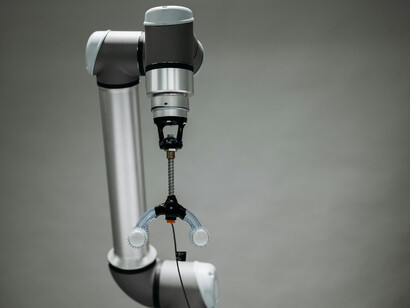
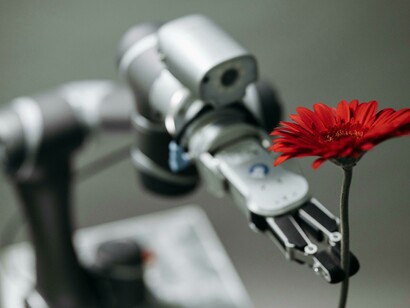
Despite their speed, humanoids still lack the fine motor skills of a human hand in unstructured environments. They struggle with delicate, irregular objects like tangled wires. This is where the human manager adds the most value. Your role is to identify which tasks are ready for robotic autonomy and which require the irreplaceable touch of a specialist. Leadership in 2026 is about finding the balance between machine precision and human intuition. You must decide which parts of the process are strictly mechanical and which require the nuance of human judgement.
The rise of the humanoid coworker exposes a new layer of logistical complexity. Humanoids require charging stations and frequent "brain" updates. This has led to the creation of Robot Operations Centers (ROCs) within many firms. As a coach, you must interface with these technicians to ensure your robotic team members remain in peak condition. A robot out of service is a bottleneck that ripples through the entire organisation. Managing this hardware-software hybrid requires a level of organisational agility that was unnecessary just three years ago.
As we look toward 2027, the goal for many firms is to reach a production capacity of ten million units. We are witnessing a new industrial revolution. The transition to a hybrid workforce is inevitable, but success depends on the leadership at the top. We must coach these machines with the same clarity we bring to our human teams. The future of work is standing right next to us on the factory floor, and it is the manager’s job to ensure technology serves the mission, not the other way around.
The final challenge for the modern leader is maintaining the soul of the organisation. When half your team is silicon, it is easy to lose the sense of community that drives excellence. You must work harder to build human connections and celebrate the unique contributions only a person can make. Robots can handle the labour, but they cannot share a vision. Leadership in the age of physical AI is the art of using machines to empower people. We are the architects of this new world, and our judgement remains the most critical component of the system.