English
 Español
 Français
 Deutsch
 Italiano
 Português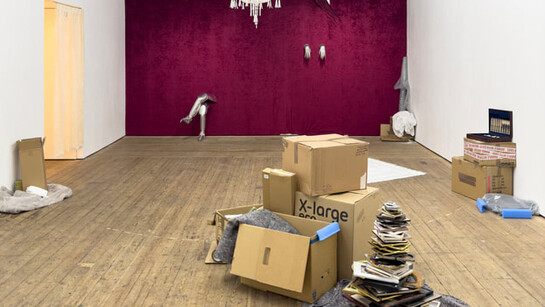
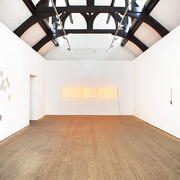
For his second solo show at Copperfield, Ty Locke gives a first impression reminiscent of an auction presentation at a bankrupt stately home. Chandeliers hang over suits of armour, but these remnants are not enough to make a home and their materiality betrays them. From cigarette filters to Poundland party platters, the works are fabricated from cheap, readily-available items but through intensive labour. As the closest thing Locke has to an heirloom is an addiction to nicotine, he set about making his own, with 20,000 threaded filters hanging over the scene in the form of a chandelier and a rizla paper echo of an antique carpet below.
Family, memory, class and coming of age have preoccupied the artist in developing the exhibition, as he began to see art school friends inheriting legacies, nest eggs and memorabilia. In the absence of real heirlooms Locke reflects that, when collected, these works might eventually become someone else’s real inheritance, consistent with the wry sense of humour that has helped him laugh his way through a complicated childhood.
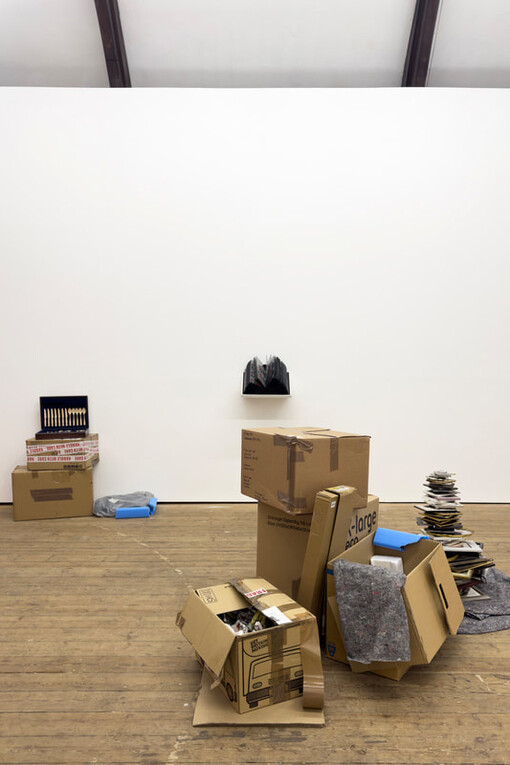
Bulging photo albums echo nostalgic picture frames stacked on the floor containing the same absurd, repeating image and surrounded by cardboard packing boxes. The boxes wait to be filled with these aspirational objects, or perhaps we have caught someone mid-pack, preparing to move home. They are littered with shipping labels referencing some of Ty’s twenty childhood addresses. As the child of a single mother with seven children, Ty’s family was often at the top of the council house waiting list, resulting in a constant state of uncertain but exciting transition, bouncing across Kent until Ty eventually relocated to London to pursue art.
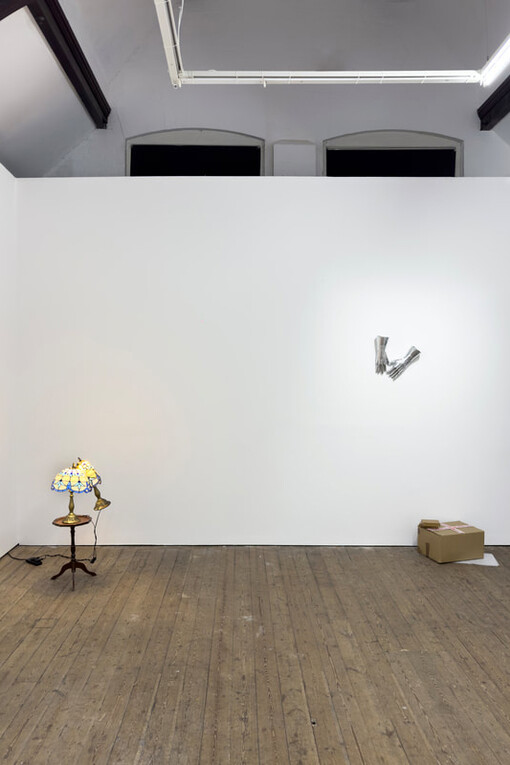
Locke’s first job was a party host at a children’s play centre ‘The Big Fun House’ where he honed his ability to play the clown. In returning to that time, he found a material for his suits of armour that offers about as much protection as his self-deprecating humour. The Poundland party platters meant for crisps and cupcakes, are here transformed into gauntlets and vambraces projecting from the walls. Hand embossed into these surfaces are copies of real tattoos inked into the arms and legs of Locke's family, acknowledging that tattoos have long been to working class people what heraldry was to the privileged: A mark of belonging and of protection by association and intimidation.
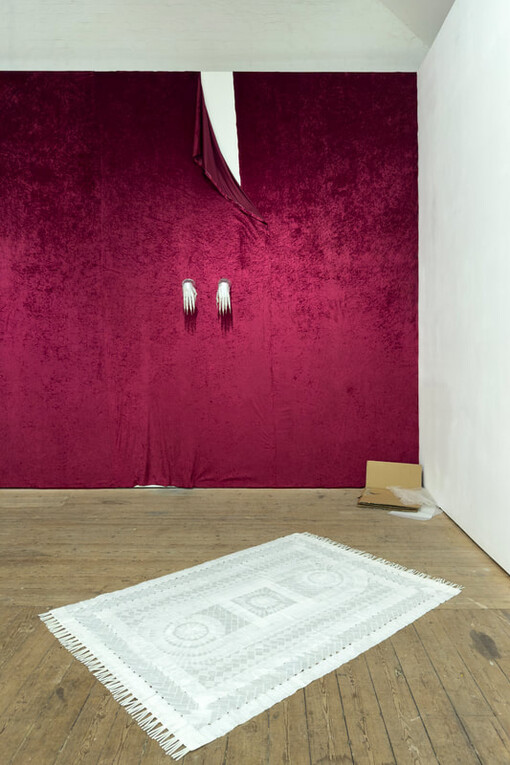
Across the space from this wall of armour that reads like a gang of flexing biceps, glistening shoulder to shoulder is a counter to all that hyper masculinity. While family and circumstance are a big part of growing up, finding our own identities and sexuality is pivotal. Serving Camp, a last pair of limp-wristed and intricately jointed gauntlets with fake drag nails moulded into the end of each finger. The limpness of the wrist is met with the aggression and sharpness of these nails that become claws, heightening the campness of this deep red velvet wall peeling away at the edges.
Memory and nostalgia are an inescapable part of aging tied to many physical and visual triggers. Despite a recurring drug addiction, Locke’s mother wrote her children poems, caring letters, took many pictures and introduced them to humour in her lighter moments. This weight of emotion and interpersonal tension is drawn out across the exhibition, but in particular in works like Good Intentions, which recall the last remnants of his mother’s half forgotten, half lost poem as it fades into the threads of a net curtain. A childhood passed. Helping to illuminate this scene are modified “Tiffany-style” stained glass lamps. The workmanship of what look like prized lamps has been carefully undone and re-configured in the latest of the artist's co-dependent series of dysfunctional objects. As their glass shards interlock and embrace, one lamp stands while the other is limp, in desperate need of support.