English
 Español
 Français
 Deutsch
 Italiano
 Português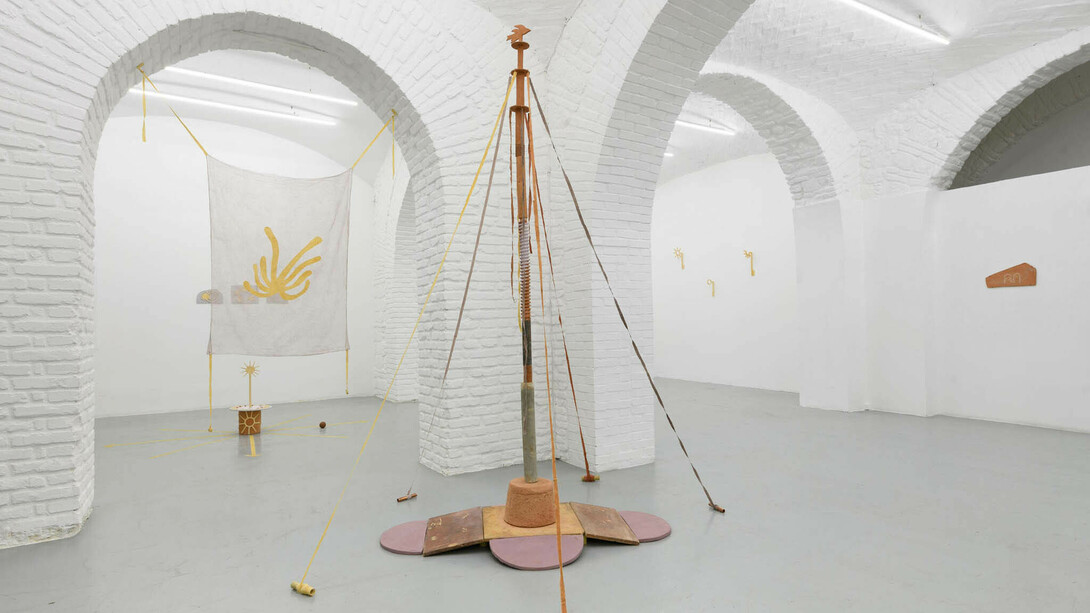
Monitor is pleased to announce the first exhibition in Italy by German-Portuguese artist Maja Escher. The show is titled Misurazione del sole (Measurement of the sun) and marks her first solo presentation at Monitor’s Rome venue, following two exhibitions held in Lisbon (So pedimos que nos semeiem na terra, 2022 and Pedras de Raio, 2024) and the monumental installation Ave Mãe presented at Arco Madrid in 2025.
Misurazione del sole originates from a text that brings together several attempts to describe a solar eclipse live on a radio broadcast. In both accounts, at the precise moment of the eclipse, the radio speaker falls silent, language fails in the face of the experience. This interval, where measurement, description, and transmission become impossible, opens the space of the exhibition.
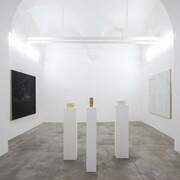
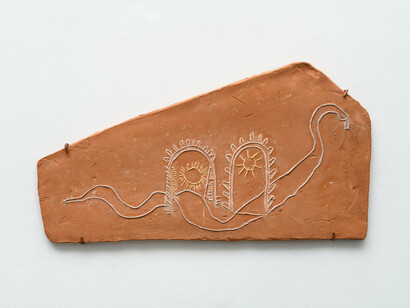
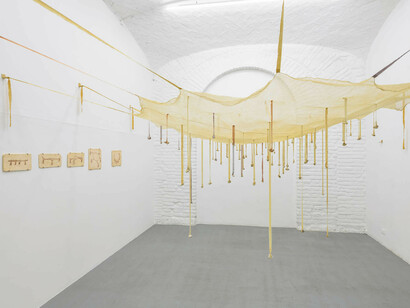
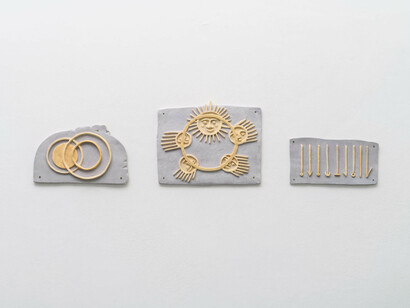
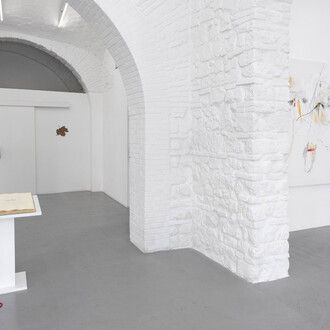
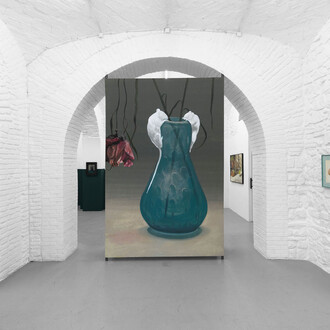
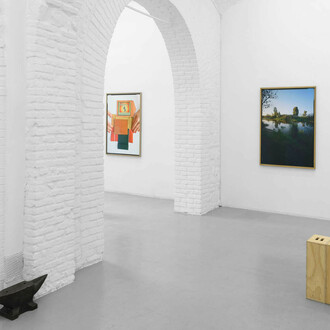
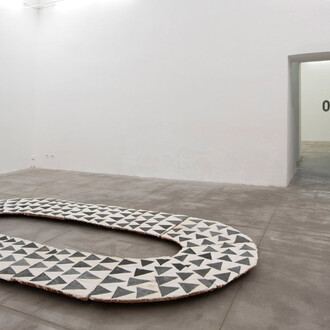
The show brings together a series of new works conceived specifically for the gallery space: a large-scale installation made of fabrics treated with natural pigments welcomes visitors, guiding them through a layered path of drawing impressed on thin terracotta slabs mounted on the walls, alongside a series of sculptures, both characteristic and representative of the artist’s practice. Reflecting on the sun as a universal and shared presence, essential to all forms of existence, the sun emerges as a principle of connection and interdependence. Humans, animals, plants, stones, and the earth itself are bound together through a common dependence on this source of light and energy, revealing a network of relationships in which no being exists in isolation.
Misurazione del sole also explores the sun as a female figure, moving across languages and cultural memory. While in Portuguese the sun is grammatically masculine, in German (Escher's mother tongue) it is feminine, revealing how language shapes our perception of the natural world. In Germanic cultures, the sun is feminine, embodied as Sól or Sunna, a goddess whose journey across the sky sustains life and marks the passage of time.
Maja Escher’s work has a collective and hybrid dimension, in which drawings, found objects, collaborative practices, and field research methods form part of the artist’s process in developing site-specific installations and research-driven projects. Clay, reeds, ropes, stones, vegetables, and other elements found or donated during fieldwork are often combined with riddles and fragments of popular culture, creating a tension between spirituality and science, magic and technology. Her practice is deeply rooted in the observation of ecosystems and ancestral forms of knowledge connected to the earth and its elements.
(The exhibition unfolds alongside a text by Filipa da Rocha Nunes)