English
 Español
 Français
 Deutsch
 Italiano
 Português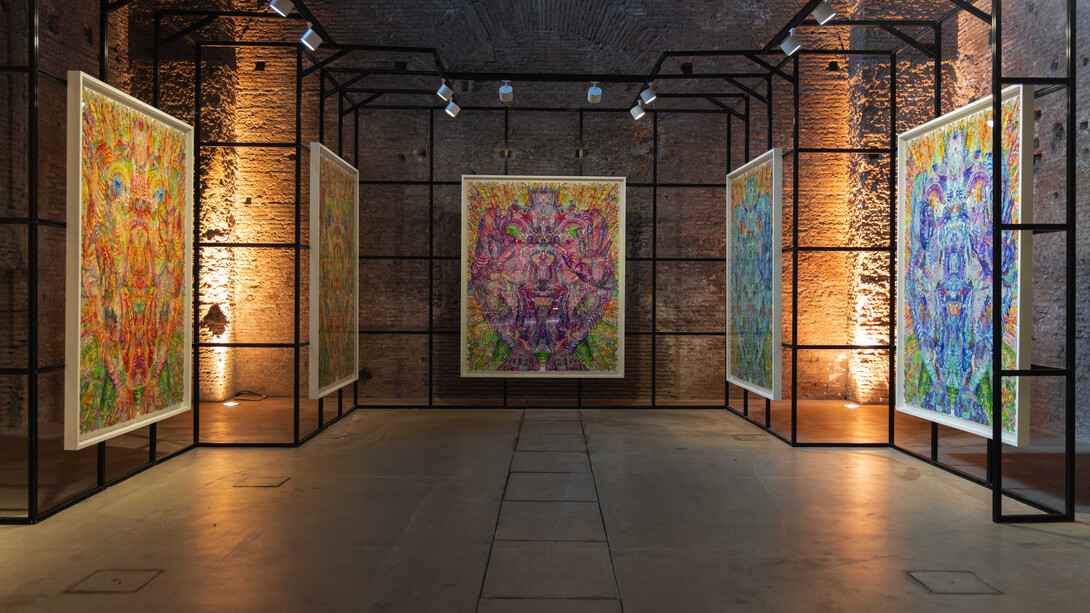
The Museo Nazionale Romano, under the direction of Federica Rinaldi, Director of the Museo Nazionale Romano, opens a solo exhibition by artist Wu Jian'an (Beijing, 1980) at The Baths of Diocletian, entitled Metamorphosis by Wu Jian’an - the first exhibition ever held in an Italian museum.
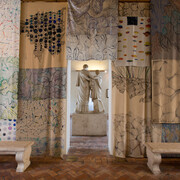
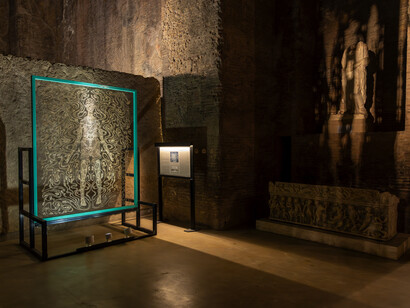
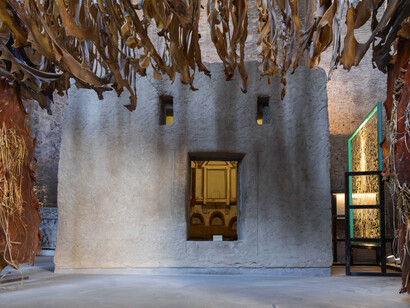
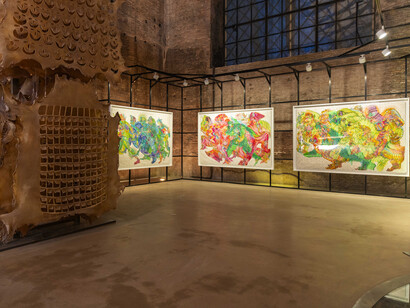
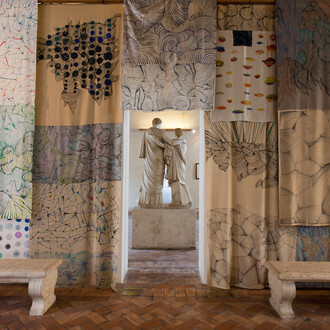
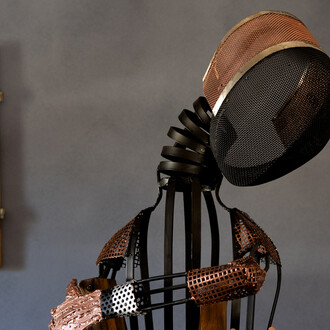
Curated by Umberto Croppi, with coordination by Giulia Cirenei, the exhibition unfolds across The Baths of Diocletian as an immersive journey through the materials and techniques that define Wu Jian’an’s practice. From hand-blown Murano glass to monumental works, the exhibition explores how the artist draws upon and reinterprets Chinese artistic traditions, incorporating paper-cutting, carving, and collage.
Set within the monumental architecture of the ancient Baths, the exhibition reflects on transformation through a dialogue between Eastern and Western traditions. This layered historical setting provides a powerful backdrop for Wu Jian’an’s exploration of change, continuity, and reinvention.
“The dialogue between contemporary art and ancient literature can reveal surprising affinities,” notes Federica Rinaldi, Director of the Museo Nazionale Romano. “The exhibition demonstrates how change is a fundamental force that runs through the natural, human, and symbolic worlds.”
“The exhibition of Wu Jian’an in Rome is an event open to multiple interpretations,” adds curator Umberto Croppi. “The installations are conceived as an interpretation of the spaces and symbols of the ancient Baths, offering a key to understanding the depths of Chinese art and its connections with Greek and Roman cultures.”
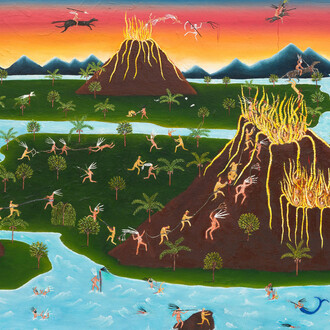
Drawing on Roman mythology and Eastern philosophy, Wu Jian’an interweaves references to Metamorphoses by Ovid - with its assertion that nec species sua cuique manet - alongside the Daoist concept of transformation (huàshēng, 化生). Myth, material, and narrative are continuously reconfigured into a unified visual language reflecting contemporary experiences of change and renewal.
Rather than placing inherited ideas, materials, and stories within fixed cultural positions, the artist synthesizes them in a dynamic process of transformation. Myth, medium, and narrative are continually reconfigured into a unified visual language that reflects contemporary experiences of instability, change, and renewal.
The juxtaposition of works created through different techniques and at varying scales highlights his capacity for image-making and refined craftsmanship, while deepening his broader investigation of transformation as both a material and philosophical process.