English
 Español
 Français
 Deutsch
 Italiano
 Português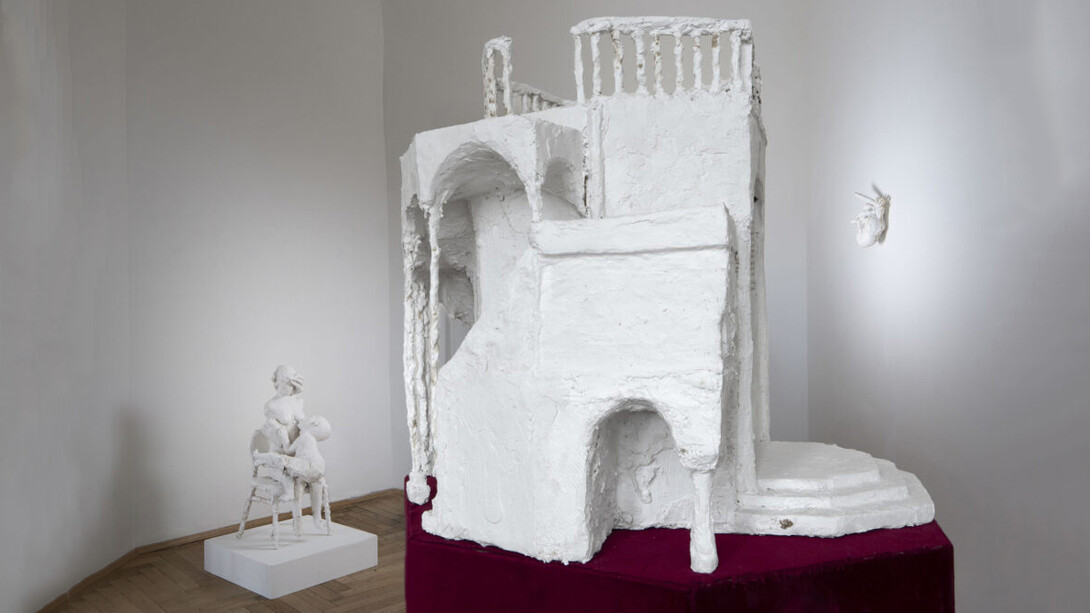
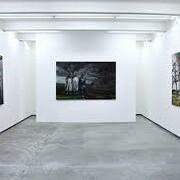
The current starting point for Kateřina Komm's sculptural work and artistic research is the idea of sculpture as a medium capable of capturing personal and collective memory and telling contemporary stories through historical forms associated with mythologies. Her monumental objects contain references to the visual culture of lost civilizations along with imprints of personal emotional and physical experiences.
The art of ancient Assyria, Egyptian, and East Asian cultures, or the medieval/renaissance architecture of the Apennine Peninsula, shifts in Kateřina Komm's conception from a detached scholarly approach closer to the present day. She succeeds in shifting us away from the usual preconceptions and confrontation with the "age value" towards "affective history" and a positive understanding of anachronism in art history. In this sense, it was also appropriate to name the exhibition with a term from literary theory referring to "the fundamental connection between space and time depicted in a work of art." Mikhail Bakhtin used the term chronotope to refer to "the merging of spatial and temporal indices into a meaningful and concrete unity." Kateřina Komm's artistic practice itself also consciously draws on subsequent performative and photo-documentary inputs, while relating to human physicality in a highly hybrid way, which can already be traced in the oldest exhibited concrete object, Moth.
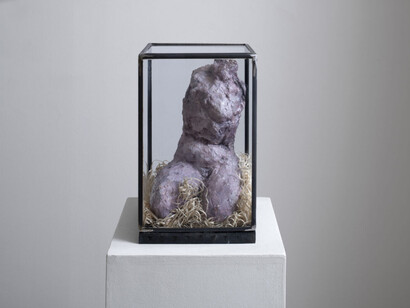
Kateřina Komm's thoughtful interventions deceive the eye and divert the viewer's attention to contemporary internalized social themes of motherhood and family in a socioeconomic context, without overshadowing the weight of emotional experience and scenes from love life (Plaster sacks). The Assyrian frieze of charioteers on an overturned but habitable chariot, as if torn from the Chinese Han dynasty (Composed way), is also enriched by an inconspicuous portrayal of self-portrait. Contrary to customary ritual practices, a female warrior figure sits on a funeral horse statue (Horsewoman & I). Similarly, the familiar figure of a young mother is attached by phantoms of phantom hands, evoking a sense of sensory overload and physical dysphoria (Touched out), while the torso trapped behind aquarium glass recalls the demands placed on maternal reproductive work from the outside and the associated feeling of withdrawal (The presence of the past).
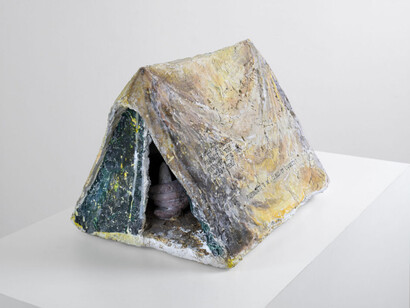
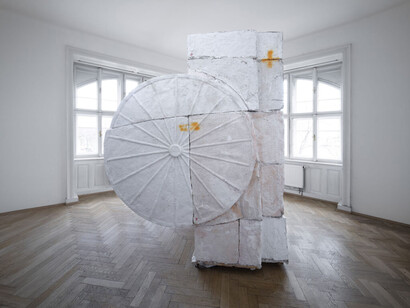
The unusual arrangement of human limbs has something in common with a monumental object built from components, with pigmentation reminiscent of archaeological excavation and architectural models. A distorted reconstruction of the pulpit from St. Stephen's Basilica in Bologna (Pulpito) meets a photographic flashback from childhood (Summertime sadness). In blurred colors, we follow the initiatory experience of an university visit to a tent at summer camp. However, Kateřina Komm embodies even these purely personal impressions in artifacts with which we can all identify and which strive for universal appeal. She achieves this through both handmade and material intensity, as well as by transforming everyday details into a morphology that to a certain extent transcends the horizon of our current perception of time and space.