English
 Español
 Français
 Deutsch
 Italiano
 Português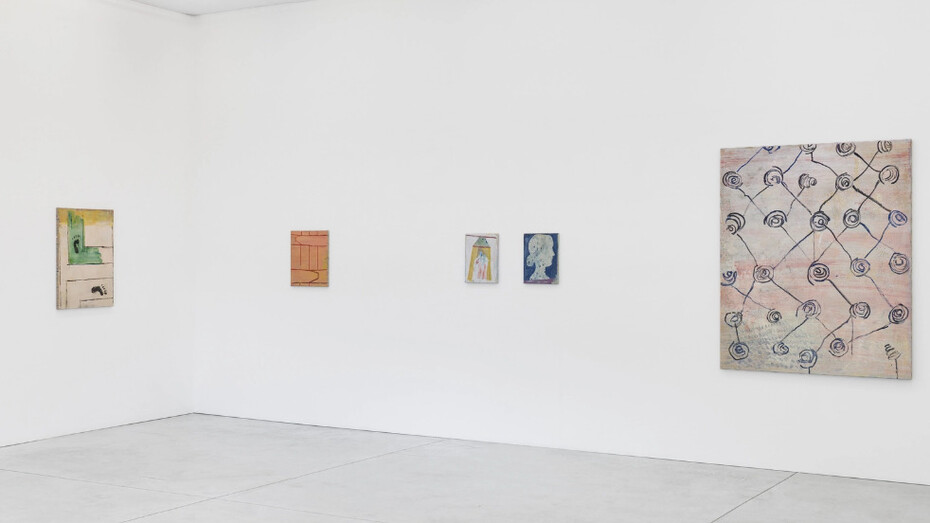
It is not experience that counts for an artist, only inner experience counts.
(Cesare Pavese, This business of living)
The impossibility in which we find ourselves of speaking the truth, even though we experience it, makes us speak as poets. (…) In the act of speaking, the individual does not transmit his knowledge, but shapes something in a poetic manner. He translates and invites others to do the same. The individual communicates as a craftsman, as someone who handles words like tools.
(Jacques Rancière, The ignorant schoolmaster)
Veerle Beckers does not eat bread, or only rarely. I should know, as her husband. While I spread my sandwiches in the morning, she eats porridge. Oatmeal porridge, from a small bowl with a wooden spoon. Yet she paints ‘for her daily bread,’ as the saying goes. She does not do this merely to earn her proverbial crust. Painting for one’s daily bread is a metaphor here that reaches further and digs deeper. Etymologically, the English word ‘bread’ can be traced back to the Old Germanic ‘brod,’ meaning ‘to brew’ or ‘to brood,’ while the Bible designates bread as a source of spiritual nourishment.
Veerle Beckers paints because she is one of those people in whom something is always brewing in her rich inner life. There is a great deal of spiritual nourishment that seeks a way out into the world through paint and canvas. Painting, in that sense, is a kind of digestive process. This spiritual nourishment springs from stimuli in everyday life that touch upon ingrained ideas, childhood memories and old patterns. When we are out together, Veerle has always seen and felt far more than I have, and what she experiences strikes more chords. What she takes in lingers longer or sinks deeper inside, where it continues to ferment and slowly rises like good bread. That last quality, that slowness, is crucial. Painting for one’s daily bread is (also) a quest for — or an ode to — patience, simplicity and silence. Only under those conditions can the inner life rise to the surface and find its way onto the canvas.
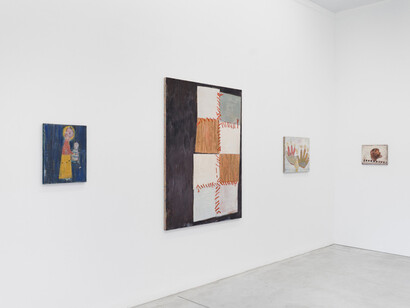
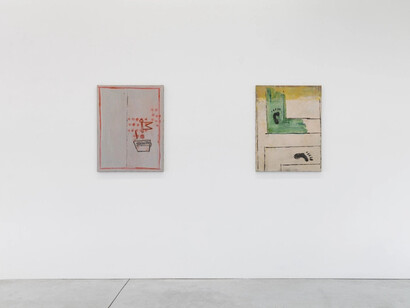
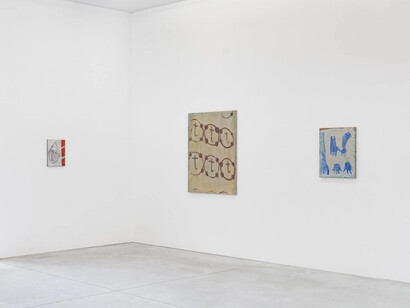
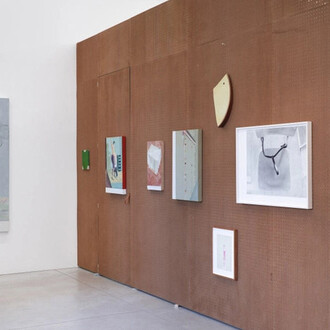
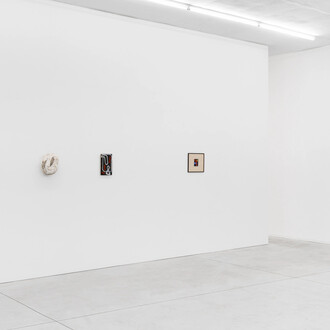
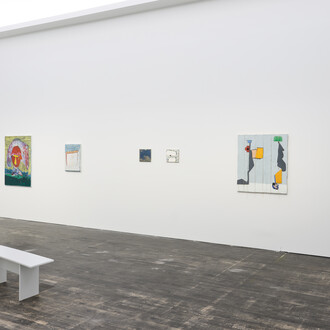
Just as bread was a staple food in the Middle Ages, so the Middle Ages form the staple for the paintings of Veerle Beckers. The Middle Ages here stand for a return to the essence of painting, a quest for maximum resonance with minimal means. A single painting shows a single image, not a mosaic of image fragments. That image is usually remarkably static, frozen in time like an artefact, prised loose from its original context. The figure or the theme only arrives on the canvas once the weeks of painstaking labour have been completed to apply the countless base layers of paint. In the thickness of these layers, a spatiality emerges that forms the context for a specific image that alights upon this painted landscape — and renders other images impossible. The colours are often akin to those we find in medieval churches and their murals. These colours shimmer through between the various layers on the canvas, ensuring that the image lies deeply enclosed within the painting. As if the painter hesitates to share her innermost stirrings with the world. The oeuvre of Veerle Beckers thus forms a language that comes from the gut, composed of forms, image fragments, layers of paint, spatters.
The ignorant schoolmaster, in painting too, does not place himself above the world in order to then brilliantly render it on canvas. He or she immerses themselves in it, undergoes the world with all the fortune and misfortune, highs and lows that come with it, and then brings those lived experiences back out through the canvas. So too Veerle Beckers. She is not a speaker and not a writer. Veerle Beckers is a painter. A painter-craftsman. She paints what she has to tell, searching and suggestive, with brush and canvas as her tools, to make paintings that stand in the world like small poems.
(Text by David Peleman. Ghent, 14 February 2026)