English
 Español
 Français
 Deutsch
 Italiano
 Português
Many readers view Wuthering Heights as their least favorite Brontë novel, arguing that none of the characters are likeable. This begs the question, do we have to like the characters to enjoy a book? Can we still find sympathy and empathy in a dark tale of obsession, revenge, and injustice?
This is Heathcliff’s story, yet the novel is narrated from the point of view of the tenant Mr Lockwood and the housekeeper Ellen (Nelly) Dean. Initially, the reader may feel sorry for the orphan Heathcliff, who is brought home by Cathy’s father and is resented by her brother Hindley. When her father dies, Heathcliff is reduced from a playmate to a servant, and the final humiliation comes from Catherine herself when she talks about marrying Linton. “I’ve no more business to marry Edgar Linton than I have to be in heaven; and if the wicked man in there had not brought Heathcliff so low, I shouldn’t have thought of it. It would degrade me to marry Heathcliff now."
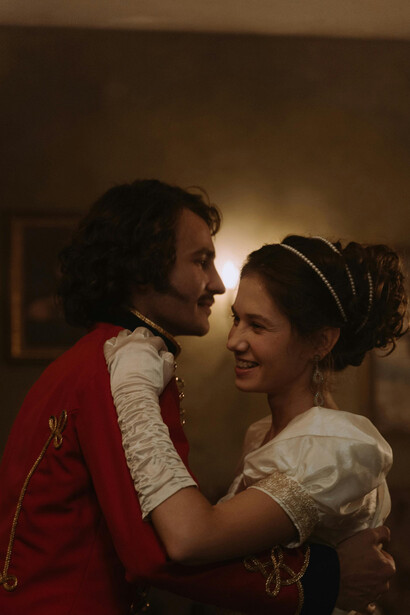
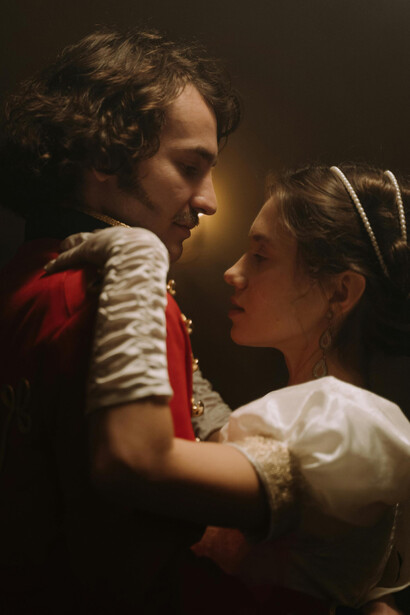
Although Cathy suggests she is no angel, she blames her brother, Hindley, for treating Heathcliff like a servant and making it socially unacceptable for her to marry him. Yet Cathy goes on to acknowledge, "He's more myself than I am. Whatever our souls are made of, his and mine are the same, and Linton’s is as different as a moonbeam from lightning, or frost from fire.” The cold, passive moonbeam and frost are compared to the violent, unpredictable nature of lightning and fire. Cathy, like Heathcliff, is something that cannot be tamed.
Heathcliff can be seen as the ultimate example of violence towards both men and women. Yet even allowing for a naturally rebellious disposition, he was the product of a class system that rejected him due to his birth and status. Described as a “dark-skinned gypsy," he would stand out as different. This attracts the infantile imagination of Isabella Linton, who, when Cathy tries to warn her about Heathcliff’s temperament, accuses her of jealousy. Heathcliff’s response is one of indifference to her person, and he claims her detestable eyes are too much like her brother Linton. Yet when he looks at her, he sees her inheritance and pursues and marries her for that reason.
In relation to Hindley, he encourages his gambling to the point where he mortgages The Heights. As part of his revenge, he brutalizes Hareton, teaching him to swear at his father and denying him an education, leaving him illiterate, something Cathy’s daughter will seek to address at the end of the novel. After Isabella’s death, Heathcliff brings his own son, Linton, to stay at The Heights, but through violence and intimidation, he becomes a weakened wreck. He instructs Linton to claim authority over the young Cathy. “He says I’m not to be soft with Catherine—she's my wife, and it’s shameful that she should wish to leave me.”
To ensure Heathcliff retains ownership of The Grange, he has Cathy’s daughter marry his son before he dies. Young Catherine thus becomes Catherine Heathcliff, something her mother could not do. Catherine’s reaction to Heathcliff’s schemes is one of compassion. “’I know he has a bad nature,’ said Catherine; ‘he’s your son. But I’m glad I’ve a better way to forgive it." This suggests that despite all the violence and revenge, there is a hope of redemption among the younger generation.
Catherine summarizes Heathcliff’s situation ahead of his story. "Mr. Heathcliff, you have nobody to love you; and, however miserable you make us, we shall still have the revenge of thinking that your cruelty rises from your greater misery!” This misery derives from separation. When Cathy marries Linton, she becomes separated from Heathcliff, despite her encouragement of his visits. After her death, Heathcliff is haunted by her ghost. The reader is first introduced to the ghost through Mr. Lockwood’s dream, where she introduces herself as Catherine Linton. Heathcliff receives the news with “irregular and intercepted breathing, and he struggled to vanquish an access of violent emotion.”
He dismisses his guest from the room and “wrenched open the lattice, bursting, as he pulled at it, into an uncontrollable passion of tears. ‘Come in! Come in!’ he sobbed. "Cathy, do come.” This is the lost love young Catherine refers to and the source of his obsession and misery. He wants to be buried with her and describes opening her grave, she whispers to him, present but unseen. Yet despite all the revenge, cruelty and violence against a system which rejected him, Heathcliff dies pining for Cathy. He refuses to eat, locks himself away in her room, and is eventually found dead in the panelled bed, cold and wet as if he had been walking outside. After his death, their ghosts are said to have been seen walking on the moors.
Despite all the violence and cruelty, there is a glimmer of hope with young Catherine and Hareton, along with Cathy and Heathcliff, being united in death. As readers, we must accept that extreme emotion elicits complex reactions that require us to look beyond circumstances to understand the events that shape a character.